Page Title: Flag Etiquette General Information About Half Staff
United States Code Title 4- Chapter 1-The Flag :The complete flag code text with a search function
"The Code is designed 'for the use of such civilian groups or organizations as may not be required to conform with regulations promulgated by one or more executive departments' of the federal government. Thus, the Flag Code does not prescribe any penalties for non-compliance nor does it include enforcement provisions; rather the Code functions simply as a guide to be voluntarily followed by civilians and civilian group. Quoted from CRS Report for Congress The United States Flag: Federal Law Relating to Display and Associated Questions published by Congressional Research Service ˜ The Library of Congress updated August 23, 2004
Questions and Answers I get tons of flag etiquette questions. Below is a sample of my e-mail and my responses. My readers come up with the greatest questions. Flag etiquette is often a matter of interpretation. As well, I do not claim to be the best authority on every question. I get generous contributions weekly from the readers of this page. I often add such contributions to this page as links to other resources or by posting the information. I am glad to offer my findings based on some 30+ years in this business and try to base my responses on identifiable and responsible sources and customs. I share my research and experience for free. However, I do not warrant it one iota. Disclaimer Al Cavalari. Prop. The Flag Guys®
Links Helpful To Flag Etiquette Questions
Air Force Honor Guard Basic Protocol, Honors and Ceremonies
Navy Flag Regulation NTP 13 (B)
|
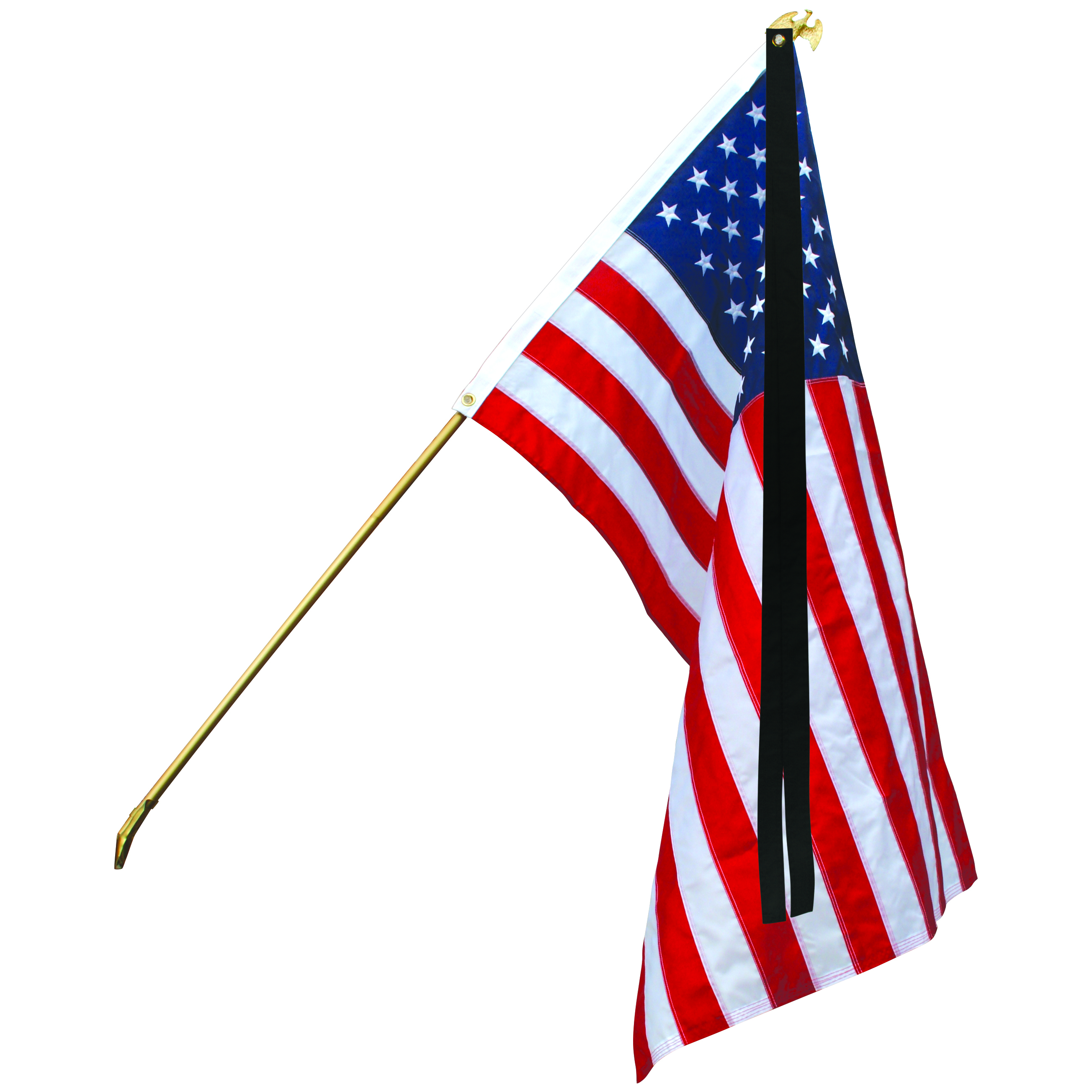
Double Mourning Streamer
Mourning Streamer Flags that are affixed to staffs such as most front porch type flag kits or indoor floor mounted sets are not expected to be half staffed. It is appropriate to show mourning by attaching a length of black mourning streamer made of ribbon or material at the base of a pole's finial. Our black nylon double streamer is about 5' long by 2" wide. #STRE $16.95 includes a cable tie,
|
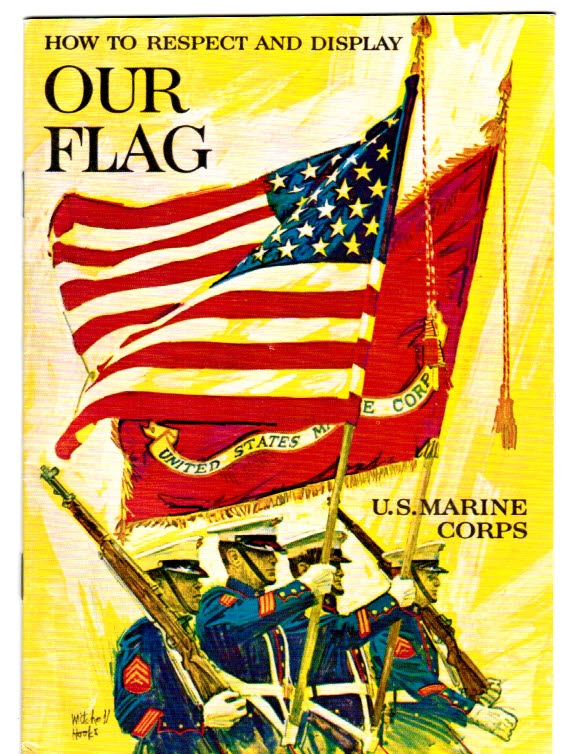
How To Respect And Display Our Flag: US Marine Corps #525MB $2.95 (Due to shipping requirements, not available if sold with stick flags) Includes history of the US flag, images of historical flags, rules and images of display from the US Flag Code, explanation of Marine Corps custom and culture Paperbook, 32 pages 5.5 x 7.5" Not available on an order that includes stick flags
|
Some general observations about Half Staffing
An interesting point about half staffing. The President's power to order flags be half staffed applies only to federal flags. He can only encourage that others follow suit. See the following question and answer found on The White House web site following the death of President Reagan.
Q:
Beaver Creek, Colorado:With President Reagan's death, what is the rule for American flags? Does the President have to state all flags must be lowered? If so, how long must they be lowered for? In addition, if the President doesn't order all of the flags to be lowered, can individuals decide on whether or not they would like to lower their flag?A:
Tim Saunders, White House Executive Clerk: Upon the death of a former President, the "flag code" (4 United States Code, section 7) states that flags shall fly at half-staff for 30 days -- the flag code is designed to provide guidelines for the display of the flag.Traditionally, the President then issues a proclamation "officially" informing the people of the United States, directs all Federal flags to be flown at half-staff over Federal facilities, and designates a "National Day of Mourning," as a mark of respect and remembrance for the former President. President Bush has designated this Friday, June 11, 2004, the day of President Reagan's funeral, as the National Day of Mourning for President Reagan. As far as flags generally, the President directs the manner of their display over Federal facilities only -- he does not direct their display over non-Federal facilities. Individuals, other levels of government, and private concerns are simply encouraged to follow these observances. (Emphasis added)
The point being made by The President's Executive Clerk is that in these United States of America, even our most powerful leader can not order our most humble citizen to participate in a display of mourning or respect. Half-staffing Old Glory is a matter left to the dictates of each individual's conscience. The President invites citizens to participate. Hey, it is one of the things that makes us different than many other countries.
Q: North Conway, NH: We need to know when to return the flags at our resort to full staff. I have read several news reports which state once President Reagan is interred (after 10:30 ET or so Friday night), I have also read that tradition states the flags should be lowered for 30 days for a President. Can you tell me what the government plans and what private citizens and businesses should do?
A:
Tim Saunders, White House Executive Clerk: Thanks for your question. The flag code (title 4, United States Code, section 7) states that flags shall be flown at half-mast for 30 days from the day of death of a former President. Individuals and private concerns are certainly invited to join in this observance.Q:
San Jose, California: What is the definition of a state funeral, and how is it decided to bestow that honor?A:
Peter Sobich, Special Assistant to the President and Deputy Cabinet Secretary: By law, former presidents are afforded a state funeral upon their death. While tradition and protocol greatly influence the funeral planning, the exact sequence of events is largely determined by the family. However, most state funerals, including those for Presidents Eisenhower, Kennedy and Johnson have included the following events: repose in home state before traveling to Washington, D.C.; formal funeral procession in horse-drawn caisson along Constitution Avenue to U.S. Capitol; repose in the Rotunda of the U.S. Capitol; memorial service in Washington, D.C., and then travel to final resting place for internment. In the case of President Reagan, this will be at his Presidential Library located in Simi Valley, California.Click Here To Return Back To Top
Question: When flown at half staff on a single pole, should the state flag be removed, or remain below the US flag? Thank you in advance for any help I can get on this. D.R
Answer:Hi Mr R.
I apologize if you did not get a response. I can't remember if I answered you or
not. The Flag Code is silent on this fascinating question and I know of no other
source that deals with this question. Army regulations for example do not
mention it. And even if they did, those regs or any other military regulations
apply to the military only. For private citizens, The Flag Code applies.
My sense is this: Many flag usage questions are left up to the discretion of
the individual. I believe that this is one of them. The Flag Code for example
gives us all the option on how to retire, that is to say, dispose of a worn out
flag. It need not be burned as most people think. The operative concept that
guides is "in a respectful manner." In handling the myriad of real world
situations that The Flag Code does not and can not address, I think if "in a
respectful manner" is always the guide, then one can not go wrong. Absent any
local or state law dealing with it, I would say it is not improper to leave the
state flag on the pole and half staff it along with the US flag.
That having been said, well meaning individuals can disagree as to the state
flag being left there or not. Some might say it is a more effective statement
for our weeping Old Glory to stand alone in solitude. She mourns a national
event, after all. On the other hand, one might say that your great state mourns
along with the nation. The state flag from that perspective represents the
people of your state as they mourn in concert with the American nation. I always
try to ask myself, "If The Flag could speak, what would she say."
I think both are proper and The Flag Code leaves it up to the individual user
and beholder. If you find it codified somewhere, please let me know. Absent any
authoritative code or law, I don't think it can be maintained that either usage
is correct or incorrect. Thank you for wanting to get it right.
Question: Half staffing ONLY the state flag when the US flag is on the same pole
X wrote: I'm a security officer at X University in MD. Recently we had one of our State Police helicopter pilots die in a air crash when on duty. The governor ordered the state flag to be flown at half mast. My question is, since we only have one flagpole that we display the US and state flag together how do we properly do this. Do we just display the state flag alone?
Answer: Hi Mr X
Sorry for the delayed response. I sympathize with your predicament.
The Flag Code is simply silent on this question. Like many questions it is
therefore left up to your discretion, logic and common sense. There is no one
answer. As with many flag usage questions, different people looking at the same
facts will likely come to different conclusions. It is likely that there is no
truly satisfying solution.
You have only one pole with the US flag flying on top and your state flag flying
below it. If you half staff both flags some people will say that The President
and your Governor had not ordered the US flag to be half staffed. Fair enough.
If you leave the US flag on top at full staff and simply lower your state flag
even further down the pole, will it even appear to be half staffed? Will it even
be effective at creating the tribute? Maybe so. However, depending on the height
of your pole, it may just appear to be a secondary flag at a normal lower
position on the pole. It may not even appear to be half staffed in honor of the
fallen officer. The only other option would be to remove the US flag for the
period of the state flag half staffing. This option would at least allow you to
clearly display the state flag in an effective half staff flag manner to honor
the officer. But some people might be critical of you removing the US flag from
display.
I know of nothing written in The Flag Code to which you can point to back up
anything you do. The Flag Code could not possibly anticipate every single one of
life's events and permutations. Absent any specific regulation in your own state
laws, there is no guidance. Either option you pick may have its supporters and
detractors and you may well take some criticism for which ever option you take.
The entire point is to honor the officer. Having the US flag at full staff and
the state flag at half staff on the same pole does not appear to be an
effective, noticeable tribute. I would either half staff them both, or remove
the US flag. When flag etiquette questions arise for which there is no answer
written in any code I always ask myself "if Old Glory could speak, what would
she say?" In this case I hear her saying "One of our state's finest has fallen.
We have only one flagpole. Either I or the state flag which will be honoring our
citizen must step aside for a moment. Let me step aside so that the flag of our
state may participate in this tribute."
There is a middle ground also. You will notice on our flag etiquette page there
is a black mourning streamer. That or any black ribbon can be used to adorn a
flag as a sign of mourning.
Good luck with it. You asked a great question. Let me know what you did and if
you got any reaction.
Click Here To Return Back To Top
Question: When is the flag half-staffed automatically? Are there certain days when the flag is always half staffed?
Answer: Yes, there are five
1) May 15- Peace Officers Memorial Day: from sunrise to sunset (section 136 of title 36, U.S.C. (Reference (e))
2) Memorial Day- According to the US Flag Code, flags are half staffed until noon only, at which point they are raised to full staff
3) September 11- 911 Display your flag at half staff from sunrise to sunset. On December 18th, 2,001 President Bush signed public law No. 107-89 designating September 11th as Patriot Day. The people of the United States are asked to observe Patriot Day with appropriate programs and activities to honor the individuals who lost their lives. In observance, US flags should be displayed at half-staff from sunrise to sunset. Patriot Day should not be confused with Patriot’s Day, a regional holiday celebrated in New England on the third Monday in April which commemorates Paul Revere's "Midnight Ride" on April 19, 1775 and the battle of Lexington & Concord during the Revolutionary War. The Boston Marathon is run on Patriot’s Day every year.
4) Fire Prevention Week: Sunrise to sunset. It is a tad complex. For Memorial Day and September 11, the legislation includes specific instructions on when to half-staff the flag. With fire prevention week, Public Law 107-51 states: "Resolved by the Senate and House of Representatives of the United States of America in Congress assembled, That each year, the American flags on all Federal office buildings will be lowered to half-staff in honor of the National Fallen Firefighters Memorial Service in Emmitsburg, Maryland."
Then, The President issues a proclamation saying which date the flag gets half staffed.
The 2008 proclamation
"NOW, THEREFORE, I, GEORGE W. BUSH, President of the United States of America, by virtue of the authority vested in me by the Constitution and laws of the United States, do hereby proclaim October 5 through October 11, 2008, as Fire Prevention Week. On Sunday, October 5, 2008, in accordance with Public Law 107-51, the flag of the United States will be flown at half staff on all Federal office buildings in honor of the National Fallen Firefighters Memorial Service. I call on all Americans to participate in this observance through appropriate programs and activities and by renewing their efforts to prevent fires and their tragic consequences."
The 2002 proclamation - Notice once again the time honored tradition whereby The President may not order the flags of private citizens to half staff. He "invites" the people of the United States to participate in the observance by half staffing their flags.
"NOW, THEREFORE, I, GEORGE W. BUSH, President of the United States of America, by virtue of the authority vested in me by the Constitution and laws of the United States, do hereby proclaim October 6 through October 12, 2002, as Fire Prevention Week. On Sunday, October 6, 2002, pursuant to Public Law 107-51, flags will be flown at half-staff on all Federal office buildings in honor of the National Fallen Firefighters Memorial Service. I invite the people of the United States to participate in this observance by flying our Nation's flag over their homes at half-staff on this day, to mark this week with appropriate programs and activities, and to renew efforts throughout the year to prevent fires and their tragic consequences."
5) Pearl Harbor Remembrance Day - Sunrise to sunset, Public Law 103-308. Here is The President's 2008 proclamation: "The Congress, by Public Law 103-308, as amended, has designated December 7 of each year as "National Pearl Harbor Remembrance Day. NOW, THEREFORE, I, GEORGE W. BUSH, President of the United States of America, do hereby proclaim December 7, 2008, as National Pearl Harbor Remembrance Day. I encourage all Americans to observe this solemn occasion with appropriate ceremonies and activities. I urge all Federal agencies and interested organizations, groups, and individuals to fly the flag of the United States at half-staff this December 7 in honor of those who died as a result of their service at Pearl Harbor.
An interesting observation on Pearl Harbor Day. It was signed into law in 1994 by President Bill Clinton. Here is a House resolution from 1999 that mentions "many Federal offices do not lower their flags to half-staff each December 7" Notice also that the law "requests" The President to issue a proclamation calling for flags to be half-staffed. The bold face emphasis below has been added by me.
Expressing the sense of the House of Representatives regarding
National Pearl Harbor Remembrance Day. (Introduced in House)
HRES 392 IH 106th CONGRESS 1st Session
H. RES. 392
Expressing the sense of the House of Representatives regarding National Pearl
Harbor Remembrance Day.
IN THE HOUSE OF REPRESENTATIVES
November 18, 1999
Mr. WELLER submitted the following resolution; which was referred to the
Committee on Government Reform
RESOLUTION
Expressing the sense of the House of Representatives regarding National Pearl
Harbor Remembrance Day.
Whereas on December 7, 1941, the Imperial Japanese Navy and Air Force attacked
units of the Armed Forces of the United States stationed at Pearl Harbor,
Hawaii;
Whereas 2,403 members of the Armed Forces of the United States were killed in
the attack on Pearl Harbor;
Whereas there are currently more than 12,000 members of the Pearl Harbor
Survivors Association;
Whereas the 60th anniversary of the attack on Pearl Harbor will be December 7,
2001;
Whereas on August 23, 1994, Public Law 103-308 was enacted, designating December
7 of each year as National Pearl Harbor Remembrance Day;
Whereas Public Law 103-308, reenacted as section 129 of title 36, United States
Code, requests the President to issue each year a proclamation calling on
the people of the United States to observe National Pearl Harbor Remembrance Day
with appropriate ceremonies and activities, and all departments, agencies, and
instrumentalities of the Federal Government, and interested organizations,
groups, and individuals, to fly the flag of the United States at half-staff each
December 7 in honor of the individuals who died as a result of their service at
Pearl Harbor;
Whereas many citizens remain unaware of National Pearl Harbor Remembrance Day;
and
Whereas many Federal offices do not lower their flags to half-staff each
December 7: Now, therefore, be it Resolved, That the House of
Representatives--
(1) pays tribute to the citizens of the United States who died in the attack on
Pearl Harbor, Hawaii, on December 7, 1941, and the members of the Pearl Harbor
Survivors Association; and
(2) urges the President to take more active steps--
(A) to inform the American public of the existence of National Pearl Harbor
Remembrance Day; and
(B) to ensure that the flag of the United States is flown at half-staff in
accordance with section 129 of title 36, United States Code.
Click Here To Return Back To Top
Private and Local, who can authorize it?Question: We are a private long-term care facility for senior adults. One of our ministers and head of the Veteran’s club just passed away in a car accident. One of the members of the Veteran’s club wants to fly our flags we have on our property at half-staff. All the regs we see say the lowest ranking official that can declare flying the US flag at half-staff is the governor of the State? What is the rule regarding a private business flying a flag at half-staff to honor someone?
Question: I saw the flag at half-mast today at a foreign legion post, and I asked them why. They said a member had died. Is this proper? I thought only the president can give an order for half-mast. Can anyone beside the president make that decision?
Answer: We are often asked if it is proper to half staff flags privately for family members, employees or members of an organization. This is among the toughest questions that arise. Regarding who can order a half-staffing and when, The Flag Code does spell out many specifics. But it does say The President is not the only one who can order a half staffing. It gives governors the right also. Many state laws provide for governors being able to order half staff also. However keep in mind, orders from The President or any other government official apply to government flags only. The President and the Federal Government can not order that citizens half staff a flag. Who says so? The White House
It would seem to follow that if The President or The Federal Government can not order private citizens to participate in a government half staffing then they can also not prohibit a private one. But is it proper to half staff flags absent a governmental decree? In indicating when a flag should be half staffed, The flag code spells out many specific instances. But then it gives us the the vague instance described as "in accordance with recognized customs or practices not inconsistent with law" to indicate when a flag may be half staffed. "Recognized customs" can mean a lot of things and indeed in practice it means different things to different people when it comes to local or personal half staffings. Some people object to them. Some would focus on The Code's mentioning only the "death of other officials or foreign dignitaries." The Code is silent altogether regarding the deaths of persons who are not an official or foreign dignitary.
But are private citizens allowed to take the matter of half staffing into their own hands? Yes. In a report titled The United States Flag: Federal Law Relating to Display and Associated Questions by the Congressional Research Service ˜ The Library of Congress there is this conclusion:
"Again, the provisions of the Flag Code on flying the flag at half-staff are, like all the Code's provisions, a guide only. They do not apply, as a matter of law, to the display of the flag at half-staff by private individuals and organizations. No federal restrictions or court decisions are known that limit such an individual’s lowering his own flag or that make such display alone a form of desecration." (Emphasis has been added by me.)
There are two schools of thought regarding private half staffing. I
can not tell you which is best. There is no right or wrong. I can teach you the
controversy. One school of thought maintains that localized and private half staffings deplete the meaning of half staffing as a national or statewide event.
I notice this situation around our town when sometimes the flags are up and down
every other week and no one knows the meaning. This school of thought maintains
that The Flag is a national symbol and its use as a symbol of mourning should be
reserved for widespread national or at least statewide events. Those who belong
to this school of thought say the best way to display local private mourning is
to affix a black mourning streamer to the flag, a technique also recognized in
army regulations.
The other school does not hold to the notion of reserving half staffing for
events as announced by government authority such as The President or a governor.
In practice, personal half staffings are done every day.
As far as how long a period of time is appropriate for a personal half staffing,
there is no answer to be found in published protocol because the very practice
itself is not specifically spelled out. As a guideline, The Flag Code creates a
pecking order in the event of government half staffings. It calls for a 30 day
half staffing for a president or former president, 10 days for the speaker of
the house, down to one day for a member of congress. Where a private individual
would fit in this protocol is anyone's opinion.
As free people, the entire matter is left up to our own discretion and the
dictates of our own consciousness. It is not against any law or code I know for
private flags to be half staffed for private events. Nor does any code of which
I am aware spell out how to properly do it.
For the record, here is verbatim what The Flag Code says about half staffing:
Title 4> Chapter 1> § 7
m) The flag, when flown at half-staff, should be
first hoisted to the peak for an instant and then lowered to the half-staff
position. The flag should be again raised to the peak before it is lowered for
the day. On Memorial Day the flag should be displayed at half-staff until noon
only, then raised to the top of the staff. By order of the President, the flag
shall be flown at half-staff upon the death of principal figures of the United
States Government and the Governor of a State, territory, or possession, as a
mark of respect to their memory. In the event of the death
of other officials or foreign dignitaries, the flag is to be displayed at
half-staff according to Presidential instructions or orders,
or in accordance with recognized customs or practices not
inconsistent with law. In the event of the death of a present or former
official of the government of any State, territory, or possession of the United
States, the Governor of that State, territory, or possession may proclaim that
the National flag shall be flown at half-staff. The flag shall be flown at
half-staff 30 days from the death of the President or a former President; 10
days from the day of death of the Vice President, the Chief Justice or a retired
Chief Justice of the United States, or the Speaker of the House of
Representatives; from the day of death until interment of an Associate Justice
of the Supreme Court, a Secretary of an executive or military department, a
former Vice President, or the Governor of a State, territory, or possession; and
on the day of death and the following day for a Member of Congress. The flag
shall be flown at half-staff on Peace Officers Memorial Day, unless that day is
also Armed Forces Day. As used in this subsection—
(1) the term “half-staff” means the position of the flag when it is one-half the
distance between the top and bottom of the staff;
(2) the term “executive or military department” means any agency listed under
sections 101 and 102 of title 5, United States Code; and
(3) the term “Member of Congress” means a Senator, a Representative, a Delegate,
or the Resident Commissioner from Puerto Rico.
Should a yacht club closing for the virus leave their flag flying?
From: JR
To: flagguys <flagguys@aol.com>
Sent: Fri, Apr 10, 2020 2:18 pm
Subject: Flag flying over an unoccupied building
Good afternoon,
Our yacht club has closed during the COVID-19 pandemic. For the most part the
club and grounds are unoccupied except for collection of mail, checking on the
facilities and occasional office chores that need to be done (bill paying etc.).
Should we continue to fly our American Flag and club burgee? It is illuminated
at night.
Respectfully yours,
JR
My Response:
"Oh yes.. Now more than ever!!!!!!!!
Don't strike it. People need to see it. Governors around the country are asking
people to fly their flags.
You are forced to retreat, but you'll be back when we win. You are yielding to
help kill the invader by denying it a place to live but you are not giving up.
It times of great national calamity and stress, people have
always looked to our flag.
Gosh, it's in the song. "......gave proof through the night, that our flag
was still there."
As a club, ask yourself this question. If your flag could speak, what would she
say? I think she would say "You go now. It is time for you to leave that you may
survive to come another day. I'll be right here when you return. In the mean
time, I am a show of force, a show of defiance and a symbol of hope"
You leave her right there.. Right now, we mortals must take refuge from these
monstrous microorganisms so that we can give our scientists and medical
personnel time to turn this around. But your flag is invincible and is prepared
to man her post. She does not need to be relieved.
I am reminded of the naval battle of Valcour Island during the Revolutionary
War. While not a direct comparison, what was done there is in the same vein. The
Americans were forced to retreat. Some ships could not be saved and were
captured along with their crews. Some ships had to be be abandoned. To prevent
those from falling into the hands of British forces, Benedict Arnold, at that
point still a patriot, ran vessels aground. They were then stripped and set
afire with their flags still flying. I kind of like that. According to Wikipedia,
"Arnold, the last to land, personally torched his flagship Congress."
There is nothing in The Flag Code that speaks against flying a flag at an
unoccupied building.
Does this response help? Let me know what the club decides. Good luck to you
all."
Half Staffing: Can only The President, and governors order it?
Answer: NO! Department of Defense INSTRUCTION NUMBER 1005.06 dated March 27, 2008 gives that authority even to the "heads of DoD Components." Bold italics emphasis has been added by me
>>3. POLICY
It is DoD policy that the national flag shall be flown at half-staff:
3.5. On buildings, grounds, or naval vessels under the jurisdiction of the Heads of DoD Components on occasions other than those specified in paragraphs 3.1. and 3.2. that the Component Heads consider proper and appropriate, in accordance with Presidential Proclamation 3044 (Reference (g)).
See also the section directly above that states "In the event of the death of other officials or foreign dignitaries, the flag is to be displayed at half-staff according to Presidential instructions or orders, or in accordance with recognized customs or practices not inconsistent with law."
I can tell you that in the Town of New Windsor and in towns all across the country it is a recognized custom that local town boards, mayors or supervisors also order half staffings for employees, former council men, fire fighters, and many other persons. I know of no law with which that practice is inconsistent. It is a recognized custom for Fire companies nation wide to half staff their flags when a member passes. What makes it a recognized custom? Again, The Flag Code is typically vague. We all get to answer that question. There is school of thought that too many localized half staffings dilute the solemn tribute and majesty of a truly rare national half staffing. Again, you need to decide. The Flag Code does not dictate. It suggests.
Question: My company has recently added international franchise locations in Canada, Ireland, and the UK. To celebrate this milestone, we installed three new flag poles and purchased corresponding flags for each country. We plan on doing this each time we add a franchise in a new country.
Here's the dilemma. Our corporate office is based
in Lansing, Michigan. Under Section 7 of Chapter 1 of Title 4 of the United
States Code, 4 USC 7, Governor Granholm, in December 2003, issued a proclamation
requiring United States flags to be lowered to half-staff throughout the state
of Michigan and on Michigan waters to honor Michigan servicemen and servicewomen
killed in the line of duty. We are wondering what the proper etiquette is for
lowing the flags of other nations. Is it okay to lower the other flags to
half-staff? Should we remove the international flags when the U.S. flag is
lowered? Help! We can't find the answer anywhere! Thank you!
Answer: That is a great question and one
for which I find no direct answer in The Flag Code. That code is simply silent
on that matter. US Army regulations do say that the US Flag is to be half
staffed even if other flags are not:
This from army regulation 840. The full regulation is linked from our etiquette
page.
"2–4. Position and manner of display
a. Ceremonies and parades.
(4) In accordance with the provisions of section 178, title 36,
United States Code (36 USC 178), when the President directs that
the flag be flown at half-staff at military facilities, naval vessels, and
stations abroad, it will be so flown whether or not the flag of
another nation is full staff alongside the U.S. flag."
The Air Force does it the same way: According to
Air Force Instruction 34-1201
2.13.4. All flags displayed with the flag of the United States should be flown
at half-staff when the
flag of the United States is flown at half-staff with the exception of
foreign national flags
2.10.4. When flags of states, cities, or localities, or pennants of societies
are flown on the same halyard
with the flag of the United States, the flag of the United States should always
be at the peak.
When the flags are flown from adjacent staffs, the flag of the United States
should be hoisted first and
lowered last. No flag or pennant may be placed above the flag of the United
States. /The only exception
is when the flag of the United States is flown at half-staff for an official
observance, foreign national
flags may be above the flag of the United States./
AFI34-1201 4 OCTOBER 2006 19
2.13.3. The flag shall be flown at half-staff outside the United States on DoD
buildings, grounds, and
naval vessels even if another nation’s flag is flown full-staff next to the
flag of the United States.
The concept here seems to me that if we as a nation are mourning a specific
event, other nations are not necessarily also mourning it.
This information indicates that there is some precedence for displaying the US
flag at half staff when other flags are at full staff. Military regulations do not
apply to civilian use but they provide a logical guide. In practice, I half
staff all other flags at my business or I remove them. Anymore, I have taken to
simply removing them because I feel it makes for a more poignant statement. At
any rate, the public would never never understand seeing other flags at full
staff. Everyone would key in on the well known provision of The Flag Code that
says no flag should be flown higher than the US flag. Even if you could hang
your hat on an identifiable rule of State Department or Army protocol, you would
likely spend your day taking irate phone calls from people who would not believe
you anyway.
The Flag Code, the only code meant to guide civilian use, does say no flag is to
be flown higher that the US flag. It does not offer an exception for this
instance. As a civilian installation, you are not bound by the protocol that
would guide military or diplomatic use. According to the army regulation above,
the US flag on an army base would be half staffed even if the flag of a foreign
country along side of it were not.
There is one further component at work here. Every state has its own flag laws and your state's attorney general's office has jurisdiction over them. It would be a fair question to ask your state government. Please let me know if it responds to you.
Half Staffing:
Is it proper to half staff the flag for foreigners
Question: Lowering the US
flag for international terror attacks?
Sir,
I admire what you do. Please help us understand why the flags area lowered for
an attack not on US soil. I just read a news report that said there is one US
citizen that was injured but is still alive. Is this current administration
using a US law to get us to bend to international events to cause us to bend to
the U.N. and Islam? That is my suspicion. What is your take on this. Unless
there are U.S. people dying, then there is no reason to lower the flag. Maybe I
am wrong and want to learn. Please help me. Thank you, A.N.
Answer: Thank you for writing. I make no attempt to explain any
administration's policy. I have no take on it. Half staffings are hard to figure
out, even domestic ones. I have seen half staffings for domestic industrial
accidents and other tragedies that had fewer deaths than other events that were
not half staffed
The Flag Code gives The President wide latitude to half staff Federal flags at
his discretion. The Flag Code does mention half staffing the flag for "foreign
dignitaries."
>>In the event of the death of other officials or foreign dignitaries, the flag
is to be displayed at half-staff according to Presidential instructions or
orders, or in accordance with recognized customs or practices not inconsistent
with law<<
By custom, Presidents have ordered half staffings for circumstances that are not
specifically spelled out in the code. I will tell you that I can recall no half
staffing to show solidarity with a foreign nation before President Obama doing
it. He did it for France also.
Here is the part of the flag code that gives our Presidents wide latitude to
take action regarding display of the flag: >>Any rule or custom pertaining to
the display of the flag of the United States of America, set forth herein, may
be altered, modified, or repealed, or additional rules with respect thereto may
be prescribed, by the Commander in Chief of the Armed Forces of the United
States, whenever he deems it to be appropriate or desirable; and any such
alteration or additional rule shall be set forth in a proclamation.>>
I can tell you what the code says but your question as to The President's
intentions would be better put to The White House. I am just a Flag Guy. I think
he makes his intentions pretty clear in his proclamation.
Does this information help?
Half Staffing: To do it or not when no one is available.
Question: I have a question on proper flag etiquette. When the flag is supposed to be flown at half-staff on a day such as Pearl Harbor Day that falls on a weekend, we do not have employees available to come to work to place the flag at half-staff. I have been asked to research if it is better/worse to leave the flag at full-staff or to have the flag taken down on Friday so it is not flown at all. I have been unable to find an answer to this question. Do you have any guidance on this issue? Any assistance or direction you can provide will be greatly appreciated. Thank you in advance for your time. P.H.
Answer: You can do what the United States Postal Service does. Put the flag to half staff when you close on Friday and put it back to full staff when you come back in on Monday. Your flag will be at half-staff longer than is actually called for.
I make that decision based on the May 13 2021 issue of USPS NEWS
LINK, a daily news site for Postal Service employees:
"Facilities that fly the flag at all times and are closed Memorial Day should
lower the flag to half-staff when the facility closes prior to the holiday.
Return the flag to full staff when the facility opens Tuesday, June 1." The site
seems to publish this same advisory each year because I found the exact same
rule in the May 2019 issue
This determination by the Postal Service on how to handle a practical issue of flag protocol is an example of the judgment calls that need to be made when The Flag Code gives no answer.
If we are to rely on only the information provided in The Flag Code, it is a question that has no clear answer. Half-Staff days often fall on a holiday or a weekend. The Flag Code is silent on the matter. First take a look at my general description of what The Flag Code is and what it is not. You will see that it does not attempt to anticipate every situation and that it is a collection of guidelines that are advisory in nature. As such, I do not see how anyone one can with authority say that either response is right or wrong. But you ask which is better or worse.
It would be nice if The Code contained that level of detail to where it would simply tell us if it is worse to let the flag fly full staff or to strike it for sometimes three full days at a time and thereby deprive your community and our society of the benefit it provides by being there. One might reformulate the question to ask if is better for a community or for our society to be without your flag for up to three days than to have it full staff. The Flag Code does not guide us in that manner.
We are left to our own on this matter and I think you have to go with your own comfort level. Is it worse to invite the criticism of someone who objects to seeing the flag fly at full staff until noon on Memorial Day or is it worse not to fly the flag at all? Surely, it would be safer not to fly it at all. Is that better?
Some might try to say that your agency or company should bear the expense, order an employee to come in on a Sunday or holiday, and pay whatever extra cost is needed. Nation wide there are 1,400 Social Security offices, 37,000 post offices, and 105,000 K-12 schools. Add to these numbers all the town halls, village halls, federal court houses, county court houses, state highway garages, federal departments of this that and the other thing, and hundreds of thousands of other types of government agencies. Surely thousands of them fly the flag 24 hours. Can it be that we send out an army of employees a half-million strong on the morning of a half-staffing day where they half staff the flag and then wait there until noon or until days end to put it back to full staff? I just don't think we do that. I also have a hunch that there is no standardization throughout all these levels of government as to how they handle their own flags in the instance you are researching. Take a look at my essay under the Pearl Harbor section above. You will see that federal agencies struggle with the same problem.
It is admirable that you seek to do the most respectful thing by your flag. Sometimes I find it helpful to ask "if the flag could speak, what would she say?" Remember, the spirit of The Flag Code is to encourage people to treat the flag with respect. Would she tell you "I know you appreciate me and take care of me. I think we all agree that I belong out in the breeze and not hiding in a box. So even if I can not participate in a particular display of homage, I would still rather be out there showing my colors and my support. I can still do a lot of good for all who see me." Or would she tell you "if I can not fully participate in that event on Sunday, I just don't even want to be there all weekend." Each of us must decide for ourselves what the flag would say.
Would it be better if nation wide, millions of flags were not to fly for two or three whole days if their owners could not be there to half staff them? For the record, I will tell you that I do not strike my flag when I can not be there to half staff it.
Remember, when The President issues a half-staff proclamation, he "urges" or "asks" private citizens to participate.
Remember, The Flag Code is advisory in nature and these questions sometimes require the wisdom of Solomon. Were you to encounter criticism, as I suspect you already have, you might be able to explain your decision and the intention behind it. Some people would listen and then understand that there is no one answer to this matter to be found in The Flag Code.
Question: I am a 65 year old Vietnam vet. I try to
respect and protect our US flag in a helpful and courteous way. I have often
mentioned your website as a place to learn and purchase flags. If I see a
tattered flag, I stop and offer to have her disposed of by my post.
I see the herky jerky up and down half staffing done to our flags by the well
meaning public and it saddens me.
On a recent occasion, my local Post Office in NJ half staffed
the US Flag and I called to see the reason. It seems it was in error in NJ as
the Postmaster General had ordered the US Flags lowered in Pennsylvania ONLY as
a member of the USPS Board of Governors had died in that state. I then asked the
question of whether the USPS followed the US Flag Code on such matters.
After four months of email's to the USPS customer service web
site, I rec'd an answer from my LOCAL Post Office. It quoted an USPS
Administrative manual that says: 472.233 part b. "the heads of governments
agencies may direct that the flag may be flown at half-staff on buildings,
grounds, etc. under their jurisdiction on occasions other than those specified
which they consider proper. The VP of Corporate Relations notifies area,
district and plant managers by either broadcast fax or electronic mail of such
an order. They, in turn, notify the heads of all postal facilities reporting to
them".
In MY interpretation of the code, a federal agency (Is the USPS
a Federal agency?) should follow the code to the letter. Under the code the
person they honored would not be a "principal figure".
I guess the key question is, Is the USPS a Federal Agency? Do
they have to follow the US Flag Code? The USPS shows more US flags than any
place in our country. They are the signal to the average US citizen that our
nation is in mourning, as that signal, they should ALWAYS follow the US Flag
Code. Thanks
Answer: Thanks for your thoughtful letter. You have not
asked me a direct question. But my guess is that you want to know if I think the
USPS should be half staffing its flag upon occasions not otherwise mentioned in
The Flag Code. The answer is yes.
Keep in mind that PUBLIC LAW 94 - 344 states The Flag Code
" is hereby, established for the use of such civilians or civilian groups or
organizations as may not be required to conform with regulations promulgated by
one or more executive departments of the Government of the United States."
A governmental agency may indeed have its own regulations pertaining to flag
display that may differ from The Flag Code. If the USPS is half staffing the
flag in situations that follow its own regulations it is not violating The Flag
Code. If your post office is following USPS regulations which, for it, take
precedence over The Flag Code, then it is correct. I am no judge on whether your
post office was correctly following its own regulations. However, The Flag Code
is a guide for civilians. It is not always a guide for governmental agencies
which may have more specific regulations. Does this information help?
Click Here To Return Back To Top
Half Staffing: Vertically Mounted Flags
Question: For a vertically hung flag, is there any way to show the appropriate honor?
Answer: Good question. Not all flags are intended to be half staffed. When I was at The White House (as a tourist standing outside the fence) during President Ford's funeral, flags all over DC were half-staffed. However, none of the flags mounted on the light poles on The White House grounds were half staffed. The Flag Code is silent on what to do with flags that can not be half staffed. However by tradition, and indeed incorporated into US Army flag regulations, is the practice of attaching a black mourning streamer/ribbon to the top of the flag. You can make it yourself out of black ribbon, or we sell one at the top of this page. Mourning Streamers On a vertically wall mounted flag it seems logical to attach the streamer at the upper left corner of the flag. That position would be the same corner of the canton to which the streamer would attach if the flag were on a vertical pole.
A short summary of the US flag code follows below.For the full version in legalese click here for the United States Code Title 4- Chapter 1-The Flag
The Flag Code is voluntary, it includes no penalties or enforcement provisions
Keep in mind that "The Flag Code" so often cited is a series of recommendations designed for the use of individuals or organizations that may not be required to conform with regulations from departments of the US Government. For example, each military branch has its own code of flag etiquette that may have additional requirements or cover aspects not anticipated the The US Flag Code. The latter code is a guide for civilians who wish to properly honor our beloved flag. It carries no penalties or enforcement procedures. As such, I have always seen it described not as a law, but as a guide for behavior. It does not attempt to anticipate every possible flag display situation. Rather, it provides a guide against which situations not contained within it may be measured.
Keep in mind that PUBLIC LAW 94 - 344 states The Flag Code
" is hereby, established for the use of such civilians or civilian groups or organizations as may not be required to conform with regulations promulgated by one or more executive departments of the Government of the United States."In a report titled "The United States Flag:Federal Law Relating to Display and Associated Questions" published by the Library of Congress Congressional Research Service, John R. Luckey, Legislative Attorney, American Law Division, writes:
"Thus, the Flag Code does not prescribe any penalties for non-compliance nor does it include enforcement provisions; rather the Code functions simply as a guide to be voluntarily followed by civilians and civilian groups.'
Later in the same report, the writer states:
"The Flag Code is a codification of customs and rules established for the use of certain civilians and civilian groups. No penalty or punishment is specified in the Flag Code for display of the flag of the United States in a manner other than as suggested. Cases which have construed the former 36 U.S.C. § 17521 have concluded that the Flag Code does not proscribe conduct, but is merely declaratory and advisory."
Short summary of the US Flag Code:
For the full version in legalese click here for the United States Code Title 4- Chapter 1-The Flag
General Display
It is the universal custom to display the flag only from sunrise to sunset on buildings and on stationary flagstaffs in the open. However, when a patriotic effect is desired, the flag may be displayed twenty-four hours a day if properly illuminated during the hours of darkness.
When displayed either horizontally or vertically against a wall, the union should be uppermost and to the flag's own right, that is, to the observer's left. When displayed in a window, the flag should be displayed in the same way, with the union or blue field to the left of the observer in the street.
No other flag or pennant should be placed above or, if on the same level, to the right of the flag of the United States of America, except during church services conducted by naval chaplains at sea . . . for personnel of the Navy . . . when the church pennant may be flown above the flag.
No person shall display the flag of the United Nations or any other national or international flag equal, above, or in a position of superior prominence or honor to, or in place of, the flag of the United States at any place within the United States or any Territory or possession thereof; Provided, that nothing in this section shall make unlawful the continuance of the practice herefore followed of displaying the flag of the United Nations in a position of superior prominence or honor, and other national flags in positions of equal prominence or honor, with that of the flag of the United States at the headquarters of the United Nations.
When flags of states, cities, or localities, or pennants of societies are flown on the same halyard with the flag of the United States, the latter should always be at the peak.
When the flags are flown from adjacent staffs, the flag of the United States should be hoisted first and lowered last. No such flag or pennant may be placed above the flag of the United States or to the United States flag's right.
The flag of the United States of America, when it is displayed with another flag against a wall from crossed staffs, should be on the right, the flag's own right, and its staff should be in front of the staff of the other flag.
The flag of the United States of America should be at the center and at the highest point of the group when a number of flags of states or localities or pennants of societies are grouped and displayed from staffs.
When flags of two or more nations are displayed, they are to be flown from separate staffs of the same height. The flags should be of approximately equal size. International usage forbids the display of the flag of one nation above that of another nation in time of peace.
Churches, Auditoriums
When used on a speaker's platform, the flag, if displayed flat, should be displayed above and behind the speaker. When displayed from a staff in a church or public auditorium, the flag of the United States of America should hold the position of superior prominence, in advance of the audience, and in the position of honor at the clergyman's or speaker's right as he faces the audience. Any other flag so displayed should be placed on the left of the clergyman or speaker or the right of the audience.
Half-Staff
The flag, when flown at half-staff, should be first hoisted to the peak for an instant and then lowered to the half-staff position. The flag should be again raised to the peak before it is lowered for the day. On Memorial Day, the flag should be displayed at half-staff until noon only, then raised to the top of the staff. By order of the President, the flag shall be flown at half-staff upon the death of principal figures of the United States Government and the governor of a state, territory or possession, as a mark of respect to their memory. In the event of the death of other officials or foreign dignitaries, the flag is to be displayed at half-staff according to Presidential instructions or orders, or in accordance with recognized customs or practices not inconsistent with law.
In the event of the death of a present or former official of the government of any state, territory or possession of the United States, the governor of that state, territory or possession of the United States, the governor of that state, territory or possession may proclaim that the National flag may be flown at half-staff.
Click Here To Return Back To Top
Flag Precedence: Deals with the fascinating question about which flag comes next in the position of honor when there is more than one flag.
Question: Is there ever a time when, on American soil/water, the American flag is not the flag of honor?
Answer: At the UN, technically not US soil, on Navy boats during religious services, and anywhere the Christian flag is being followed.
Flag Precedence Historic Flags:
Question: Greetings! My name is __ and I am a Senior cadet in the AFROTC program at ____. Our detachment is starting to put together a flag ceremony to both educate and inspire the community; we intend to perfect it to the point where our performances will be requested. The ceremony will include the current US flag as well as historical flags (to include the Gadsden Flag, Grand Union Flag, the Union Jack, The Star Spangled Banner, etc). Our question is- what is the protocol in displaying these flags together; we assume the current US flag will be front, center, and higher than the rest but do the other flags require a certain order? Any help in deciding this matter, along with any other advice you can offer, would be greatly appreciated. Thanks again!
Answer: Wow. What a cool letter and what a cool goal. I wish I could see your ceremony when it is perfected. You are correct that the US flag takes the position of honor. That position differs depending on how all the flags are being displayed. Follow the links on our flag etiquette page to the Flag Code and you will see what I mean. The US flag is not necessarily always higher. But, with very rare exceptions, it is always in the position of honor.
The other part of your question deals with the concept of flag precedence. There is indeed a pecking order when it comes to which flag gets honored before the next one. It is kind of like the concept of seniority. The Flag Code is silent on how to honor historical flags over one another. However, base the precedence of the historical flags on their age. The Defense Dept does that with the armed forces. They are honored in order of their creation. The same is done with the 50 state flags. They can be displayed alphabetically OR in order of their admission into the union.
So research the historic flags you are using and give them precedence based on their age. In your example, here is the order: USA, Gadsden Flag, Grand Union Flag, The Star Spangled Banner. I have left out the Union Jack because in my experience, people mean different things when they use that term. Some mean the modern day flag of the UK. Some mean the colonial Kings Colors. But you get the idea. An interesting point: If you are using a foreign flag such as that of the UK, it takes precedence over all others except the USA. It would even come before a state or even the flag of the United States Air Force!
Flag Precedence: Historic Flags
Question: OK you guys should know this. A local Dallas school uses the Bennington ('76) historical US flag because it matches their Patriot mascot. They fly on one flagpole, the US Flag, the Bennington US FLag, and the Texas flag in this order. My question is can the antique Bennington flag be flown over the Texas flag (between the US & Texas flag). Given that its an antique flag I'm just curious if it takes precedence over a current State flag. Thanks so much!
Answer: The US Flag code is silent on this specific matter as it is on many permutations regarding flag usage. The code can not have anticipated every varied situation. In my view, cases like these come down to context, intent, logic, and in the end, respect. I would say, the school has it correct. The Code tells us how to properly respect and honor The American flag and the school is trying to do just this. One of the ways The Code provides to respect the flag is by laying out the notion of "position of honor." That is to say, there is a pecking order for types of flags. The US Flag Code does not specifically reference non current versions of the US flag. This point is where logic and intent come in. The intent of everyone involved there at the school is to respect and honor the US flag. Tradition and practice has established that an historic version of the US flag flag remains entitled to the same respect as is the current day US flag. And a US flag does take precedence over a state flag. It may interest you to know that a foreign flag also takes precedence over a state flag! So according to The Flag Code, if the president of Mexico visited the school, his flag comes after the American flag in flag precedence, but before the Texas flag! As a side point, a foreign flag is supposed to be on a separate pole at the same height of the US flag.
One could argue that the Bennington flag was never an official US flag. I would not accept that side argument. Back then, Congress had not yet defined exactly what a US flag was supposed to look like. Local flag makers and individual folks were free to use their own imagination as long as it had the right number of stars and stripes. So even if it were a local variant not widely used, The Bennington Flag was as much an American flag as any other. And in our hearts and minds, it is one of our most popular and beloved American flags.
Flag Precedence: Confederate Flags
On the topic of flag precedence/positioning: I'm a Civil War buff and I enjoy displaying the 34-star Union flag together with the 3rd National Confederate flag on the anniversaries of the major Civil War battles. I display the flags on a common staff in front of my house, with the Union flag at the peak and the Confederate flag just below it. My theory is that the Union flag, which was once the official national banner of the United States, should always take precedence over the Confederate flag. Is my theory correct, or should I be displaying the flags differently? Since I display these flags to honor all the soldiers who served in the war, I don't want to do anything that would disrespect either side. I've never seen this issue addressed anywhere, so I'd be interested in your opinion. Thanks!
It is an interesting question and one for which you can likely
never find one answer. No modern day code I know addresses that question.
Clearly the US flag should take the position of honor according to our modern
day US Flag Code. According to that code, a flag of one nation should not be
displayed higher than that of another nation. Flags of separate nations should
be displayed at the same height from separate staffs. IF you accept the notion
that the Southern states had formed their own nation AND you choose to apply our
modern code, they should be on separate staffs with the US flag on the left as
you view the display. Did those states form their own nation? It depends on who
you ask. Lincoln would say no, Jeff Davis would say yes. I suppose that is the
heart of the question as to why they fought a war.
|
|
|
|
|
|
|
|
|
|
d. State and territorial flags. Normally, state flags are displayed in order of admittance of the State to the Union. However, they may also be displayed in alphabetical order using the English alphabet.
|
|
e . Militaryorganizational flags of th e Services in order of precedence (1) Cadets, United States Military Academy 9; 9; 9; 9; (2) Midshipmen, United States Naval Academy (3) Cadets, United States Air Force Academy (4) Cadets, United States Coast Guard Academy (5) Midshipmen, United States Merchant Marine Academy (6) United States Army (7) United States Marine Corps (8) United States Navy (9) United States Air Force (10) United States Coast Guard (11) Army National Guard of the United States (12) Army Reserve (13) Marine Corps Reserve (14) Naval Reserve (15) Air National Guard of the United States (16) Air Force Reserve (17) Coast Guard Reserve (18) Other training organizations of the Army, Marine Corps,
|
|
Military organizational flags within a Service by echelon. The flag for the regimental corps will have precedence immediately before the regimental proponent's command flag. The regimental corps flag will never have precedence above a MACOM flag. |
|
g. Individual flags in order of rank. For the purpose of order of precedence, the term "individual flags" includes the Department of
|
|
|
|
|
|
|
|
|
|
|
|
|
|
|
|
|
|
|
|
|
|
|
|
|
|
|
|
|
Click Here To Return Back To Top
Flag
Precedence POW Flag with Navy Flag
Question: Sir, I need to know how to set
up 3 flag on a stage for a military ceremony. I will have the National Ensign,
the Navy Flag, and the POW/MIA flag. Thank you. Very respectfully, LTJG A. A.
Operations Officer
Answer: Sorry for the delay. I was out of
town and behind on my e mail.
The flag code for civilian use is silent on your question. I do not know what
the US Navy says about the matter. I see no reference to it in your Navy
regulation NTP13 (B). The Army says it is a discretionary matter. The Air Force
places the POW flag after all other flags. See my
reference below.
As the flags are viewed from the audience, I would put
USA, US Navy, then POW
US
Army Here is what The Institute of Heraldry says about it.. The Institute answers
questions regarding flag usage in The US Army: "DISPLAY OF THE POW/MIA FLAG. Display of this flag is covered by Section 902,
Title 36 of the United States Code. The POW/MIA flag should be flown beneath the
flag of the United States, if displayed on the same pole. The US Code does not
address display of the POW/MIA flag with organizational flags. The order of
display would therefore be at the discretion of the organization."
US Air Force AIR FORCE INSTRUCTION 34-1201, 4 OCTOBER 2006, 2.34.6.8. "There is no precedence for the POW/MIA flag. It shall always be displayed in a location subordinate to all other flags."
Flag
Precedence Service Academy Flags:
Question: I was wondering why it is that the service schools take precedence over the actual service flags? What is the history behind that?
Answer:
WOW! That is a really great question. I was just pondering it myself just
yesterday day as I was studying the differences between those two lists. Also,
take note: In my comparison chart between only The Army and The Air Force, only
The Army does it that way. The Air Force does not. I do not know what the other
services do in that regard. My one thought, and this is only my own sentiment
not at all based on fact or history, is as follows. In life, don't all we
"seasoned veterans" let the younguns go ahead of us. I do not claim the honor of
ever having served, but I compare the concept to myself and my brood of nephews.
If I were with them all someplace where there was some honor or recognition to
be enjoyed, wouldn't I let them sit in the front row?
Somehow it seems very cool, very gallant and very self sacrificing to me that
currently serving troops give up the position of honor to the cadets. Maybe it
is somehow tied to the idea that the troops currently serving don't have
anything to prove and will therefore let those coming up behind them have the
spotlight. Imagine the symbolism represented by this order of march: First come
the cadets who are ,after all, mostly college kids yet to fire a shot in anger.
After them come active duty combat troops whose ranks may no longer even be
complete. Gosh, think of this protocol. Imagine a ceremony at West Point in
1946. First come the cadets just out of high school , next come the D-Day
Normandy veterans. I wonder if the words bravery, courtesy, honor, and gallantry
apply to this protocol. After all, I suppose every society and every
organization understands that its youth represents the entire hope for the
future. As well, I wonder if this amazing US Army protocol is a display of the
behavior we see throughout mankind wherein the strong will protect its young who
in their own turn will soon assume the torch.
The sort answer to your question is that I do not know. My personal observation
is that I find it very endearing that the Army protocol calls for a very mighty
group, active duty troops, to give up the position of honor to cadets. Keep in
mind that some of those cadets will never even finish their term to become
active duty. I will keep my eye out for a better explanation and let you know. I
will see if West Point's head of protocol will respond to this question. Let me
know if you find out anything
Click Here To Return Back To Top
Ever wonder if there is an order of precedence among state flags?
DISPLAY OF STATE FLAGS
State flags are normally displayed in the order of admittance to the State of the Union. However, they may be displayed in alphabetical order. The following is the date each state was admitted to the Union:
|
Delaware, The First State!! |
7 Dec 1787 |
Michigan |
26 Jan 1837 |
|
Pennsylvania |
12 Dec 1787 |
Florida |
3 Mar 1845 |
|
New Jersey |
18 Dec 1787 |
Texas |
29 Dec 1845 |
|
Georgia |
2 Jan 1788 |
Iowa |
28 Dec 1846 |
|
Connecticut |
9 Jan 1788 |
Wisconsin |
29 May 1848 |
|
Massachusetts |
6 Feb 1788 |
California |
9 Sep 1850 |
|
Maryland |
28 Apr 1788 |
Minnesota |
11 May 1858 |
|
South Carolina |
23 May 1788 |
Oregon |
14 Feb 1859 |
|
New Hampshire |
21 Jun 1788 |
Kansas |
29 Jan 1861 |
|
Virginia |
25 Jun 1788 |
West Virginia |
20 Jun 1863 |
|
New York |
26 Jul 1788 |
Nevada |
31 Oct 1864 |
|
North Carolina |
21 Nov 1789 |
Nebraska |
1 Mar 1867 |
|
Rhode Island |
29 May 1790 |
Colorado |
1 Aug 1876 |
|
Vermont |
4 Mar 1791 |
North Dakota |
2 Nov 1889 |
|
Kentucky |
1 Jun 1792 |
South Dakota |
2 Nov 1889 |
|
Tennessee |
1 Jun 1796 |
Montana |
8 Nov 1889 |
|
Ohio |
1 Mar 1803 |
Washington |
11 Nov 1889 |
|
Louisiana |
30 Apr 1812 |
Idaho |
3 Jul 1890 |
|
Indiana |
11 Dec 1816 |
Wyoming |
10 Jul 1890 |
|
Mississippi |
10 Dec 1817 |
Utah |
4 Jul 1896 |
|
Illinois |
3 Dec 1818 |
Oklahoma |
16 Nov 1907 |
|
Alabama |
14 Dec 1819 |
New Mexico |
6 Jan 1912 |
|
Maine |
15 Mar 1820 |
Arizona |
14 Feb 1912 |
|
Missouri |
10 Aug 1821 |
Alaska |
3 Jan 1959 |
|
Arkansas |
15 Jun 1836 |
Hawaii |
21 Aug 1959 |
The following territorial flags are normally displayed when all of the state flags are displayed:
District of Columbia, Virgin Islands, Puerto Rico, Guam, American Samoa, Commonwealth of the Northern Marianas Islands
Other areas such as Baker Islands, Howland Islands, Jarvis Island, Palmyra Atoll, Johnson Atoll, Kingman Reef, Midway Atoll, Navassa Island, and Wake Atoll are either uninhabited or use the United States Flag.
Flag Precedence: State Flags below the US flag
Question:
I live in Texas. Should not the Texas state flag be
flown on a separate pole from the
US flag, and at the same height, versus on one pole beneath the Us flag as
though it were subservient. I was under the impression that the "only" flag
approved to be flown on the same staff / pole with the US flag was the POW/MIA.
Please advise. N.S. Vietnam Vet
Answer:
Those are good questions. Your
impression is incorrect. The flag code clearly states that state flags may be
flown under the US flag on the same pole. There is no exception for Texas:
(f) When flags of States, cities, or localities, or pennants of societies are
flown on the same halyard with the flag of the United States, the latter should
always be at the peak. When the flags are flown from adjacent staffs, the flag
of the United States should be hoisted first and lowered last. No such flag or
pennant may be placed above the flag of the United States or to the United
States flag’s right.
Also, your state has a
Texas Flag Code, linked from my etiquette page,
which says the same thing:
Sec. 3100.055. DISPLAY ON FLAGPOLE OR FLAGSTAFF WITH FLAG OF UNITED
STATES. (a) If it is necessary for the state flag (Texas flag) and the flag of
the United States to be displayed on the same flagpole or flagstaff, the United
States flag should be above the state flag.
Click Here To Return Back To Top
Flag Precedence: US Flag below yacht club flag?
Question: Dear sir, I have recently been made aware that it is legal for a pennant or flag to be flown higher than the u s flag. This is according to a local yacht club that claims it has been researched. This display is on the land and supposedly allowed under some obscure law. I sure would appreciate any info you could provide on this subject. It has a lot of us vets upset. Thank you M. L
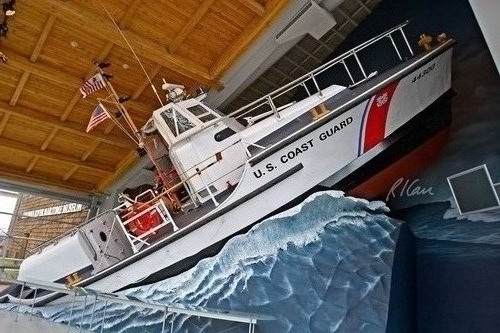
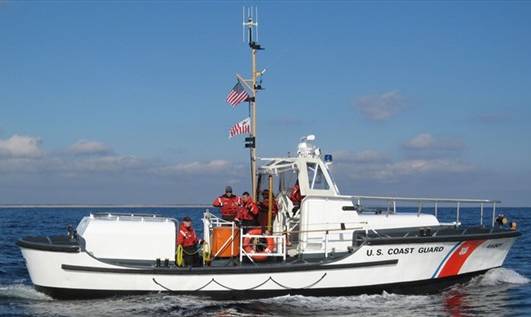
Answer: You don't mention exactly how the pole is configured. In maritime practice, the configuration does makes a world of difference. If you read Navy regulation NTP 13 (B) even the time of day makes a world of difference if you are on a ship!
But even when not on a ship, the US Navy has detailed regulations that require the practice of flying the US flag lower than other flags. It sounds like the yacht club is following that practice. You provide no details so it is difficult to say. To us landlubbers it always seems incorrect at first glance when any flag is flown higher than the American flag. After all, we all "know" that no flag ever flies above the US flag. When it is done, the concept is not that another flag is being put in the position of honor above the US flag. On the contrary. The United States Navy regulation is that the American flag belongs in fact on the "gaff", not on the higher position way up on the main mast. That is, unless there is a "crosstree." involved. In that case, if displayed with a foreign flag, the US flag goes even lower! I am not privy to the history behind the regulation. The gaff seems to be the position of honor. But it is lower than the top of the main mast. Perhaps the concept is that, as a sailing ship of yore moved forward, the gaff leads the way. It is out in front. (WRONG) The gaff is the pole that is attached to a taller pole. It sticks out from the taller pole at a 45 degree angle below the top of the taller pole where another flag may be flying.
I do wonder why my country's navy places a foreign flag on the gaff and places Old Glory on the lower crosstree. Maybe the concept is chivalry? After all, if we were entertaining a foreign guest, wouldn't we extend him or her every courtesy? I don't know about you, but if I were representing my country and hosting a foreign guest, I'd give him the best seat in the house. Maybe that is how the world's sailors see it. Anyway, I am only guessing as to the reason. The fact is simply a matter of my country's navy's regulations.
But the yacht club should easily be
able to set any veteran's mind at ease by simply showing the appropriate naval
regulation. I do not know on what regulation the club bases its decision but it
may be this one:
Navy regulation NTP 13 (B) is the Navy's flag code. It tells everyone in The
Navy all the rules and regulations regarding flying flags. Here is what it says
in part. Bold type emphasis has been added by me.
NTP 13(B)
CHAPTER 8
DISPLAY OF THE NATIONAL ENSIGN AT
U.S. NAVAL SHORE ACTIVITIES
801. GENERAL
"(4) Polemast with Crosstree and Gaff - This is commonly called a "yacht club
mast". Displayed from the gaff. When displayed with foreign national ensign(s),
display U.S. national ensign from outermost halyard on right hand crosstree."
So you see, depending on the pole configuration, the US flag might not even be on the gaff. Since we are on the subject of maritime exceptions to commonly held beliefs we all "know" about the US flag, here is another one: We all know that the US flag is never dipped to another flag, right? Wrong. The regulations of my country's navy do allow my flag to be dipped to a foreign flag if the other flag is dipped first!
Everything I have told you above is based on US Navy regulations. The US Flag code ,which is a guide, not a law, for civilians is by far not as detailed as naval regulations. It is in fact silent on the entire matter of pole configurations and maritime use with the exception of naval church pennants.
Click Here To Return Back To Top
POW/MIA Flag With State FlagsQuestion: Greetings! I am curious to know of the proper etiquette to
fly the POW/MIA flag along with a State Flag on the same pole as the US. I have
seen both the state flag above and below the POW/MIA flag, is there a standard
protocol? Thanks! Chad.<
Answer:
The US Flag Code is silent on the POW flag specifically or on the matter of
state flags taking precedence over non US flags. So I find no help there. It
only establishes that the US flag takes first position. Both the US Army and US
Air Force regulations put state flags ahead of all armed forces flags. Both
those regulations, found on our flag etiquette page, place only the US flag,
foreign flags, and, in the case of the Army, The US President's flag ahead of
state flags. Those armed forces place all other flags after state flags. Yes,
according to those regulations, the flag of North Korea takes precedence ahead
of New York or The United States Marine Corps.
Keep in mind that military rules of flag usage are not binding on civilians.
But I find them a logical guide. Ultimately the matter is left up to the
conscience of the individual. One last variable: some states may have their own
rules or even laws concerning flag display. Your state Attorney General might
respond to such an inquiry.
It seems to me, that in the eyes of the US Air Force and the US Army, a state
flag takes precedence ahead of the POW flag.
Other info about POW flag precedence
Does this help?
Click Here To Return Back To Top
Question: Our organization will now be flying the POW/MIA flag. Our understanding is that this flag should be flown on the same pole as the U.S. Flag. Someone on our staff thinks it has to be smaller in size than the U.S. Flag. Does the size of the POW/MIA flag matter?
Answer: No code I know references the size of the POW
flag. No code I know that governs civilian use says the POW flag must fly on the
same pole as the US Flag. The Flag Code is silent on this question as well as
the question of size.. Even Title 36 of the US code is silent on that question.
That code does say "(f) Display To Be in a Manner Visible to the Public.—
Display of the POW/MIA flag pursuant to this section shall be in a manner
designed to ensure visibility to the public. "
Many questions of flag etiquette are simply not dealt with in the codes. Ask
the person on your staff what his source is. He likely does not have a
source. That having been said, perception is reality. Many people think a second
flag must be smaller than the US flag. Those people may think you are doing it
wrong unless you make the POW flag smaller. At my business, the POW flag is
below the US flag on the same pole, and it is smaller.
Here is what The Institute of Heraldry says about it.. The Institute answers
questions regarding flag usage in The US Army.:
"DISPLAY OF THE POW/MIA FLAG. Display of this flag is covered by Section 902,
Title 36 of the United States Code. The POW/MIA flag should be flown beneath the
flag of the United States, if displayed on the same pole. The US Code does not
address display of the POW/MIA flag with organizational flags. The order of
display would therefore be at the discretion of the organization."
Click Here To Return Back To Top
Flags On BuildingsQuestion: Where does the Flag get put in front of a
building? We are having a discussion on where to put the flag. I was told it is
put to the right of the building as you look at the building. Also some one said
it has to be in the middle front of the building. So would you PLEASE help me on
this problem?
>
Answer: You can put it where ever you want. The Flag Code only says where
to place the flag relative to other flags. So if you were putting up two or
three poles, it says where to put the US flag in relation to the others. It does
not spell out a correct or incorrect position on or near a building when it is
displayed by itself. I would put it where it looks best.
Anyone who said it has to go in the middle or in any other specific position should be asked what code is the source of that information.
Click Here To Return Back To Top
CARS: How to position flags on carsQuestion: I work at a limousine company and we supply hearses to the local funeral homes. We have a set of military flags and the American flag which are on the front of the hearse to honor the deceased. The deceased always enters the hearse feet first. So my question is which side of the hearse should the American flag be on and which side should the military flag be on? Thank you in advance for your help! DC
Answer: You don't spell it out specifically, but let's say you are mounting the flags on the front of the vehicle. Old Glory would go on the right fender, any other flag on the left. The US Flag Code is silent on this point. But West Point and The President do it like I say above. I figure, if it is good enough for those folks, it is good enough for me!
Here is what the US Army's regulations say:
(4) When the flag of the United States is displayed from a vehicle,the staff of the flag will be clamped firmly to the right frontfender.
If you go to our etiquette page, you can click on links to the US flag code and also the US Army's regulations courtesy of West Point's Protocol office. Thanks for caring enough to want to get it right.
Click Here To Return Back To Top
Question: I manage a group of buildings that display several American flags. I was wondering what is the proper way to dispose of American flags when they need to be replaced. Thanks for your time. Fredericksburg VA
Answer: Dear Mr __Here is exactly what the US Flag Code says about retiring flags:
(k) The flag, when it is in such condition that it is no longer a fitting emblem for display, should be destroyed in a dignified way, preferably by burning.
Notice that the code does not say the flag must be burned. It says burning is preferred. It also does not say that only Boy Scout Troops or The American Legion may do the burning. This belief sometimes gets brought up, but, unless some state or municipality has some local law to this effect, it is an urban myth. According to the US Flag Code, private individuals are permitted to retire the flag in this manner. However, those fine organizations and others do it in an organized way, often with a ceremony that can be quite moving to attend. I have also seen where The Girl Scouts have a ceremony that includes first cutting the retired flags into strips before they are burned. But the US Flag Code does not require that step. The Flag Code is also silent on what method other than burning would be considered dignified. As with many things in our beloved country, that decision is left to the dictates of our own respective consciences. But I have always stuck with burning. We used to just do it ourselves at my shop or at my home. But then I came to find out that towns have laws against the opening burning of anything and had to stop. Therefore, I save up flags that people drop off at my shop. When I see that a veterans organization or scout troop is having a retirement ceremony, I bring them there. Sometimes quite some time goes by and I have boxes of them. But I always find an outlet. Some VFW posts in our area have a wonderful idea. They have taken old mailboxes and repainted them in a red/white/blue theme. These are the giant mailboxes found on city streets. They put a sign on them saying "old flag drop off" or words to that effect. This is a wonderful service.
After all the years in this business some things still move me a great deal. One of them is the care that many folks take when it comes time to say goodbye to a worn out flag. Here is my favorite story in that regard. I got a call from what was clearly the classic "little old lady". She wanted to know how to go about disposing of her worn out flag. I told her about burning it and told her if it is not possible for her to do so she could bring it to our shop. She asked me many questions about how we would handle the flag, how we would treat the flag, where we would bring it. Would it be done the right way? She was very concerned and very involved. She needed to satisfy herself that her Old Glory would be handled with the care it deserved for its final service. All her questions answered, she thanked me and we said good-bye.
You could appreciate the next part of the story better if you knew the layout of our shop. Our building was not built as a commercial building and the shop entrance is all the way around the back. I admit it is a long walk for some people and it can be quite an effort to get around there. In fact, anymore when I see a person making their way in who is challenged by the walk, I just head them off in the parking lot to save them the effort. Nowadays with cell phones, disabled people sometimes just call us from the parking lot or call ahead so we can watch for them. Anyway, later that day I was sitting at my desk in my office from where I can see our parking lot. A car pulls up and out gets a little old lady. I did not yet know it was the same lady who called. I watch her slowly begin the march around to the entrance and I proceeded into the shop area to meet her. After a moment she comes in and approaches the counter saying she had called about having a flag to retire. But I see no flag. Out of here purse comes the tiniest of 4x6" American flags on a little stick! That is smaller even than the typical flag you get at a parade. It is a desk size flag. She had made that call, asked all those questions, driven to my shop and made that march just to be sure that her tiny little flag would get the respectful retirement it deserved. When I see our American Flag neglected, worn and faded beyond recognition yet still being displayed, I just think of that little old lady, of her long march, and I just smile.
I also note with interest that you write from Fredericksburg in our great sister state of Virginia. There was a day not all that long ago where many thousands of guys also went to a great deal of effort on behalf of their flags. Thanks for wanting to do the right thing
Question: We were discussing proper flag disposal and
that brought up the question of what actually constitutes an American flag. Is a
flag decal considered an actual flag or just the representation of a flag?
Does the decal deserve the same disposal etiquette as an actual flag? How about
a lapel pin? Or those very small flags that some people fly on their cars?
Thanks, T.H. Elkhart, Indiana
Answer: The Flag Code is silent on these matters. Much of
what the code does is to leave many things up to our own discretion, common
sense and interpretation. We all get to decide for ourselves how long a list of
items constitutes a flag for purposes of retirement and disposal. I think a good
cut off is on the material.
To me personally I make a distinction between fabric and metal. I consider the
small car flags or small flags on sticks still to be flags worthy of not being
simply thrown away. I consider flags on postage stamps or printed in the
newspaper not to be flags for retirement ceremony purposes and able to be just
thrown away. You can bet that every day in Congress, The White House and The
Pentagon they also simply throw in the garbage images of flags printed on paper.
I would consider flag decals to be in the category of postage stamps and paper
products.
Same thing with metal. I would not consider a flag pin or any other rigid
material to constitute a flag for this purpose. If the standard were to give ANY
representation of a flag the same retirement standard we give to the flags we
fly on poles, would the activity still have meaning? Can you imagine millions of
us every day busy sorting out every paper image of a flag that we come across?
If we were to really sort out every postage stamp, worn out decal, newspaper
image, photograph and on and on, would the activity still have meaning?
Not in my mind. But again, until some definitive list appears in The Flag Code
that gives us guidance for many thousands of items that may portray a flag, we
are all left to decide the matter for ourselves. But that is why we live in The
United States of America. One important point: Your state may have laws
regarding this matter.
If you want to include more rather than fewer items, there certainly is no fault
in it.
As with most answers to flag etiquette questions, there is no one answer. I hope
this response helps. Does it?
Click Here To Return Back To Top
Pole OrnamentsQuestion: Hello. The college I work at is looking into buying some new top ornaments for the 2 flag poles (U.S. flag and MN state flag) displayed on our auditorium's stage. The question came up about having the eagle on top of both poles, or only have the eagle on the U.S. flag's pole and a star, ball or other ornament on top the state flag's pole. Is there any rule to follow regarding the use of a top ornament? Would the eagle be okay on top of each, or is the eagle only supposed to be used on the U.S. flag's pole?
Answer: Good question. The answer has several components. First, the US flag code is silent on this issue. It says nothing about only the US flag being able to take the eagle. So there is no help from that source. Second, in my experience, most civilian users do use eagles on both. Third, however, there is a tradition, which I personally adhere to, for using the eagle only on the US flag and some other ornament on the other flags. I just feel it reserves a special distinction for the US flag. Many people do follow this method. I suggest a round spear. Fourth, it is possible that your state has enacted some type of law in this regard. Individual states do have various rules about flag usage and I do not know yours. Maybe ask your Attorney General's office. Fifth, the military quite certainly has rules of flag protocol that apply to this and other issues. Click on the link above to West Point Protocol Office. I have seen this question addressed in those army regulations. Military regulations are not binding on civilian situations. As well, the various military branches can have rules that disagree with each other. To sum up, absent any local or state ordinance, in my opinion, it is proper for you as a civilian to use eagles on both flags OR to reserve the distinction of the eagle for the US flag. Either way is proper. I feel the eagle, our national bird, is best reserved for Old Glory. Does this help?
Click Here To Return Back To Top
Funeral FlagsQuestion: My father passed away two weeks ago. My mother was presented the flag from the ceremony, the spent cartridges form the salute were passed to me. I thought that since the cartridges were also given to us, it would be fitting to display them in the case with the American flag. However, I have been searching websites for display boxes, and none of the flag display/shadow boxes are ever shown with the cartridges. Is it proper to display the brass with the flag?
Answer: I am sorry for your loss. Yes it is. People display patches, medals and all kinds of things with the flag. The Flag Code does not prohibit personal effects from being displayed with a flag. We have a display case in our shop that has extra compartments for mementos. If you are local to us come in and see it. Otherwise, give me a couple days and I will add it to the selection of cases on the web site so you can see it.
Question: The second questions concerns two memorial flags that my father had stored away. One was from his sister who never married, my father had been presented with her flag. The other was from an unmarried friend of the same aunt's. She had been presented that flag years ago. What is the proper disposition of these flags? They, of course, are beautiful and we would be proud to fly one of them, but I feel that may not be proper etiquette. Should they be retired?
Answer: It is quite proper to display these flags. In fact, it is a moving tribute. Such flags from funerals are usually 5 x 9.5' so they are too large to display from a pole in a bracket. They are by rights also too large for most home in-ground poles. Since they would be oversize for those types of poles, display them only on a calm day during good weather because they will stress the pole much more that a properly sized flag. Do it with care to protect your pole, and only during that time of calm weather. You could damage your pole with such an oversize flag. OR you could just display them vertically on an exterior wall or hanging down from a porch. Stars would to in the upper left corner as you view the flag. Flags from funerals are almost always cotton which is the least durable fabric for outdoor display. To extend their life some people display them just once in a while on selected holidays or special days. You might display them say on Memorial Day or on the person's birthday.
OR, you could put them folded in the flag display cases for display in a room.
OR, you could donate them to a fire company, school or house of worship that might have a pole big enough to actually handle them for normal continual use. Your departed loved ones might like the notion that their flags are serving in that manner. Look how this Boy Scout leader gives honorable new life to funeral flags that are languishing in closets:
<<As a retired
Funeral Director & current Scoutmaster, I also thought you could include a great
tip for those flags. I have 12 of them in our troop. People have given them to
us following funerals (usually of aunts, uncles, etc) when they really had no
use or desire to keep them. We honor those flags by caring for them and using
them to teach our new scouts about flag folding, presenting, caring, etc. We
also publicly collect flags to retire at each of our monthly campouts AND
publicly on Memorial Day.
So, the suggestion for funeral flags: Contact your local Boy Scout Troop and let
them have them for training purposes!>>
The flags will of course then eventually wear out just like you and I will. At that time they would then be properly retired, preferably by being burned up in a respectful manner as suggested by The US Flag Code.
Also don't be concerned if the flags happen to have 48 stars. Historic versions of Old Glory are proper to display and retain all the honor and respect due to our current day flag.
In short, special memorial flags need not be hidden away. During aftermath of the 911 crisis, when there was a nation wide flag shortage every flag seller had lines more than an hour long. In one of the most moving things I have experienced in my decades as a flag dealer, a lady showed up at our shop and gave away to strangers the funeral flags from her WWII Veteran husband and her Vietnam Veteran son. Those flags were able to stand watch when here loved ones no longer could. I hope this helps Thank you for being concerned about how your flags are used.
Click Here To Return Back To Top
Question: Hey Guys, My Dad passed away Aug. 20 this year (83 year old WWII Vet) and we
had the flag presented to his oldest living brother who in turn passed away in
October. My Aunt called and asked me to pick the flag up and give it to one of
the grandchildren (my two sons). My brother has stated that he wants it. He
served about 2 years in the army and was given a general discharge. My personal
belief is that he doesn't deserve it as it would be an injustice to my Dad's
record but I don't want to cause any hard feelings. Is there a protocol in this
matter as to who should receive the flag? Thanks
Answer: I am sorry for your losses. I am also sorry to tell you, but there is no answer
to be found in The US Flag Code. That is the code that is meant to be a guide
for civilians. It is silent on who gets the flag from a funeral. There just is
no protocol known to me that addresses this exact situation. You might study the
Army Regulation 840 found on West Point's Protocol Office web site and linked
from our own etiquette page. The relevant section only states that the "The
internment flag may be given to the next of kin at the conclusion of the
internment." Even that regulation does not specify how it is decided who shall
be the next of kin. It also states who even gets to have a flag on the coffin at
a military funeral. Pardon my ignorance, but my understanding is that a general
discharge is less than an honorable one. The army regulation does not apply to
civilians who are free to do as they wish. But maybe their regulation provides
some kind of guidance for you. The Army Regulation does say the flag goes to the
next of kin. That current next of kin in your own family chain of those who have
had the stewardship of this flag has made her decision. However, what you have
is a family matter that will require more insight and guidance than I can
provide. What would be an injustice to your Dad's record I can hardly say. I
wonder what your Dad would say. If you could all divine that which his intent
would be, you would have your answer. Your situation calls for an answer that
any code or regulation can not have anticipated. I am afraid I do know know that
the answer is, or if there even is one. Does any of this information help?
Here is what Army regulations say about the matter of military funerals
>>
i. Lowering and folding.
(1) While the flag of the United States is being lowered from the
staff and folded, no portion of it should be allowed to touch the
ground. The flag should be folded in the triangular shape of a
cocked hat. (See fig 2-10).
(2) For the ceremonies of hoisting and lowering, see FM 22-5.
j. At military funerals.
(1) The internment flag covers the casket at the military funeral
of any of the following:
(a) Members of the active military force.
(b) Members of the Army National Guard.
(c) Members of the Army Reserve.
(d) Honorably discharged veterans.
(e) Retired military personnel.
(2) On a closed casket, the flag will be placed lengthwise, with
the union at the head and over the left shoulder of the deceased.
When a full-couch casket is opened, the flag will be removed,
folded to the triangular shape of a cocked hat and placed in the lid
at the head end of the casket and just above the decedent’s left
shoulder. When a half-couch casket is opened, the flag will be
folded on the lower half of the casket in the same relative position
as when displayed full length on a closed casket. The flag will not
be lowered into the grave, and it will not be allowed to touch the
ground. The internment flag may be given to the next of kin at the
conclusion of the internment. (See figs 2-11 and 2-12).
Here is what is required of the Department of Defense in the rendering of military funeral honors for veterans and as codified in :Title 10, Chapter 75, Section 1491, U.S.C:
>>(c) CEREMONY. A funeral honors detail shall, at a minimum, perform at the funeral a ceremony that includes the folding of a United States flag and presentation of the flag to the veteran’s family and the playing of Taps. Unless a bugler is a member of the detail, the funeral honors detail shall play a recorded version of Taps using audio equipment which the detail shall provide if adequate audio equipment is not otherwise available for use at the funeral.<<
Question: Is it appropriate to have more than one internment flag for presentation at the grave?
Answer: Yes. From these pictures of Richard Nixon's funeral you can see that both of his daughters were presented a flag: CLICK TO ENLARGE

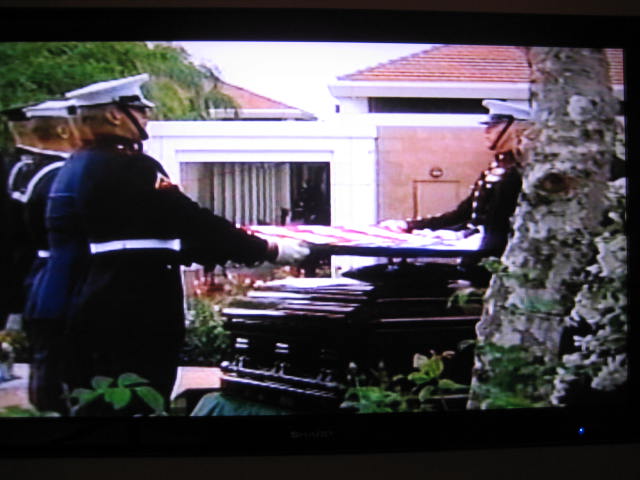
 CLICK TO ENLARGE
Click Here To Return Back To Top
Presenting Flags: Only for military?
Question: I sit on an elected board for my community. One of our board members re-enlisted in the Marines. At his last meeting before going away a group of his political supporters had an American Legion Post present to him a folded flag in a wood box. After the Legion members left the room one of his supporters requested (demanded) that the flag in its box should be placed in front of his seat at board meetings until his return.
Privately the board members agreed that we would not consent to the request. One of the members is a former member of the armed forces and said the presentation was inappropriate. Such a flag is presented only to the family of a fallen hero or upon death of a former member of the service or it is presented to a member of the military after long service. What say ye?
Answer: A flag may be presented to anyone.
There are many things going on here and an unfortunate misconception is involved that I have begun to see recently. It is incorrect that a flag may only be presented to military people or their families. There is not one thing in The Flag Code that even hints at that concept. I know of no published protocol that says a commemorative flag folded into a triangle and presented in a case is inappropriate for those who have not died or who are civilians. In fact, we are near West Point, and they do it all the time for civilian workers who are retiring or being transferred.
I would like to see a reference found in the several flag codes of each of the armed forces that deems such a presentation inappropriate. There is a link to the Army regulation 840 on our etiquette page. Each armed force has its own such document. I would ask the former armed forces member what his source is that deems it inappropriate. I was recently sent such a flag in a case with a certificate by some guys serving in Afghanistan right now who appreciated some things I did for them. The certificate was signed by their three star general. I am a civilian and they know it. They still presented me with a flag.
The flag is for all who love it.
Accompanying this misbelief that a flag can only be presented to a veteran is the related misbelief that a flag may only be used to drape the coffin of a veteran.
I recently heard from a fireman who said his department would not allow a flag to be used at a departmental funeral because the deceased fireman had not been a veteran. There is nothing in The Flag Code to support that restrictive decision. The letter writer was working on behalf of the poor widow who wanted the flag to drape the coffin. The bosses were telling them "you show me where it says a civilian can have a flag on his coffin. If you can not do so, then he can not have a flag." That was wrong.
In fact, the flag code specifically instructs us how to do so:
TITLE 4 > CHAPTER 1 > § 7
§ 7. Position and manner of display
(n) When the flag is used to cover a casket, it should be so placed that the
union is at the head and over the left shoulder. The flag should not be lowered
into the grave or allowed to touch the ground.
BUT HEY AL, THERE IS NOTHING THERE THAT SAYS CIVILIANS MAY BE GIVEN THAT HONOR!!!
Oh yes there is. the very presence of the practice showing us how to do it is proof that the practice is proper for civilians because The Flag Code IS, for civilians. REPEAT: Everything in the Flag Code is to guide civilians on proper flag display and protocol. Don't believe me? Well then, believe The Flag Code. It tells you so at the very beginning. Just read it.
>>TITLE 4 > CHAPTER 1 > § 5
§ 5. Display and use of flag by civilians; codification of rules and customs;
definition
The following codification of existing rules and customs pertaining to the
display and use of the flag of the United States of America is established for
the use of such civilians or civilian groups or organizations as may not be
required to conform with regulations promulgated by one or more executive
departments of the Government of the United States.<<
The armed forces each has their own flag regulations. These incorporate The Flag Code and then go into way more detail. If you are in the Army, you do it Army way. If you work for the Department of Defense or The State Department, your department surely has lots of its own flag regulations.
If you are a civilian, then the flag code was written with you in mind because you have no "regulations promulgated by one or more executive departments of the Government of the United States" with which to comply!
However, I can not speak to the other component of your situation regarding the flag being presented during a town meeting or being placed at the absent board member's seat until he returns. Those matters become more of a discussion of politics, personalities, decorum and even parliamentary procedure. Those issues are for wiser minds than mine and are, as they say, "above my pay grade." The Flag Code is silent on these two situations.
Click Here To Return Back To Top
Question: Is someone who is NOT a veteran but IS a police officer or fireman entitled to receive an American Flag at his funeral? I don't have any idea where to find it in the flag code –have researched it but could not find any ruling. H.H.
Answer: This is a common misbelief.
The flag is for all who love it. Ask anyone who tells you otherwise to show you
the source of this supposed prohibition.
The answer is right in the very code you are reading. That code was written FOR
CIVILIANS. Don't believe me? Fair enough. Then just read The Code and believe
it.
Accompanying the misbelief that a flag can only be presented to a veteran is the
related misbelief that a flag may only be used to drape the coffin of a veteran.
I recently heard from a fireman who said his department would not allow a flag
to be used at a departmental funeral because the deceased fireman had not been a
veteran. It was heart breaking because the widow dearly wanted a flag on the
coffin. There is nothing in The Flag Code to support that restrictive decision.
The letter writer was working on behalf of the poor widow who wanted the flag to
drape the coffin. The bosses were telling them "you show me where it says a
civilian can have a flag on his coffin. If you can not do so, then he can not
have a flag." That was wrong. They merely had to READ THE CODE.
In fact, the flag code specifically instructs us how to do so:
TITLE 4 > CHAPTER 1 > § 7
§ 7. Position and manner of display
(n) When the flag is used to cover a casket, it should be so placed that the
union is at the head and over the left shoulder. The flag should not be lowered
into the grave or allowed to touch the ground.
BUT HEY AL, THERE IS NOTHING THERE THAT SAYS CIVILIANS MAY BE GIVEN THAT
HONOR!!!
Oh yes there is! Just read The Code. The very presence of the practice showing
us how to do it is proof that the practice is proper for civilians because The
Flag Code IS, for civilians. REPEAT: Everything in the Flag Code is to guide
civilians on proper flag display and protocol. Don't believe me? Well then,
believe The Flag Code itself. It simply tells you so at the very beginning. Just
read it.
>>TITLE 4 > CHAPTER 1 > § 5
§ 5. Display and use of flag by civilians; codification of rules and customs;
definition
The following codification of existing rules and customs pertaining to the
display and use of the flag of the United States of America is established for
the use of such civilians or civilian groups or organizations as may not be
required to conform with regulations promulgated by one or more executive
departments of the Government of the United States.<<
So, there you have it where The Flag Code is telling you that everything in it
is meant to explain to civilians how to use, treat and display their flags. The
Flag Code meant to guide civilians does not contain within it detailed
instructions how do drape a coffin with a flag if civilians are prohibited to
have a flag on their coffin.
Now of course, the armed forces each has their own flag regulations. These
incorporate The Flag Code and then go into way way more detail. If you are in
the Army, you do it Army way. The different armed forces have conflicting rules
within their respective codes. If you work for the Department of Defense or The
State Department, your department surely has lots of its own flag regulations.
HOWEVER, if you are a civilian, then the very Flag Code itself tells you that it
was written with you in mind because you have no "regulations promulgated by one
or more executive departments of the Government of the United States" with which
to comply!
Here is a shorter answer: Funeral Flags For Civilians: Flags on caskets are NOT for military personnel or veterans only. The Flag Code specifically states that its very purpose is to guide civilians on proper flag usage. It then explains how to use a flag on a casket. "When the flag is used to cover a casket, it should be so placed that the union is at the head and over the left shoulder. The flag should not be lowered into the grave or allowed to touch the ground." It is simply not true that The Flag Code prohibits civilians from being honored with a flag on their casket. See the flag etiquette page on our web site for extensive flag protocol info. Anyone who tries to tell you that a civilian may not have a flag on his casket should be asked to tell you the source for this prohibition. Then, when he can not show you the source, show him The Flag Code which was created to tell civilians how to display flags. Military funerals are an entirely different matter. They are clearly only available for armed forces members and veterans. Military funerals include traditions and honors to which civilians are not entitled. A flag on the coffin is not one of those honors. Both military funerals and civilian funerals may use flags on coffins. Just look in The Flag Code. I am not making it up. The Flag Code simply says so.
Click Here To Return Back To Top
Question:
My father’s funeral included an Air Force Honor Guard in which the flag from the
coffin was presented to my mother. The words spoken to her by the soldier were
very touching and special. They included, “… on behalf of the President of the
Answer: Air Force Honor Guard Basic Protocol, Honors and Ceremonies Gives the answer:
5.3.2.9. NCOIC/OIC hands off
flag to next of kin, says the message of condolence, and renders
slow salute.
5.5.3.14. The NCOIC/OIC presents the flag to the next of kin and recites the
message of
condolence, followed by a slow salute to the flag and departure.
5.5.3.15. The message of condolence is; On behalf of the President of the United
States, the Department of the Air Force, and a grateful nation, we offer this
flag for the faithful and dedicated service of (state service members rank and
name).
Fringe: On The American Flag. No, it does NOT mean we live under martial law The following is quoted verbatim from the Institute of Heraldry web site
Gold fringe is used on the National flag as an honorable enrichment only. It is not regarded as an integral part of the flag and its use does not constitute an unauthorized addition to the design prescribed by statutes.
Records of the Department of the Army indicate that fringe was used on the National flag as early as 1835 and its official use by the Army dates from 1895. There is no record of an Act of Congress or Executive Order which either prescribes or prohibits the addition of fringe, nor is there any indication that any symbolism was ever associated with it. The use of fringe is optional with the person or organization displaying the flag.
A 1925 Attorney General’s Opinion (34 Op. Atty. Gen 483) states:
"The fringe does not appear to be regarded as an integral part of the flag, and its presence cannot be said to constitute an unauthorized additional to the design prescribed by statute. An external fringe is to be distinguished from letters, words, or emblematic designs printed or superimposed upon the body of the flag itself. Under the law, such additions might be open to objection as unauthorized; but the same is not necessarily true of the fringe."
It is customary to place gold fringe on silken (rayon-silk-nylon) National flags that are carried in parades, used in official ceremonies, and displayed in offices, merely to enhance the beauty of the flag. The use of fringe is not restricted to the Federal Government. Such flags are used and displayed by our Armed Forces, veterans, civic and civilian organizations, and private individuals. However, it is the custom not to use fringe on flags displayed from stationary flagpoles and, traditionally, fringe has not been used on internment flags.
Then there is this from THE TAX PROTESTER FAQ Created by Daniel B. Evans Copyright © 2002-2007. All rights reserved. Not legal advice.
>>>If the flag of the United States that is in the courtroom has a gold fringe, then the court is operating under martial law.
There is actually some interesting history behind this nonsense.
There is a federal statute that defines the American flag as thirteen horizontal stripes, alternate red and white, with a “union” of a blue field with one white star for each state. 4 U.S.C. §§ 1 and 2. The statutory definition says nothing about any kind of fringe of the kind often used on ceremonial flags displayed indoors, and at some point someone in the military wondered whether a flag with a fringe was “legal.” In 1925, the Attorney General issued an opinion that a fringe “does not appear to be regarded as an integral part of the Flag, and its presence cannot be said to constitute an unauthorized addition to the design prescribed by statute,” concluding that “The presence, therefore, of a fringe on military colors and standards does not violate any existing Act of Congress. Its use or disuse is a matter of practical policy, to be determined, in the absence of statute, by the Commander in Chief....” 34 Op. Atty. Gen. 483 (May 15, 1925).
Perhaps you can see where this is going? Because the Attorney General expressed the opinion that the President as Commander-in-Chief can put a fringe on military flags, tax protesters have leapt to the conclusion that all flags with fringes are military flags. This idea has been flatly rejected in numerous court decisions. See, e.g., McCann v. Greenway, 952 F. Supp. 647 (W.D. Mo. 1997); United States v. Greenstreet, 912 F.Supp. 224, 229 (N.D.Tex.1996) (“To think that a fringed flag adorning the courtroom somehow limits this Court’s jurisdiction is frivolous.”); Vella v. McCammon, 671 F.Supp. 1128, 1129 (S.D.Tex.1987) (rejecting argument that a federal court lacks jurisdiction to impose penalties for civil and criminal contempt because its flag is fringed); Commonwealth v. Appel, 438 Pa.Super. 214, 652 A.2d 341, 343 (1994) (rejecting argument that a fringed flag in a state courtroom conferred on the court admiralty or maritime jurisdiction).
In Leverenz v. Torluemlu, 1996 WL 272538, at *1 & n. 3 (N.D.Ill. May 20, 1996), the court noted that the complaint named as defendants a judge, a state attorney general, a doctor, several police officers from different communities, and 600 unnamed John and Jane Does and that “[s]ome idea of what is to come is provided by this legend that Leverenz attaches to his ‘Complaint’ heading: “This case is under the jurisdiction of the American flag of peace of the United States of America. No flags of war will serve this case jurisdiction.” (In National Auto. Dealers & Assocs. Retirement Trust v. Arbeitman, 89 F.3d 496, 502 (8th Cir.1996), a later motion in the Leverenz case was described as “bizarre.”)<<<
Click Here To Return Back To Top
Flag Myths
If the flag touches the ground it must be burned: False. The code does say the flag should not be allowed to touch the ground but there is no requirement in the code that a perfectly good flag needs to be burned if it does so
Only The American Legion or The Boy Scouts are allowed to retire US flags by burning them: False. Those fine organizations are not the only ones allowed to do so and do not claim to be. They both have fine ceremonies to retire worn flags. Other groups such as The Girl Scouts do too. As well, any private person may do so on his own. The Flag Code only calls for a worn out flag to be "destroyed in a dignified way, preferably by burning." It does not restrict flag retirement by burning to any one group. In fact, it does not restrict the destruction to burning.
The gold ball on top of a flagpole contains a razor blade, a match and a bullet: False. I've seen inside lots of gold balls and have never seen anything in there other than New York air. This myth gets told in different variations and is invariably accompanied by an explanation something like this: As the invading hoards are bearing down on his hopeless position, the last man standing can at least have time to get the razor blade, shred the flag, burn the pieces and then do himself in with the bullet. The story never includes the explanation as how he is supposed to get up to the top of the flagpole.
The gold fringe on a flag is proof that we are living under martial law: False. Fringe On Flags
It is improper to fly the American flag in the rain: False. The Flag Code Title 4, Chapter 1, Section 6 specifically allows this practice if "an all weather flag is displayed." The code is silent on what an all weather flag is, but the intent sure sounds like it means a flag that is able to stand up to the conditions. Even very light weight flags can do so. They just will not do so as long as the better models.
The Texas state flag may be placed in a position of superiority to The US flag because a) This flag protocol was a condition for Texas coming into the union or b) Texas was once a sovereign nation: False. The next time someone tells you this information show him the Texas flag code Texas Flag Code . Of course it is true that Texas was indeed an independent republic having won its independence from Mexico. Before gaining her independence, our Great Lone Star State was a state of Mexico in the way that it is now a state of The United States of America.
The flag should be
half staffed because we are at war: False.
I
received this inquiry via email: >>I
have a quick question I hope you may be able to help with. I have a friend
whose wife works at the local community college. She was approached by a
supposed veteran and read the riot act because the flag in front of her building
was not at half staff. His reasoning for it needing to be at half staff is
because our nation is at war. I searched your site as well as the VFW site and
could find no such ‘rule’. This guy had pushed his complaint all the way up the
chain until the flag out front of the college was lowered.
If I have missed something within the code I would sure like to know. Any
insight would be greatly appreciated.
X.X. Veteran U.S.A.F>>
MY RESPONSE: "The flag does not get half staffed because we are at war. The guy reading the riot act should be asked for the source of his information. There is none. I know of no code or regulation that says any such thing. The entire Flag Code in every word of its legalese is linked at the top of this page. Show me where is says any such thing. The college should be asked what on earth it is doing. Incorrectly altering their flag display because they have been yelled at? Just look at the flag on The White House and on The Capitol building. They are at full staff too. Flags are at full staff at every school, town hall, post office and government building nation wide. I find that when guys come in off the street and yell at a business or an institution over some supposed flag infraction, they are often wrong and way off base. Often the perceived infraction is based on some fantastic flag myth. I had another inquiry from a large corporation that had been dressed down because they had a bench within 50 inches of their flagpole. The guy doing the yelling claimed it was disrespectful and a breach of some law about the flag. He declined to provide the source of his "information." These kind of things happen all the time. Guys off the street doing that kind of yelling can easily get nice folks feeling like they are doing something wrong. Guys off the street should be thanked for their concern and then asked for the source of their information. If they actually have one or actually have a valid concern, they should be happy to share it. Thanks for visiting my web site. There is loads of info there about flag half-staffing."
Nothing is allowed to be within (fill in the blank) inches of a flagpole: False. Read the response directly above.
I was recently told that it's illegal to re-sell a used US flag. True or
false?: False. Ask whomever told you
that the source of the information. US flags are re-sold all the time at yard
sales, antique shops and at auction. I have never heard even one inkling of a
notion that the practice is illegal. There is not one slight of anything related
to reselling US flags in The Flag Code. I have never heard of any state or local
law to that effect.
Click Here To Return Back To Top
Pledge of Alegiance:
Demeanor
Question: I'm hoping you can help clarify an issue regarding etiquette while saluting the flag. I was recently told that one should not hold anything in his hands while saluting the flag (purse, papers, etc.). I am part of an organization where young children routinely pledge allegiance to the flag. I would like to pass this etiquette on to them, but would prefer to find it in writing. So far I have been unsuccessful in my search. Do you know if that is proper etiquette, and if it is, where I might find it officially stated? Thank you
Answer: I apologize for the slight delay in responding to your e mail. I was out of
town. Thanks for being so interested in getting it right.
United States Code, Title 4, Chapter 1- The Flag (commonly referred to as the US
Flag Code) does indeed have a subsection titled "§ 4. Pledge of allegiance to
the flag; manner of delivery". For your convenience I quote it to you here in its
very simple entirety:
"The Pledge of Allegiance to the Flag: “I pledge allegiance
to the Flag of the United States of America, and to the Republic for which it
stands, one Nation under God, indivisible, with liberty and justice for all.”,
should be rendered by standing at attention facing the flag with the right hand
over the heart. When not in uniform men should remove any non-religious
headdress with their right hand and hold it at the left shoulder, the hand being
over the heart. Persons in uniform should remain silent, face the flag, and
render the military salute."
The Flag Code does not prohibit holding anything in hand. The Flag Code is
intended as a model of conduct for civilians who are not governed by other
codes. For example, each branch of the armed forces has more detailed
regulations that may differ from the above code which intended for civilians.
I would ask the person who gave you that information to also give you its
source. A common response is 'that is how we did it in the Army, the Navy, etc."
That may be. But if you are in a civilian organization, you are governed by the
US Flag Code.
There is one further point. Every state has flag laws. Check with your state's
Attorney General.
Click Here To Return Back To Top
Repairing Flags
Question: Hi, I work at an elementary school in a suburb of
Minneapolis, MN. We fly a State flag along with the American flag. One corner of
our state flag has frayed (about 3"x3"). The flag is approximately 5 fett by 8
feet in size. Would it be proper etiquette to cut out the frayed area and rehem
the flag and then continue to use it? The rest of the flag is in very good
condition..
Answer:
Thanks for asking. Yes, it is entirely proper flag etiquette to repair flags. It is done all
the time with US flags. We call it a "cut and re-hem repair." It becomes a
judgment call about how short to make the flag and still have it look good. A
stitch in time saves nine. Repairing small tatters can prevent them from
becoming foot long tears. Nothing in The Flag Code forbids it. In fact,
maintaining your flags is a way of showing respect.
The same concept applies to cleaning a flag. If your flag can take it (not every flag can!!!) it is proper flag etiquette to put it in the washing machine. Ask the store where you bought it. Only outdoor flags of modern outdoor fabric (our Eagle sm nylon or Iron Man sm Polyester) and manufacture should go in the washing machine. CAUTION: Never put an old flag or a worn flag in the washing machine. Fringed flags should also not be put in the washing machine. It is also proper flag etiquette to have flags dry cleaned. Ask your dry cleaner if his process will damage your flag. Or if your outdoor flag is of modern outdoor fabric and manufacture, you can hand wash it in mild soap and cold water. Don't put flags in a dryer. Don't leave them piled up wet or leave them wet in the washing machine. Don't try to clean flags of a delicate fabric yourself.
Click Here To Return Back To Top
Question: I'm a retired active duty
Soldier work as a Career Counselor for the Wyoming Army National Guard working
in a local Armory and serve as a Honor Guard member honoring veterans who have
passed away so everyone looks to me for answers for these kind of questions. I
had a local veteran ask me about wearing a Flag replica patch on the front of an
organization vest:
- How and which side would you display a Flag patch on the front of a vest?
- Based on the information in your Q & A section referencing Flags on a uniform
- "Therefore, the lapel flag pin being a replica, should be worn on the left
lapel near the heart". - Would the correct answer be - a Flag
replica patch worn on the front of a garment would be placed on the left side
with the stripes pointed toward the outside of the clothing and the stars
closest to the heart - Is that correct? THANKS for your information
and help making sure our Flag is properly displayed and cared for! PZ,
Wyoming
Answer: Sir. Thank you for your inquiry. I appreciate your recognition of
my effort to share info that serves those who want to "get it right". I
appreciate the thought you have put into the inquiry you've received. I see you
must get a regular stream of these kinds of questions so I bet you have noticed
as you research them that most of the time there is no one answer. The Flag Code
leaves more things unanswered than it answers.
Much of the time situations are left up to our own discretion. Also, much of the
time we are left to draw a logical conclusion based on some clue the code gives
to some similar situation. That is often all you can do. This is one of those
times.
Assuming this is for civilian use and not active duty use, I would give the
exact solution you suggest. IF the question were applied to active duty military
then that service branch's own military flag regs would apply. Each branch has
its own regs and they often differ with each other!
As regards flag patches, I agree with your solution to place the patch on the
left breast with the stars in the upper left corner of the patch. Here is what
the Institute of Heraldry says about patches
The following text is quoted verbatim from the FAQ section on The Institute Of Heraldry Web Site
PATCH
WEAR OF THE AMERICAN FLAG PATCH.
- The US Code states "no part of the flag should ever be used as a costume or
athletic uniform. However, a flag patch may be affixed to the uniform of
military personnel, firemen, policemen, and members of patriotic organizations.
The flag represents a living country and is itself considered a living thing.
Therefore, the lapel flag pin being a replica, should be worn on the left lapel
near the heart."
-The US Code does not address the positioning of the flag patch. It is
appropriate to wear an American flag patch on the left or right sleeve. When
worn on the left sleeve, the union would appear towards the front and the
stripes would run horizontally toward the back. When worn on the right sleeve,
it is considered proper to reverse the design so that the union is at the
observer’s right to suggest that the flag is flying in the breeze as the wearer
moves forward.
- Since the law does not specifically address the positioning of the patch, a
decision is left to the discretion of the organization prescribing the wear. As
many states and cities have ordinances pertaining to the use of the flag, you
may wish to contact the Attorney General of your state or the City Attorney’s
office regarding this matter.
WEAR OF THE FLAG PATCH BY ARMY PERSONNEL. HQDA policy has been changed to
authorize all soldiers throughout the force permanent wear of the full-color
U.S. Flag cloth replica (approximately 2"x3") on utility uniforms. The patch is
worn on BDUs, Desert BDUs, the Maternity BDU, the Cold Weather Coat (Field
Jacket), Aircrew Battle Dress Uniform, and the Combat Vehicle Crewman Uniform
and Jacket (Cold Weather). DA policy states that the patch will be sewn 1/2 inch
below the right shoulder seam of the utility uniform. When the shoulder sleeve
insignia-former wartime service (SSI-FWTS) is worn on the right shoulder of the
utility uniform, the U.S. Flag insignia is placed 1/8 inch below the SSI-FWTS.
The cloth replica is worn so that the star field faces forward or to the flag's
own right. When worn on the right sleeve, it is considered proper to reverse the
design so that the union is at the observer's right to suggest that the flag is
flying in the breeze as the wearer moves forward.
Click Here To Return Back To Top
Flag Patch:
On non uniform garments
Question: Mr. Cavalari, Thanks for the useful information on your web
site. I'd like to get your opinion on an issue of flag etiquette, please.
I'd like to wear a U.S. flag patch on the left breast panel of a jacket as a
sign of patriotism. I'm a veteran, and current member of a patriotic
organization, but the jacket is not part of an official uniform. Nor, on the
other hand, is it a costume or athletic uniform. The intended wearing doesn't
meet the strict language of the Code. What are your thoughts? Thanks. John
Answer: Thank you for your question. I think I contacted
you but I have been behind on my e mail. Here is my take on your question.
First, The Flag Code is silent on this specific matter of where to place a patch.
There is no one answer. Therefore a judgment call is required. Here is what the
code says:
"No part of the flag should ever be used as a costume or athletic uniform.
However, a flag patch may be affixed to the uniform of military personnel,
firemen, policemen, and members of patriotic organizations. The flag represents
a living country and is itself considered a living thing. Therefore, the lapel
flag pin being a replica, should be worn on the left lapel near the heart."
(U.S. Code, Title 4, Chapter 1, Section 8(j))
The flag code does not prohibit displaying a patch on a garment. It does advise
against putting one on "costumes or athletic uniforms." Your jacket is neither
of those things. The Flag Code does say that a flag pin should be worn "near the
heart". To my mind, a flag patch in your use use is as appropriate being worn on
your left breast near your heart as would be the flag pin. A flag pin on your
suit jacket is clearly appropriate under the code. It seems to me that a flag
patch on your leisure jacket is similarly appropriate.
Nothing in The Flag Code says you must put a patch on the shoulder of a garment.
That position seems correct to us because it is the most common position. There
are various military regulations which determine where the patch must go on
those military uniforms. But those regulations apply only to those respective
branches of the military. They differ between the different branches themselves and they may differ
from those of other non military organizations such as police departments. They
do not apply to civilians anyway. The Flag Code is meant specifically as a guide
for civilians.
Flag Patch:
On athletic uniforms
Question: L.S. wrote:
> Hello,
> I was searching the web for info. and found your very informative site. I am a
vet of the gulf war and I love to fly my flag, display my patriotism, and
support our troops! My question is about patches and stickers. I read about "not
used in athletic uniforms" and wondered about the Olympics and such. Are all
such uses wrong? I would love to sew some on my jerseys, bowling shirts, etc.,
but not at the expense of being disrespectful. As a civilian, how do I show the
proper respect and still display my love for this great symbol of our country.
Thanks in advance, God Bless the US
L. S.
Answer: Sir: Sorry for the bad delay. I
was away. You raise a good point. Here is what the code says:
>>No part of the flag should ever be used as a costume or athletic uniform.
However, a flag patch may be affixed to the uniform of military personnel,
firemen, policemen, and members of patriotic organizations. The flag represents
a living country and is itself considered a living thing.
Therefore, the lapel flag pin being a replica, should be worn on the left lapel
near the heart. <<
As is typical in many areas of the code, it has a problem with vague and
confusing language. I read it to say not to put a patch on an athletic uniform.
Or is it making a distinction between a flag patch and "part of the flag."? If
it is making a distinction, does it say not to put a "part of a flag" on an
athletic uniform but a flag patch would be OK? Or is it saying not
to use a flag "AS" an athletic uniform but it is OK to affix a flag patch to an
athletic uniform? The Flag Code often creates as many questions as it answers.
You are correct. The US Olympic team does it all the time.
Keep in mind, The Flag Code is NOT a law. It is a set of suggested guidelines for
civilians and attaches no penalties. It is a suggested protocol. A Canadian flag
protocol officer once said that the most important aspect of protocol is
adaptability. Keep in mind
also, that if you put a patch on your athletic uniform, the day will come when
someone tells you it is wrong and is a violation of the code. I am sorry, but there
is no clear cut answer. I wish I could give you something better on which to
stand. The code is weak in its explanation of this matter.
The safest course would be NOT to put a patch on an athletic uniform.
Flags On Motorcycles : Which Side?
Question: I'm the V.P. of a P.O.W.-M.I.A. motorcycle club in __. During parades we all
display both the U.S flag and the P.O.W. flag on the back of our bikes. Here's
the problem......I say that since these flags are viewed from the rear (after
the bike passes) and not the front (as the bike would be coming toward you) the
U.S. flag has to be on your left and the P.O.W. flag on the right. Since you
can't see the flags from the front while the rider is on the bike, they must be
displayed this way. If they are displayed in reverse, then you've put a flag to
the U.S. flags' own right. The only time I can agree that the flags can be
reversed is if they are on poles and are above the rider or out to the side of
the rider where they can be seen from the front, then the U.S. flag would be to
the viewers left as the bike approached them in parade form. Now, all that said,
I'm the only one that sees it this way. Everyone else says my bike is backwards
but I refuse to change. The flags are viewed from the rear, my way has to be
correct. Can you lend any help on this matter? Thanks in advance.
Answer: Sorry for the delay in responding. I was out of town. Here is what the US Flag
Code says about displaying the US Flag on vehicles.
§ 7. Position and manner of display
(b) The flag should not be draped over the hood, top, sides, or back of a
vehicle or of a railroad train or a boat. When the flag is displayed on a
motorcar, the staff shall be fixed firmly to the chassis or clamped to the right
fender.
The code is silent regarding motorcycles in particular. I think it reasonable to
extend it's meaning to include any type of vechicle be it a horse drawn wagon or
motorcycle. The context of this subsection § 7 is to speak of vehicles, be they
boats or trains or motorcars, as having no distinction for the purpose at hand.
The code makes no exceptions depending on from where the flag is viewed. The
flag will almost always be viewed incorrectly from some viewer's standpoint. The
way I read the code, the operative instruction puts the US flag on the vehicle's
RIGHT side no matter where one might stand as the vehicle passes by. Even a bike
has a left and right side. I would put it on the BIKE's right side. The Code can
not place the flag in the position of honor as it will be seen from every viewer
at once. So, just as with flags placed on a stage, The Code settles the question
based on the flag's own right. As the flag moves forward in a parade, The Flag's
own right is also your bike's right fender.
To sum up, flag placement is from the point of view of Old Glory, not the point
of view of the viewer.
Keep in mind that the Flag Code can not anticipate every circumstance. Well
meaning individuals may come to different conclusions regarding its meaning. As
well, The Code is not a law. It is a suggested set of protocol measures. What do
you say?>>
MOUNTING A FLAG CASE ON A MOTORCYCLE
> Hello,
> First of all, you have a great site! What sticks in my mind about your
business is that its what I call ol-fashioned-hi-tech. The best of both worlds.
Usually, you can find a convenient -impersonal site online, or on the contrary,
you can find an inconvenient down-home type store around town. You guys fill the
narrow niche of offering both. Just the consideration that you put into the
notations of your store hours speaks volumes about your business ethics. I like
that. I'm e-mailing to ask you some important questions regarding
displaying a funeral/burial flag....
> On Pearl Harbor Day in 2001, my grandfather passed away. He was an Army
soldier during WWII. My father, of course was given the flag. He himself
is a Vietnam Veteran and participates yearly in the "Rolling Thunder" motorcycle
parade. If you are not familiar, it involves 500,000 motorcyclists rolling
through DC every Memorial Day weekend in honor of Veterans and especially
POW/MIA's. My father commented once on considering taking my grandfathers flag
with him on the ride. I am a machinist. I am planning on making a chromed
aluminum flag case for the burial flag of my grandfather to fit onto my father's
motorcycle. It will be located where the passengers backrest normally is. I am
making brackets and mounting rods so that the unseen back side of the flag case
will double as a backrest as well. I am planning on sealing every seam with an
"O" ring material from the inside so as not to be visible. It will have a
plexiglass front for viewing and inboard mounted LED's for illumination @ night.
I am also planning on engraving an "In Memory" section on the 25" leg of the
case; probably his name, rank, DOB and DOD. Needless to say, it will be an
awesome case, but my main concerns are as follows.
>1. Is the overall idea disrespectful?
My Answer: There is a link to the text of The Flag Code on our etiquette
page. I see nothing in there that would indicate your idea is disrespectful.
> 2. Is it disrespectful to display the funeral flag in the case
with the point facing downward since only part of the union is visible? (This is
my best mounting option)
My Answer: The code simply does not address any point this specific. At
any rate, whenever a flag is in a case only part of the union is ever visible.
> 3. Is there some sort of taboo about having a flag in a metal case?
My Answer: None known to me.
> 4. Is the lighting disrespectful? (Thought about the rule of never leaving a
flag @ night unless lit.)
My Answer: I see nothing in the code that would consider the lights
disrespectful. I appreciate your concern in getting it right. The fine points
you raise were not anticipated when they wrote the code. Sorry I can not be more
specific.
Question: I enjoyed your site and will try and use you for any flag related purchases in the future. I am wondering though if I am doing the wrong thing. I leave my flag up at my house all the time and I don't have a light shining on it after dark. In a residential setting do I need to either take it down at dusk, or keep a light shining on it?
Answer: The Flag Code says
(a) It is the universal custom to display the flag only from sunrise to sunset
on buildings and on stationary flagstaffs in the open However, when a patriotic
effect is desired, the flag may be displayed 24 hours a day if properly
illuminated during the hours of darkness.
The code makes no distinction between residential and non residential settings.
The code is silent on the meaning of "properly illuminated." Here is what The
American Legion says on its web site regarding that point:
"The American Legion interprets " proper illumination" as a light specifically
placed to illuminate the flag (preferred) or having a light source sufficient to
illuminate the flag so it is recognizable as such by the casual observer."
Question: Thank you for your great informational website! > I have a question about taking down the flag at sunset: I have an American flags (about 3' x 5') flying from a pole near our front door. On Memorial day I placed small flags (12" x 18") on each of my cul-de-sac neighbors laws. I made a great neighborhood patriotic display which they seemed to appreciate. One neighbor brings her lawn flag inside everyday before sunset. Is it disrespectful to our flags to leave them out at night? Thank you very much for your service! CW Cmdr, U.S. Navy, Retired
Answer: Sir. Thank you for your great
question. Here is what "The Flag Code" says:
"It is the universal custom to display the flag only from sunrise to sunset on
buildings and on stationary flagstaffs in the open. However, when a patriotic
effect is desired, the flag may be displayed 24 hours a day if properly
illuminated during the hours of darkness."
The Code does not say what "properly illuminated" means. The American Legion
says illuminated is to be defined as "having a light source sufficient to
illuminate the flag so it is recognizable as such by the casual observer." It
must also be observed that nation wide millions of flags are placed on graves
and monuments where there is no illumination. Arlington puts out a couple
hundred thousand on memorial day. They do not take them in at night.
Keep in mind that The Flag Code is a set of recommendations. There are numerous
situations the code does not address and could not possibly have addressed.
Context is everything. Is Arlington National Cemetery and is the WWII widow who
puts a stick flag on a grave to be left out at night being disrespectful? Each
of us is free to answer that question according to the dictates of his or her
conscience. Maybe it is very American that we do not have every facet of life
spelled out for us by the government. In situations as these, I always ask
myself "If the flag could speak, what would she say?"
You are a Navy man. I am always moved by the WWII documentaries I see of shot up
ships that are only just barely still afloat whose shot up flag is still flying
by moonlight. Maybe the busy sailors just could not get around to taking it in.
Or maybe the flag said "don't you dare take me in tonight."
Take a look at the field of flags shown on this page:
http://flagguys.com/amer.html
Those did not come in at night either.
I hope this information helps. Thanks for your interest, for your service and
for loving our flag.
Flags At Night: Lighting flags in a dark room
Question: J.B.
wrote:>Hi, do we have to keep the American flag in our church (on the platform)
lit overnight? We have some in the church who insist that the platform lights
stay on 24 hours a day because we have a flag there. It is my understanding that
a flag is to be lit overnight if it is displayed outside. I have researched this
in the internet and do not find anywhere that it has to be lit indoors. Can you
please clear this up for us? Thanks
Answer: You do not have to light a flag indoors. The intention of The Flag Code is not to have flags in dark rooms be lit
Question: this past weekend I was in a
parade where i have marched previously and they had people in front of us
carrying a banner for advertising the parade. What is the protocol for such an
occasion do the colors go first?
Answer: Thank you for writing. I apologize for the delay. I was on vacation for a week and since back have been behind on e mail.
I went to The Flag Code and did a search using the term "parade". I find no reference in the code describing the situation you describe. What you've been told does sound logical. However, the code is simply silent on this matter as it is on many matters. The Flag Code is the one meant to apply to civilian use. In short, I see no protocol spelling out this situation. The several branches of the armed forces each have their own flag regulations that apply to their own military settings but these can differ with each other and do not apply to civilians.
Folds in a Flag: What is the meaning?
Question: My mother sent this to me and I
was wondering if it is fact or fiction?
Have you ever noticed the honor guard pays meticulous attention to correctly
folding the United States of America Flag 13 times? You probably thought it was
to symbolize the original 13 colonies, but we learn something new every day!
The 1st fold of the flag is a symbol of life.
The 2ndfold is a symbol of the belief in eternal life.
The 3rd fold is made in honor and remembrance of the veterans departing the
ranks who gave a portion of their lives for the defense of the country to attain
peace throughout the world.
The 4th fold represents the weaker nature, for as American citizens trusting in
God, it is to Him we turn in times of peace as well as in time of war for His
divine guidance.
The 5th fold is a tribute to the country, for in the words of Stephen Decatur,
'Our Country, in dealing with other countries, may she always be right; but it
is still our country, right or wrong.'
The 6th fold is for where people's hearts lie. It is with their heart that They
pledge allegiance to the flag of the United States Of America, and the Republic
for which it stands, one Nation under God, indivisible, with Liberty and Justice
for all.
The 7th fold is a tribute to its Armed Forces, for it is through the Armed
Forces that they protect their country and their flag against all her enemies,
whether they be found within or without the boundaries of their republic.
The 8th fold is a tribute to the one who entered into the valley of the shadow
of death, that we might see the light of day.
The 9th fold is a tribute to womanhood, and Mothers. For it has been through
their faith, their love, loyalty and devotion that the character of the men and
women who have made this country great has been molded.
The 10th fold is a tribute to the father, for he, too, has given his sons and
daughters for the defense of their country since they were first born.
The 11th fold represents the lower portion of the seal of King David and King
Solomon and glorifies in the Hebrews eyes, the God of Abraham, Isaac and Jacob.
The 12th fold represents an emblem of eternity and glorifies, in the Christians
eyes, God the Father, the Son and Holy Spirit.
The 13th fold, or when the flag is completely folded, the stars are! uppermost
reminding them of their nations motto, 'In God We Trust.'
Answer: There are various meanings
attributed to the folds and I have seen various versions of these kinds of
meanings.
The Flag Code gives no information on flag folding whatsoever. I know of no
official designation given to any meanings of the folds. However that is not to
say that the meanings are fictional. It only means they are not official.
They are not facts because they are not codified in law as is the number of
stars and stripes. Those are specifications that are facts which can be looked
up. It is a fact that the flag has 13 stripes because Congress said so in 1775
when it passed the resolution creating the flag. So, no, the things written
above are not facts. But they are not fictional as long as anyone chooses to
find meaning in them. It would be fiction to describe them as facts. You will
see in the Air Force publication quoted below that various organizations have
given various meanings to the folds. None of them are wrong but none of them are
facts.
They are a kind of poetry, they are symbolism. We are Americans and it is our
birth right to assign meaning to symbols however we see fit.
USAF HONOR GUARD BASIC PROTOCOL, HONORS, AND CEREMONIES L5AZO8G000-001
And L5AZK8G000-002 has the most detailed description on how to fold the flag
that I have ever seen. It is pages long and very technical. It is the training
manual for the Air Force funeral detail. It assigns no meaning to the folds.
Air Force publication AIR FORCE INSTRUCTION 34-1201 4 OCTOBER 2006 discusses the
handling and display of the flag in every imaginable detail. Here is what it
says about the folds having meaning:
"2.15. According to Title 4, United States Code, there is no specific meaning
assigned to the folds of the flag. Although there are flag folding ceremony
options offered by various national interest groups, these are not official Air
Force ceremonies. The Air Force developed a script which provides an historical
perspective on the flag. There are no ceremonies in the Air Force requiring a
script to be read when the flag is folded. However, when a flag folding ceremony
is desired and conducted
by the honor guard, this script is the only one which may be used. See
Attachment 4 for this script and a
diagram depicting the proper method for folding the flag of the United States."
The script is a very nice patriotic narrative about the meaning and importance
of the flag in general but it attaches no meaning to the folds.
This explanation does not mean that some organization or maybe one of the other
services may assign meaning to the folds. I have not looked at the regulations
of the other services in this regard. If an organization assigns meanings to
each fold, then it is a fact for that organization. There is no universal
meaning to the folds which is factual. By definition, it is a universal fact
that the stars are white and the field is blue. The folds have no such
definition.
Because we are Americans, we are free to assign meanings to the folds.
Military Funeral Honors Law: The National Defense Authorization Act for Fiscal Year 2000 (NDAA for FY 2000) - Section 578 of the NDAA for FY 2000 and as amended by Sections 561 and 564 of the NDAA for FY 2002 and Section 571 of the NDAA for FY 2003 reflects the extensive deliberations conducted on military funeral honors. The following describes what is now required of the Department of Defense in the rendering of military funeral honors for veterans and is codified in Title 10, Chapter 75, Section 1491, U.S.C.:
(a) AVAILABILILTY OF FUNERAL HONORS DETAIL
ENSURED. The Secretary of Defense shall ensure that, upon request, a funeral
honors detail is provided for the funeral of any veteran.
(b) COMPOSITION OF FUNERAL HONORS DETAILS.
(1) The Secretary of each military department shall ensure that a funeral honors detail for the funeral of a veteran consists of two or more persons.
(2) At least two members
of the funeral honors detail for a veteran’s funeral shall be members of the
armed forces (other than members in a retired status), at least one of whom
shall be a member of the armed force of which the veteran was a member. The
remainder of the detail may consist of members of the armed forces (including
members in a retired status) or members of veterans organizations or other
organizations approved for purposes of this section under regulations prescribed
by the Secretary of Defense. Each member of the armed forces in the detail shall
wear the uniform of the member’s armed force while serving in the detail
(c) CEREMONY. A funeral honors detail
shall, at a minimum, perform at the funeral a ceremony that includes the folding
of a United States flag and presentation of the flag to the veteran’s family and
the playing of Taps. Unless a bugler is a member of the detail, the funeral
honors detail shall play a recorded version of Taps using audio equipment which
the detail shall provide if adequate audio equipment is not otherwise available
for use at the funeral.
(d) SUPPORT.
(1) To support a funeral honors detail under this
section, the Secretary of a military department may provide the following:
(A) For a person who participates in the funeral honors
detail (other than a person who is a member of the armed forces not in a retired
status or an employee of the United States), either transportation (or
reimbursement for transportation) and expenses or the daily stipend prescribed
under paragraph (2).
(B) For members of a veterans organization or other
organization referred to in subsection (b)(2) and for members of the armed
forces in a retired status, materiel, equipment and training.
(C) For members of a
veterans organization or other organization referred to in subsection (b)(2)
articles of clothing that, as determined by the Secretary concerned, are
appropriate as a civilian uniform for persons participating in a funeral honors
detail.
(2) The Secretary of Defense shall prescribe annually a flat rate daily stipend
for purposes of paragraph (1) (A). Such stipend shall be set at a rate so as to
encompass typical costs for transportation and other miscellaneous expenses for
persons participating in funeral honors details who are members of the armed
forces in a retired status and other persons who are not members of the armed
forces or employees of the United States.
(3) A stipend paid under this subsection to a member of the armed forces in a
retired status is in addition to any compensation to which the member is
entitled under section 435(a)(2) of title 37 and any other compensation to which
the member may be entitled.
(e) WAIVER AUTHORITY. (1) The Secretary of Defense may waive any
requirement provided in or pursuant to this section when the Secretary considers
it necessary to do so to meet the requirements of war, national emergency, or a
contingency operation or other military requirements. The authority to make such
a waiver may not be delegated to an official of a military department other than
the Secretary of the military department and may not be delegated within the
Office of the Secretary of Defense to an official at a level below Under
Secretary of Defense.
(2) Before or promptly after granting a waiver under paragraph (1), the
Secretary shall transmit a notification of the waiver to the Committees on Armed
Services of the Senate and House of Representatives.
(f) REGULATIONS. The Secretary of Defense shall prescribe regulations to
carry out this section. Those regulations shall include the following:
(1) A system for selection of units of the armed forces and other organizations
to provide funeral honors details.
(2) Procedures for responding and coordinating responses to requests for funeral
honors details.
(3) Procedures for establishing standards and protocol.
(4) Procedures for providing training and
ensuring quality of performance.
(g) ANNUAL REPORT. The Secretary of Defense shall submit to the Committee
on Armed Services of the Senate and the Committee on Armed Services of the House
of Representatives a report not later than January 31 of each year beginning
with 2001 and ending with 2005 on the experience of the Department of Defense
under this section. Each such report shall provide data on the number of
funerals supported under this section, the cost for that support, shown by
manpower and other cost factors, and the number and costs of funerals supported
by each participating organization. The data in the report shall be presented in
a standard format, regardless of military department or other organization.
(h) VETERAN DEFINED. In this section, the term “veteran” means a decedent
who –
(1) served in the active military, naval, or air service (as defined in section
101(24) of title 38) and who was discharged or released therefrom under
conditions other than dishonorable; or
(2) was a member or former member of the Selected Reserve described in section
2301(f) of title 38.
Follow my observations and opinions at your own risk. I accept no responsibility for any losses, damages or problems you may incur from my opinions. They are offered free of charge in the spirit that I hope the information will help those wishing to honor our flag to do it properly. You are encouraged to check with higher authorities than me if your situation is more than casual. There do exist professionals in the field of protocol. I am not one. This page offers links where you can research questions on your own. My research is informed, but may be subject to correction.
I welcome corrections and or differing views on the fascinating situations that come up with flag etiquette. Decisions about flag etiquette may differ among thoughtful persons of good will looking at the same information. Keep in mind, that The US Flag Code guides civilian use. The branches of the armed forces have their own far more detailed rules of flag usage that may sometimes differ with The US Flag Code and with those of their sister services. Government agencies sometimes have yet their own rules. In addition, many states have their own flag codes. Check with your state's Attorney General. Certainly, even localities have laws pertaining to flags.
President Ford's Half Staffing: half staff the flag,
This from The White House
web site: NOW, THEREFORE, I, GEORGE W. BUSH, President of the United States of
America, by the authority vested in me by the Constitution and laws of the
United States, in honor and tribute to the memory of Gerald R. Ford, and as an
expression of public sorrow, do hereby direct that the flag of the United States
be displayed at half-staff at the White House and on all buildings, grounds, and
Naval vessels of the United States for a period of 30 days from the day of his
death. I also direct that for the same length of time, the representatives of
the United States in foreign countries shall make similar arrangements for the
display of the flag at half-staff over their Embassies, Legations, and other
facilities abroad, including all military facilities and stations.
I hereby order that suitable honors be rendered by units of the Armed Forces
under orders of the Secretary of Defense.
In a further expression of our national grief, I will appoint in a subsequent
proclamation a National Day of Mourning throughout the United States when the
American people may assemble in their respective places of worship, there to pay
homage to the memory of President Ford.
IN WITNESS WHEREOF, I have hereunto set my hand this twenty seventh day of
December, in the year of our Lord two thousand six, and of the Independence of
the United States of America the two hundred and thirty-first.
GEORGE W. BUSH (Full Text)
Presidential Proclamation Regarding Half Staffing for President Ford
What date do the flags go to full staff?
There was considerable confusion. These proclamations never give the date to put the flag back up. The proclamation for President Ford said to half staff the flag "30 days from the day of his death." President Ford died on 12/26/06. I count 12/27/06 as day #1 in the counting which puts the 30th day on 1/25/07. So I called The White House.
The White House Executive Clerk's office told me they would be putting the flag to full staff at sunset on 1/25/07. But The White House web site mentioned no date. But this morning, 1/25/07, an interested person from Washington State said he was looking at live web cams showing the flags at full staff at The Capitol, The Washington Monument, Union Station and The Smithsonian Institution. So I called The Executive Clerk's Office again. This time a different guy said they had also raised The White House flag to full staff this morning. He said that at a tick past midnight this morning, the 30 day period ended. It is unclear to me why then they went up this morning and not this evening at sunset as I had originally been told. Perhaps I can write a letter and get it explained.
But some people counted 12/27/06 as day #2 in the counting:
The State of Maryland said put the flags to full staff on 1/24/07:
this is what it said at the time:
>>December 27, 2006 This is to advise you that the United States Flag and
Maryland State Flag will now be flown at half staff for a period of 30 days
until sunset on January 24, 2007, in honor of President Gerald R. Ford, the 38th
President of the United States, who passed away December 26, 2006.
This action is taken under the Protocol for the Maryland State Flag which
dictates that the Maryland flag is never to be flown higher than the flag of the
United States. Any question on the above should be directed to the Office of the
Secretary of State.<<
The State of Virginia web site disagreed saying to full staff the flags at sunset on the 25th.
I called a well known institution, which I will not name, that does occupy itself with flag etiquette and patriotism. They said the flags go to full staff on 1/27/06!! When I told them what the other sources said and asked them how they were counting, the person said someone would call me back. No one called.
The full text of President Bush's proclamation upon the passing of President Ford:
Announcing the Death of Gerald R. Ford
A Proclamation by the President of the United States of America
TO THE PEOPLE OF THE UNITED STATES:
It is my sad duty to announce officially the death of Gerald R. Ford, the
thirty-eighth President of the United States, on December 26, 2006.
President Ford was a great man who devoted the best years of his life to serving
the United States of America. He was also a true gentleman who reflected the
best in America's character. Before the world knew his name, he served with
distinction in the United States Navy and the United States House of
Representatives. As a congressman from Michigan, and then as Vice President, he
commanded the respect and earned the goodwill of all who had the privilege of
knowing him. On August 9, 1974, he stepped into the presidency without having
ever sought the office.
During his time in office, the American people came to know President Ford as a
man of complete integrity, who led our country with common sense and kind
instincts. Americans will always admire Gerald Ford's unflinching performance of
duty, the honorable conduct of his Administration, and the great rectitude of
the man himself. We mourn the loss of such a leader, and our thirty-eighth
President will always have a special place in our Nation's memory.
President Ford lived 93 years, and his life was a blessing to America. Now this
fine man will be taken to his rest by a family that will love him always and by
a Nation that will be grateful to him forever.
NOW, THEREFORE, I, GEORGE W. BUSH, President of the United States of America, by
the authority vested in me by the Constitution and laws of the United States, in
honor and tribute to the memory of Gerald R. Ford, and as an expression of
public sorrow, do hereby direct that the flag of the United States be displayed
at half-staff at the White House and on all buildings, grounds, and Naval
vessels of the United States for a period of 30 days from the day of his death.
I also direct that for the same length of time, the representatives of the
United States in foreign countries shall make similar arrangements for the
display of the flag at half-staff over their Embassies, Legations, and other
facilities abroad, including all military facilities and stations.
I hereby order that suitable honors be rendered by units of the Armed Forces
under orders of the Secretary of Defense.
In a further expression of our national grief, I will appoint in a subsequent
proclamation a National Day of Mourning throughout the United States when the
American people may assemble in their respective places of worship, there to pay
homage to the memory of President Ford.
IN WITNESS WHEREOF, I have hereunto set my hand this twenty seventh day of
December, in the year of our Lord two thousand six, and of the Independence of
the United States of America the two hundred and thirty-first.
GEORGE W. BUSH
Virginia Tech Half Staffing
The State of Virginia is half staffing its state flag until sunset May 17,2007 for a total of 32 days in honor of each of the victims of the Virginia Tech tragedy. US Flags went to full staff at sunset on Sunday April 22 Half Staff
White House News For Immediate Release Office of the Press Secretary April 17, 2007
Honoring the Victims of the Tragedy at Virginia Tech
A Proclamation by the President of the United States of America
Our Nation grieves with those who have lost loved ones at Virginia Tech. We hold
the victims in our hearts. We lift them up in our prayers, and we ask a loving
God to comfort those who are suffering.
As a mark of respect for the victims of the senseless acts of violence
perpetrated on Monday, April 16, 2007, by the authority vested in me as
President of the United States by the Constitution and the laws of the United
States of America, I hereby order that the flag of the United States shall be
flown at half-staff at the White House and upon all public buildings and
grounds, at all military posts and naval stations, and on all naval vessels of
the Federal Government in the District of Columbia and throughout the United
States and its Territories and possessions until sunset, Sunday, April 22, 2007.
I also direct that the flag shall be flown at half-staff for the same length of
time at all United States embassies, legations, consular offices, and other
facilities abroad, including all military facilities and naval vessels and
stations.
IN WITNESS WHEREOF, I have hereunto set my hand this seventeenth day of April,
in the year of our Lord two thousand seven, and of the Independence of the
United States of America the two hundred and thirty-first.
GEORGE W. BUSH
Flag Half Staff
Lady Bird Johnson Half Staffing
Flags Half Staffed on the day of Lady Bird Johnson's Interment: Her Interment is Sunday 7/15/07
Death of Lady Bird Johnson
A Proclamation by the President of the United States of America
As a mark of respect for the memory of Lady Bird Johnson, I hereby order, by the
authority vested in me by the Constitution and laws of the United States of
America, that on the day of her interment, the flag of the United States shall
be flown at half-staff at the White House and upon all public buildings and
grounds, at all military posts and naval stations, and on all naval vessels of
the Federal Government in the District of Columbia and throughout the United
States and its Territories and possessions until sunset on such day. I also
direct that the flag shall be flown at half-staff for the same period at all
United States embassies, legations, consular offices, and other facilities
abroad, including all military facilities and naval vessels and stations.
IN WITNESS WHEREOF, I have hereunto set my hand this twelfth day of July, in the
year of our Lord two thousand seven, and of the Independence of the United
States of America the two hundred and thirty-second.
GEORGE W. BUSH
DEATH OF SENATOR EDWARD M. KENNEDY
BY THE PRESIDENT OF THE UNITED STATES OF AMERICA
A PROCLAMATION
Senator Edward M. Kennedy was not only one of the greatest senators of our time,
but one of the most accomplished Americans ever to serve our democracy. Over the
past half-century, nearly every major piece of legislation that has advanced the
civil rights, health, and economic well-being of the American people bore his
name and resulted from his efforts. With his passing, an important chapter in
our American story has come to an end.
As a mark of respect for the memory of Senator Edward M. Kennedy, I hereby
order, by the authority vested in me by the Constitution and laws of the United
States of America, that the flag of the United States shall be flown at
half-staff at the White House and upon all public buildings and grounds, at all
military posts and naval stations, and on all naval vessels of the Federal
Government in the District of Columbia and throughout the United States and its
Territories and possessions until sunset on August 30, 2009. I also direct that
the flag of the United States shall be flown at half-staff until sunset on the
day of his interment. I further direct that the flag shall be flown at
half-staff for the same periods at all United States embassies, legations,
consular offices, and other facilities abroad, including all military facilities
and naval vessels and stations.
IN WITNESS WHEREOF, I have hereunto set my hand this twenty-sixth day of August,
in the year of our Lord two thousand nine, and of the Independence of the United
States of America the two hundred and thirty-fourth.
BARACK OBAMA
Editorial Note: This Presidential half staff proclamation is interesting in that there is a unique difference between it and the others I have observed. Notice that The President calls for two specific time periods. There is the "until August 30" time period. Then there is specifically singled out the "day of interment". At first glance it would seem a duplication. If the day of interment were to take place before August 30th, why single it out? That day is already covered in the "until August 30" time frame? My guess is that perhaps at the time of The President's proclamation, the funeral arrangements were not yet finalized. Under the proclamation as worded, if the interment were to happen after the four day mourning period, there would be an additional day of half staffing on the day of interment, whenever that would happen. The President's proclamation was made on Wed. August 26th. We now know that Senator Kennedy's interment at Arlington National Cemetery will take place on Saturday August 29th. 2009.
The Flag Code calls for a half staffing "on the day of death and the following day for a Member of Congress." By code, a senator would get two days. The Flag Code also gives The President wide latitude to alter half staffing time frames at his discretion:
Title 4, Chapter 1 § 10. Modification of rules and customs by
President
Any rule or custom pertaining to the display of the flag of the United States of
America, set forth herein, may be altered, modified, or repealed, or additional
rules with respect thereto may be prescribed, by the Commander in Chief of the
Armed Forces of the United States, whenever he deems it to be appropriate or
desirable; and any such alteration or additional rule shall be set forth in a
proclamation.
THE WHITE HOUSE
Office of the Press Secretary
___________________________________________________________________
For Immediate Release November 6, 2009
Honoring the Victims of the Tragedy at Fort Hood, Texas
- - - - - - -
By The President of the United States of America
A Proclamation
Our Nation's thoughts and prayers are with the service members, civilians, and
families affected by the tragic events at Fort Hood, Texas. The brave victims,
who risked their lives to protect their fellow countrymen, serve as a constant
source of strength and inspiration to all Americans. We ask God to watch over
the fallen, the wounded, and all those who are suffering at this difficult hour.
As a mark of respect honoring the victims of the tragedy at Fort Hood, Texas, I
hereby order, by the authority vested in me by the Constitution and the laws of
the United States of America, that the flag of the United States shall be flown
at half-staff at the White House and upon all public buildings and grounds, at
all military posts and naval stations, and on all naval vessels of the Federal
Government in the District of Columbia and throughout the United States and its
Territories and possessions until sunset, Tuesday, November 10, 2009. I also
direct that the flag shall be flown at half-staff for the same length of time at
all United States embassies, legations, consular offices, and other facilities
abroad, including all military facilities and naval vessels and stations.
IN WITNESS WHEREOF, I have hereunto set my hand this sixth day of November, in
the year of our Lord two thousand nine, and of the Independence of the United
States of America the two hundred and thirty-fourth.
BARACK OBAMA
The White House
Office of the Press Secretary
For Immediate Release April 12, 2010 Presidential Proclamation -- Honoring the
Victims of the West Virginia Mine Disaster
A PROCLAMATION
As a mark of respect for the memory of those who perished in the mine explosion
in Montcoal, West Virginia, I hereby order, by the authority vested in me by the
Constitution and the laws of the United States of America, that the flag of the
United States shall be flown at half-staff at all public buildings and grounds
and at all military facilities and naval stations of the Federal Government in
the State of West Virginia until sunset on April 18, 2010.
IN WITNESS WHEREOF, I have hereunto set my hand this twelfth day of April, in
the year of our Lord two thousand ten, and of the Independence of the United
States of America the two hundred and thirty-fourth.
BARACK OBAMA
EDITORIAL NOTE: In all of the Federal half staff proclamations I have observed, this one is interesting in that it is limited to one state and not all Federal flags world wide.
Half Staff for Senator Byrd: 6/30 Finally a proclamation. Half staff until sunset on day of interment, EXCEPT for 4th of July. His funeral is July 6th at Arlington.
The White House
Office of the Press Secretary
For Immediate Release
June 30, 2010
Presidential Proclamation--Passing of Robert Byrd
As a mark of respect for the memory and longstanding service of Senator Robert C. Byrd, President pro tempore of the Senate, I hereby order, by the authority vested in me by the Constitution and the laws of the United States of America, that the flag of the United States shall be flown at half-staff at the White House and upon all public buildings and grounds, at all military posts and naval stations, and on all naval vessels of the Federal Government in the District of Columbia and throughout the United States and its Territories and possessions until sunset on the day of his interment. I further direct that the flag shall be flown at half-staff for the same period at all United States embassies, legations, consular offices, and other facilities abroad, including all military facilities and naval vessels and stations.
I also direct, that in honor and tribute to this great patriot, that the flag of the United States shall be displayed at full-staff at the White House and on all public buildings and grounds, at all military posts and Naval stations, and on all naval vessels of the Federal Government in the District of Columbia and throughout the United States and its Territories and possessions on Independence Day, July 4, 2010. I further direct that on that same date, that the flag of the United States shall be flown at full-staff at all United States embassies, legations, consular offices, and other facilities abroad, including all military facilities and naval vessels and stations.
IN WITNESS WHEREOF, I have hereunto set my hand this thirtieth day of June, in the year of our Lord two thousand ten, and of the Independence of the United States of America the two hundred and thirty-fourth.
BARACK OBAMA
6/30/10 8:02AM Flag Still at half staff! I thought the half staffing would last through 6/29/10 based on the information below. I guess not. This has been a very tough half-staffing to pin down. The White House posted no proclamation as it usually does. The state of WV posted an order to half staff but did not say when to end it. The states of VA and UT posted orders that are consistent with The Flag Code which was for two days. And The Capitol building still has them half staffed on the morning of the third day. Sorry, I am at a loss this time around.
The Flag Code § 7. Position and manner of display (m) says to half staff the flag "on the day of death and the following day for a Member of Congress." Senator Byrd died June 28, 2010. I called The White House and asked if there has been a proclamation as is often the case. I was told there was none because The Flag Code makes a half staffing "until the day of interment" automatic. That information was incorrect as you can see from the above quoted text of the code. Indeed, there is no proclamation posted on The White House web site.
The Governor of Virginia has a flag order that agrees with the code.
Governor’s flag order for the Commonwealth of Virginia
This is to order that the flags of the United States of America and the Commonwealth of Virginia shall be flown at half-staff on all local, state, and federal buildings and grounds in the Commonwealth of Virginia in respect and memory of United States Senator Robert Byrd. I hereby order that the flags shall be lowered immediately today, Monday, June 28, 2010, and remain at half-staff until sunset. I further order that the flags shall be lowered at sunrise on Tuesday, June 29, 2010, and remain at half-staff until sunset.
This flag order is in compliance with federal Proclamation 3044 of March 1, 1954. Ordered this the 28th day of June, 2010.
As a matter of interest, The Governor of West
Virginia has an order to lower the flags but does not say when to put them back
up: 6/28/2010
CHARLESTON, W.Va. - Gov. Joe Manchin has ordered all U.S. and state flags
displayed at state facilities to be lowered in commemoration of the
distinguished life and service of U.S. Sen. Robert C. Byrd.
Half Staff flags until sunset January 14 in honor of the Arizona shooting victims
The White House
Office of the Press Secretary
For Immediate Release January 09, 2011 Presidential Proclamation--Honoring the
Victims of the Tragedy in Tucson, Arizona
As a mark of respect for the victims of the senseless acts of violence
perpetrated on Saturday, January 8, 2011, in Tucson, Arizona, by the authority
vested in me as President of the United States by the Constitution and the laws
of the United States of America, I hereby order that the flag of the United
States shall be flown at half-staff at the White House and upon all public
buildings and grounds, at all military posts and naval stations, and on all
naval vessels of the Federal Government in the District of Columbia and
throughout the United States and its Territories and possessions until sunset,
January 14, 2011. I also direct that the flag shall be flown at half-staff for
the same length of time at all United States embassies, legations, consular
offices, and other facilities abroad, including all military facilities and
naval vessels and stations.
IN WITNESS WHEREOF, I have hereunto set my hand this
ninth day of January, in the year of our Lord two thousand eleven, and of the
Independence of the United States of America the two hundred and thirty-fifth.
BARACK OBAMA
The White House
Office of the Press Secretary For Immediate Release July 20,2012
HONORING THE VICTIMS OF THE TRAGEDY IN AURORA,
COLORADO
- - - - - - -
BY THE PRESIDENT OF THE UNITED STATES OF AMERICA
A PROCLAMATION
As a mark of respect for the victims of the senseless acts of violence
perpetrated on July 20, 2012, in Aurora, Colorado, by the authority vested in me
as President of the United States by the Constitution and the laws of the United
States of America, I hereby order that the flag of the United States shall be
flown at half-staff at the White House and upon all public buildings and
grounds, at all military posts and naval stations, and on all naval vessels of
the Federal Government in the District of Columbia and throughout the United
States and its Territories and possessions until sunset, July 25, 2012. I also
direct that the flag shall be flown at half-staff for the same length of time at
all United States embassies, legations, consular offices, and other facilities
abroad, including all military facilities and naval vessels and stations.
IN WITNESS WHEREOF, I have hereunto set my hand this twentieth day of July, in
the year of our Lord two thousand twelve, and of the Independence of the United
States of America the two hundred and thirty-seventh.
BARACK OBAMA
The White House
Office of the Press Secretary
For Immediate Release August 06, 2012
Presidential Proclamation--Honoring the Victims of the Tragedy in Oak Creek,
Wisconsin
HONORING THE VICTIMS OF THE TRAGEDY IN OAK CREEK, WISCONSIN
BY THE PRESIDENT OF THE UNITED STATES OF AMERICA
A PROCLAMATION
As a mark of respect for the victims of the senseless acts of violence
perpetrated on August 5, 2012, in Oak Creek, Wisconsin, by the authority vested
in me as President of the United States by the Constitution and the laws of the
United States of America, I hereby order that the flag of the United States
shall be flown at half-staff at the White House and upon all public buildings
and grounds, at all military posts and naval stations, and on all naval vessels
of the Federal Government in the District of Columbia and throughout the United
States and its Territories and possessions until sunset, August 10, 2012. I also
direct that the flag shall be flown at half-staff for the same length of time at
all United States embassies, legations, consular offices, and other facilities
abroad, including all military facilities and naval vessels and stations.
IN WITNESS WHEREOF, I have hereunto set my hand this sixth day of August, in the
year of our Lord two thousand twelve, and of the Independence of the United
States of America the two hundred and thirty-seventh.
BARACK OBAMA
For Immediate Release September 12, 2012
Presidential Proclamation -- Honoring the Victims of the Attack in Benghazi,
Libya
HONORING THE VICTIMS OF THE ATTACK IN BENGHAZI, LIBYA
- - - - - - -
BY THE PRESIDENT OF THE UNITED STATES OF AMERICA
A PROCLAMATION
As a mark of respect for the memory of John Christopher Stevens, United States
Ambassador to Libya, and American personnel killed in the senseless attack on
our diplomatic facility in Benghazi, by the authority vested in me as President
of the United States by the Constitution and the laws of the United States of
America, I hereby order that the flag of the United States shall be flown at
half-staff at the White House and upon all public buildings and grounds, at all
military posts and naval stations, and on all naval vessels of the Federal
Government in the District of Columbia and throughout the United States and its
Territories and possessions until sunset, September 16, 2012. I also direct that
the flag shall be flown at half-staff for the same length of time at all United
States embassies, legations, consular offices, and other facilities abroad,
including all military facilities and naval vessels and stations.
IN WITNESS WHEREOF, I have hereunto set my hand this twelfth day of September,
in the year of our Lord two thousand twelve, and of the Independence of the
United States of America the two hundred and thirty-seventh.
BARACK OBAMA
For Immediate Release
December 14, 2012
Presidential Proclamation -- Honoring the Victims of the Shooting in
Newtown, Connecticut
HONORING THE VICTIMS OF THE TRAGEDY IN NEWTOWN, CONNECTICUT
- - - - - - -
BY THE PRESIDENT OF THE UNITED STATES OF AMERICA
A PROCLAMATION
As a mark of respect for the victims of the senseless acts of violence
perpetrated on December 14, 2012, in Newtown, Connecticut, by the authority
vested in me as President of the United States by the Constitution and the
laws of the United States of America, I hereby order that the flag of the
United States shall be flown at half-staff at the White House and upon all
public buildings and grounds, at all military posts and naval stations, and
on all naval vessels of the Federal Government in the District of Columbia
and throughout the United States and its Territories and possessions until
sunset, December 18, 2012. I also direct that the flag shall be flown at
half-staff for the same length of time at all United States embassies,
legations, consular offices, and other facilities abroad, including all
military facilities and naval vessels and stations.
IN WITNESS WHEREOF, I have hereunto set my hand this fourteenth day of
December, in the year of our Lord two thousand twelve, and of the
Independence of the United States of America the two hundred and
thirty-seventh.
BARACK OBAMA
For Immediate Release April 16, 2013
The White House
Office of the Press Secretary
Presidential Proclamation -- Honoring the victims of the tragedy in Boston,
Massachusetts
HONORING THE VICTIMS OF THE TRAGEDY IN BOSTON, MASSACHUSETTS
- - - - - - -
BY THE PRESIDENT OF THE UNITED STATES OF AMERICA
A PROCLAMATION
As a mark of respect for the victims of the senseless acts of violence
perpetrated on April 15, 2013, in Boston, Massachusetts, by the authority vested
in me as President of the United States by the Constitution and the laws of the
United States of America, I hereby order that the flag of the United States
shall be flown at half-staff at the White House and upon all public buildings
and grounds, at all military posts and naval stations, and on all naval vessels
of the Federal Government in the District of Columbia and throughout the United
States and its Territories and possessions until sunset, April 20, 2013. I also
direct that the flag shall be flown at half-staff for the same length of time at
all United States embassies, legations, consular offices, and other facilities
abroad, including all military facilities and naval vessels and stations.
IN WITNESS WHEREOF, I have hereunto set my hand this sixteenth day of April, in
the year of our Lord two thousand thirteen, and of the Independence of the
United States of America the two hundred and thirty-seventh.
BARACK OBAMA
HALF STAFF FLAGS UNTIL SUNSET Friday September 20 as a mark of respect for the victims of the Washington Navy Yard shooting:
The White House
Office of the Press Secretary
For Immediate Release September 16, 2013
Honoring the Victims of the Tragedy at the Washington Navy Yard
HONORING THE VICTIMS OF THE TRAGEDY AT THE WASHINGTON NAVY YARD
--------
BY THE PRESIDENT OF THE UNITED STATES OF AMERICA
A PROCLAMATION
As a mark of respect for the victims of the senseless acts of violence
perpetrated on September 16, 2013, at the Washington Navy Yard, by the authority
vested in me as President of the United States by the Constitution and the laws
of the United States of America, I hereby order that the flag of the United
States shall be flown at half-staff at the White House and upon all public
buildings and grounds, at all military posts and naval stations, and on all
naval vessels of the Federal Government in the District of Columbia and
throughout the United States and its Territories and possessions until sunset,
September 20, 2013. I also direct that the flag shall be flown at half-staff for
the same length of time at all United States embassies, legations, consular
offices, and other facilities abroad, including all military facilities and
naval vessels and stations.
IN WITNESS WHEREOF, I have hereunto set my hand this sixteenth day of September,
in the year of our Lord two thousand thirteen, and of the Independence of the
United States of America the two hundred and thirty-eighth.
There are TWO Half-Staffings:
For Nelson Mandela until sunset on December 9th 2013
For Pearl Harbor from sunrise to sunset on December 7th 2013
BY THE PRESIDENT OF THE UNITED STATES OF
AMERICA
As a mark of respect for the memory of Nelson Mandela, by the authority vested
in me as President of the United States by the Constitution and laws of the
United States of America, I hereby order that the flag of the United States
shall be flown at half-staff at the White House and upon all public buildings
and grounds, at all military posts and naval stations, and on all naval vessels
of the Federal Government in the District of Columbia and throughout the United
States and its Territories and possessions until sunset, December 9, 2013. I
also direct that the flag shall be flown at half-staff for the same length of
time at all United States embassies, legations, consular offices, and other
facilities abroad, including all military facilities and naval vessels and
stations.
IN WITNESS WHEREOF, I have hereunto set my hand this fifth day of December, in
the year of our Lord two thousand thirteen, and of the Independence of the
United States of America the two hundred and thirty-eighth.
BARACK OBAMA
The Congress, by Public Law 103-308, as amended, has designated December 7 of
each year as "National Pearl Harbor Remembrance Day."
NOW, THEREFORE, I, BARACK OBAMA, President of the United States of America, do
hereby proclaim December 7, 2013, as National Pearl Harbor Remembrance Day. I
encourage all Americans to observe this solemn day of remembrance and to honor
our military, past and present, with appropriate ceremonies and activities. I
urge all Federal agencies and interested organizations, groups, and individuals
to fly the flag of the United States at half-staff this December 7 in honor of
those American patriots who died as a result of their service at Pearl Harbor.
IN WITNESS WHEREOF, I have hereunto set my hand this fifth day of December, in
the year of our Lord two thousand thirteen, and of the Independence of the
United States of America the two hundred and thirty-eighth.
BARACK OBAMA
Half Staff flags until sunset, Saturday July 25, 2015.
The White House
Office of the Press Secretary
For Immediate Release
July 21, 2015
Presidential Proclamation -- Honoring the Victims of the Tragedy in Chattanooga,
Tennessee
HONORING THE VICTIMS OF THE TRAGEDY IN CHATTANOOGA, TENNESSEE
- - - - - - -
BY THE PRESIDENT OF THE UNITED STATES OF AMERICA
A PROCLAMATION
Our thoughts and prayers as a Nation are with the service members killed last
week in Chattanooga. We honor their service. We offer our gratitude to the
police officers and first responders who stopped the rampage and saved lives. We
draw strength from yet another American community that has come together with an
unmistakable message to those who would try and do us harm: We do not give in to
fear. You cannot divide us. And you will not change our way of life.
We ask God to watch over the fallen, the families, and their communities. As a
mark of respect for the victims of the senseless acts of violence perpetrated on
July 16, 2015, in Chattanooga, Tennessee, by the authority vested in me as
President of the United States by the Constitution and the laws of the United
States of America, I hereby order that the flag of the United States shall be
flown at half-staff at the White House and upon all public buildings and
grounds, at all military posts and naval stations, and on all naval vessels of
the Federal Government in the District of Columbia and throughout the United
States and its Territories and possessions until sunset, July 25, 2015. I also
direct that the flag shall be flown at half-staff for the same length of time at
all United States embassies, legations, consular offices, and other facilities
abroad, including all military facilities and naval vessels and stations.
IN WITNESS WHEREOF, I have hereunto set my hand this twenty-first day of July,
in the year of our Lord two thousand fifteen, and of the Independence of the
United States of America the two hundred and fortieth.
BARACK OBAMA
The White House
Office of the Press Secretary
For Immediate Release
October 02, 2015
Presidential Proclamation: Honoring the Victims of the Tragedy in Roseburg,
Oregon
BY THE PRESIDENT OF THE UNITED STATES OF AMERICA
A PROCLAMATION
As a mark of respect for the victims of gun violence perpetrated on October 1,
2015, in Roseburg, Oregon, by the authority vested in me as President of the
United States by the Constitution and the laws of the United States of America,
I hereby order that the flag of the United States shall be flown at half-staff
at the White House and upon all public buildings and grounds, at all military
posts and naval stations, and on all naval vessels of the Federal Government in
the District of Columbia and throughout the United States and its Territories
and possessions until sunset, October 6, 2015. I also direct that the flag shall
be flown at half-staff for the same length of time at all United States
embassies, legations, consular offices, and other facilities abroad, including
all military facilities and naval vessels and stations.
IN WITNESS WHEREOF, I have hereunto set my hand this
second day of October, in the year of our Lord two thousand fifteen, and of the
Independence of the United States of America the two hundred and fortieth.
BARACK OBAMA
The White House
Office of the Press Secretary
For Immediate Release
November 15, 2015
Presidential Proclamation -- Honoring the Victims of the Attack in Paris, France
HONORING THE VICTIMS OF THE ATTACK IN PARIS, FRANCE
- - - - - - -
BY THE PRESIDENT OF THE UNITED STATES OF AMERICA
A PROCLAMATION
The American people stand with the people of France. Friday's terror attacks
were not just an attack on Paris; they were an attack on all humanity and the
universal values we share, including the bonds of liberté, égalité, and
fraternité. These values will endure far beyond any terrorists or their hateful
vision. The United States and our allies do not give in to fear, nor will we be
divided, nor will anyone change our way of life. We will do whatever it takes,
working with nations and peoples around the world, to bring the perpetrators of
these attacks to justice, and to go after terrorists who threaten our people.
As a mark of respect for the victims of the senseless acts of violence
perpetrated on November 13, 2015, in Paris, France, by the authority vested in
me as President of the United States by the Constitution and the laws of the
United States of America, I hereby order that the flag of the United States
shall be flown at half-staff at the White House and upon all public buildings
and grounds, at all military posts and naval stations, and on all naval vessels
of the Federal Government in the District of Columbia and throughout the United
States and its Territories and possessions until sunset,
November 19, 2015. I also direct that the flag shall be flown at half-staff for
the same length of time at all United States embassies, legations, consular
offices, and other facilities abroad, including all military facilities and
naval vessels and stations.
IN WITNESS WHEREOF, I have hereunto set my hand this fifteenth day of November,
in the year of our Lord two thousand fifteen, and of the Independence of the
United States of America the two hundred and fortieth.
BARACK OBAMA
The White House
Office of the Press Secretary
For Immediate Release
December 03, 2015
Presidential Proclamation -- Honoring The Victims Of The Attack In San
Bernardino, California
HONORING THE VICTIMS OF THE ATTACK IN SAN BERNARDINO, CALIFORNIA
- - - - - - -
BY THE PRESIDENT OF THE UNITED STATES OF AMERICA
A PROCLAMATION
As a mark of respect for the victims of gun violence perpetrated on December 2,
2015, in San Bernardino, California, by the authority vested in me as President
of the United States by the Constitution and the laws of the United States of
America, I hereby order that the flag of the United States shall be flown at
half-staff at the White House and upon all public buildings and grounds, at all
military posts and naval stations, and on all naval vessels of the Federal
Government in the District of Columbia and throughout the United States and its
Territories and possessions through December 7, 2015. I also direct that the
flag shall be flown at half-staff for the same length of time at all United
States embassies, legations, consular offices, and other facilities abroad,
including all military facilities and naval vessels and stations.
IN WITNESS WHEREOF, I have hereunto set my hand this third day of December, in
the year of our Lord two thousand fifteen, and of the Independence of the United
States of America the two hundred and fortieth.
BARACK OBAMA
The White House
Office of the Press Secretary
For Immediate Release
February 13, 2016
Presidential Proclamation: Death of Antonin Scalia
As a mark of respect for Antonin Scalia, Associate Justice of the United States,
I hereby order, by the authority vested in me by the Constitution and laws of
the United States of America, including section 7 of title 4, United States
Code, that the flag of the United States shall be flown at half-staff at the
White House and on all public buildings and grounds, at all military posts and
naval stations, and on all naval vessels of the Federal Government in the
District of Columbia and throughout the United States and its Territories and
possessions until sunset, on the day of interment. I also direct that the flag
shall be flown at half-staff for the same period at all United States embassies,
legations, consular offices, and other facilities abroad, including all military
facilities and naval vessels and stations.
IN WITNESS WHEREOF, I have hereunto set my hand this thirteenth day of February,
in the year of our Lord two thousand sixteen, and of the Independence of the
United States of America the two hundred and fortieth.
BARACK OBAMA
The White House
Office of the Press Secretary
For Immediate Release
March 07, 2016
Presidential Proclamation -- Nancy Reagan
DEATH OF NANCY REAGAN
- - - - - - -
BY THE PRESIDENT OF THE UNITED STATES OF AMERICA
A PROCLAMATION
As a mark of respect for the memory of Nancy Reagan, I hereby order, by the
authority vested in me by the Constitution and the laws of the United States of
America, that the flag of the United States shall be flown at half-staff at the
White House and upon all public buildings and grounds, at all military posts and
naval stations, and on all naval vessels of the Federal Government in the
District of Columbia and throughout the United States and its Territories and
possessions until sunset, on the day of interment. I also direct that the flag
shall be flown at half-staff for the same period at all United States embassies,
legations, consular offices, and other facilities abroad, including all military
facilities and naval vessels and stations.
IN WITNESS WHEREOF, I have hereunto set my hand this seventh day of March, in
the year of our Lord two thousand sixteen, and of the Independence of the United
States of America the two hundred and fortieth.
BARACK OBAMA
The White House
Office of the Press Secretary
For Immediate Release
March 22, 2016
Presidential Proclamation -- Honoring the Victims of the Attack in Brussels,
Belgium
HONORING THE VICTIMS OF THE ATTACK IN BRUSSELS, BELGIUM
- - - - - - -
BY THE PRESIDENT OF THE UNITED STATES OF AMERICA
A PROCLAMATION
The American people stand with the people of Brussels. We will do whatever it
takes, working with nations and peoples around the world, to bring the
perpetrators of these attacks to justice, and to go after terrorists who
threaten our people
As a mark of respect for the victims of the senseless acts of violence
perpetrated on March 22, 2016, in Brussels,Belgium, by the authority vested in
me as President of the United States by the Constitution and the laws of the
United States of America, I hereby order that the flag of the United States
shall be flown at half-staff at the White House and upon all public buildings
and grounds, at all military posts and naval stations, and on all naval vessels
of the Federal Government in the District of Columbia and throughout the United
States and its Territories and possessions until sunset, March 26, 2016. I also
direct that the flag shall be flown at half-staff for the same length of time at
all United States embassies, legations, consular offices, and other facilities
abroad, including all military facilities and naval vessels and stations.
IN WITNESS WHEREOF, I have hereunto set my hand this twenty-second day of March,
in the year of our Lord two thousand sixteen, and of the Independence of the
United States of America the two hundred and fortieth.
BARACK OBAMA
The White House
Office of the Press Secretary
For Immediate Release
June 12, 2016
Presidential Proclamation -- Honoring the Victims of the Attack in Orlando,
Florida
HONORING THE VICTIMS OF THE ATTACK IN ORLANDO, FLORIDA
- - - - - - -
BY THE PRESIDENT OF THE UNITED STATES OF AMERICA
A PROCLAMATION
As a mark of respect for the victims of the act of hatred and terror perpetrated
on Sunday, June 12, 2016, in Orlando, Florida, by the authority vested in me as
President of the United States by the Constitution and the laws of the United
States of America, I hereby order that the flag of the United States shall be
flown at half-staff at the White House and upon all public buildings and
grounds, at all military posts and naval stations, and on all naval vessels of
the Federal Government in the District of Columbia and throughout the United
States and its Territories and possessions until sunset, June 16, 2016. I also
direct that the flag shall be flown at half-staff for the same length of time at
all United States embassies, legations, consular offices, and other facilities
abroad, including all military facilities and naval vessels and stations.
IN WITNESS WHEREOF, I have hereunto set my hand this
twelfth day of June, in the year of our Lord two thousand sixteen, and of the
Independence of the United States of America the two hundred and fortieth.
BARACK OBAMA
# # #
The White House
Office of the Press Secretary
For Immediate Release
July 08, 2016
Presidential Proclamation -- Honoring the Victims of the Attack in Dallas, Texas
BY THE PRESIDENT OF THE UNITED STATES OF AMERICA
A PROCLAMATION
As a mark of respect for the victims of the attack on police officers
perpetrated on Thursday, July 7, 2016, in Dallas, Texas, by the authority vested
in me as President of the United States by the Constitution and the laws of the
United States of America, I hereby order that the flag of the United States
shall be flown at half-staff at the White House and upon all public buildings
and grounds, at all military posts and naval stations, and on all naval vessels
of the Federal Government in the District of Columbia and throughout the United
States and its Territories and possessions until sunset, July 12, 2016. I also
direct that the flag shall be flown at half-staff for the same length of time at
all United States embassies, legations, consular offices, and other facilities
abroad, including all military facilities and naval vessels and stations.
IN WITNESS WHEREOF, I have hereunto set my hand this eighth day of July, in the
year of our Lord two thousand sixteen, and of the Independence of the United
States of America the two hundred and forty-first.
BARACK OBAMA
HALF STAFF FOR THE VICTIMS OF NICE FRANCE UNTIL SUNSET JULY 19TH
The White House
Office of the Press Secretary
For Immediate Release
July 15, 2016
Presidential Proclamation -- Honoring the Victims of the Attack in Nice, France
HONORING THE VICTIMS OF THE ATTACK IN NICE, FRANCE
- - - - - - -
BY THE PRESIDENT OF THE UNITED STATES OF AMERICA
A PROCLAMATION
As a mark of respect for the victims of the attack perpetrated on July 14, 2016,
in Nice, France, by the authority vested in me as President of the United States
by the Constitution and the laws of the United States of America, I hereby order
that the flag of the United States shall be flown at half-staff at the White
House and upon all public buildings and grounds, at all military posts and naval
stations, and on all naval vessels of the Federal Government in the District of
Columbia and throughout the United States and its Territories and possessions
until sunset, July 19, 2016. I also direct that the flag shall be flown at
half-staff for the same length of time at all United States embassies,
legations, consular offices, and other facilities abroad, including all military
facilities and naval vessels and stations.
IN WITNESS WHEREOF, I have hereunto set my hand thisfifteenth day of July, in
the year of our Lord two thousand sixteen, and of the Independence of the United
States of America the two hundred and forty-first.
BARACK OBAMA
The White House
Office of the Press Secretary
For Immediate Release
July 18, 2016
Presidential Proclamation -- Honoring the Victims of the Attack in Baton Rouge,
Louisiana
HONORING THE VICTIMS OF THE ATTACK IN BATON ROUGE, LOUISIANA
- - - - - - -
BY THE PRESIDENT OF THE UNITED STATES OF AMERICA
A PROCLAMATION
As a mark of respect for the victims of the attack on police officers
perpetrated on Sunday, July 17, 2016, in Baton Rouge, Louisiana, by the
authority vested in me as President of the United States by the Constitution and
the laws of the United States of America, I hereby order that the flag of the
United States shall be flown at half-staff at the White House and upon all
public buildings and grounds, at all military posts and naval stations, and on
all naval vessels of the Federal Government in the District of Columbia and
throughout the United States and its Territories and possessions until sunset,
July 22, 2016. I also direct that the flag shall be flown at half-staff for the
same length of time at all United States embassies, legations, consular offices,
and other facilities abroad, including all military facilities and naval vessels
and stations.
IN WITNESS WHEREOF, I have hereunto set my hand this eighteenth day of July, in
the year of our Lord two thousand sixteen, and of the Independence of the United
States of America the two hundred and forty-first.
BARACK OBAMA
The White House
Office of the Press Secretary
For Immediate Release
December 09, 2016
Presidential Proclamation -- Death of John Glenn
DEATH OF JOHN GLENN
- - - - - - -
BY THE PRESIDENT OF THE UNITED STATES OF AMERICA
A PROCLAMATION
As a mark of respect for the memory of John Glenn, I hereby order, by the
authority vested in me by the Constitution and the laws of the United States of
America, that the flag of the United States shall be flown at half-staff at the
White House and upon all public buildings and grounds, at all military posts and
naval stations, and on all naval vessels of the Federal Government in the
District of Columbia and throughout the United States and its Territories and
possessions until sunset, on the day of interment. I also direct that the flag
shall be flown at half-staff for the same period at all United States embassies,
legations, consular offices, and other facilities abroad, including all military
facilities and naval vessels and stations.
IN WITNESS WHEREOF, I have hereunto set my hand this
ninth day of December, in the year of our Lord two thousand sixteen, and of the
Independence of the United States of America the two hundred and forty-first.
BARACK OBAMA
The White House
Office of the Press Secretary
For Immediate Release
December 16, 2016
Presidential Proclamation -- Returning the Flag of the United States to
Full-Staff
RETURNING THE FLAG OF THE UNITED STATES TO FULL-STAFF
- - - - - - -
BY THE PRESIDENT OF THE UNITED STATES OF AMERICA
A PROCLAMATION
By the authority vested in me by the Constitution and the laws of the United
States of America, I hereby order that the flag of the United States shall be
flown at full-staff at the White House and upon all public buildings and
grounds, at all military posts and naval stations, and on all naval vessels of
the Federal Government in the District of Columbia and throughout the United
States and its Territories and possessions beginning at sunset, December 17,
2016. I also direct that the flag shall be flown at full-staff on such day at
all United States embassies, legations, consular offices, and other facilities
abroad, including all military facilities and naval vessels and stations.
IN WITNESS WHEREOF, I have hereunto set my hand this sixteenth day of December,
in the year of our Lord two thousand sixteen, and of the Independence of the
United States of America the two hundred and forty-first.
BARACK OBAMA
July 14, 2017: Governor Andrew M. Cuomo today
directed that flags on all state government buildings be flown at half-staff on
Monday, July 17 to honor the 16 members of the armed services killed when an
aircraft assigned to Marine Aerial Refueler Transport Squadron 452 crashed in
Mississippi on July 10.
The Marine Corps Reserve unit is based at Stewart Air National Guard Base in
Newburgh, and nine of the Marine Reservists on board were members of VMGR-452.
"On behalf of all New Yorkers, I extend my deepest condolences to the families
of the 15 Marines and the Navy sailor who tragically died in a military plane
crash earlier this week in Mississippi," said Governor Cuomo. “These service
members, many of whom were based out of Stewart Air National Guard Base,
answered the call to serve this nation and defend its ideals. I share in the
pain and the heartbreak caused by the deaths of these brave service members and
urge everyone to keep them and their loved ones in your prayers during this
difficult and trying time."
July 10, 2017: Governor Andrew M. Cuomo today
directed that flags on all state government buildings be flown at half-staff
beginning Wednesday, July 12 through interment, in honor of New York State
Police Trooper Joel R. Davis. Service arrangements for Trooper Joel R. Davis
have been set for Friday, July 14 and Saturday, July 15, 2017
"The entire New York family grieves today for Trooper Joel Davis, who was shot
and killed in the line of duty Sunday night in Theresa, Jefferson County,"
Governor Cuomo said. "Trooper Davis served as a member of the New York State
Police for four years, and his death is yet another sad reminder of the risks
law enforcement officers face each day in order to protect our communities and
serve the residents of this great state. I ask all New Yorkers to keep Trooper
Davis' family, loved ones and colleagues in the state police in their prayers
during this incredibly difficult time."
July5 2017: Governor Andrew M. Cuomo directed
that flags on all State government buildings be flown at half-staff in memory of
New York City Police Officer Miosotis Familia, who died earlier today after
being shot in the line of duty. Flags will be flown at half-staff beginning
Thursday, July 6 and remain in that position until Officer Familia’s interment.
(Her interment was Tuesday 7/11)
"Officer Miosotis Familia spent 12 years protecting her community as a member of
the NYPD and all New Yorkers share in the pain and heartbreak caused by her
death," Governor Cuomo said. "Law enforcement officers across New York put their
lives on the line to protect and serve their communities. This horrific and
senseless assassination is a devastating reminder of the risks these brave men
and women face each day. I offer my deepest condolences to Officer Familia's
loved ones and fellow members of the NYPD. Today, we all come together to mourn
one of New York's Finest."
The White House
Office of the Press Secretary
For Immediate Release
October 02, 2017
Presidential Proclamation Honoring the Victims of the Tragedy in Las Vegas,
Nevada
HONORING THE VICTIMS OF THE TRAGEDY IN LAS VEGAS, NEVADA
- - - - - - -
BY THE PRESIDENT OF THE UNITED STATES OF AMERICA
A PROCLAMATION
Our Nation is heartbroken. We mourn with all whose loved ones were murdered and
injured in last night's horrible tragedy in Las Vegas, Nevada. As we grieve, we
pray that God may provide comfort and relief to all those suffering.
As a mark of respect for the victims of the senseless act of violence
perpetrated on October 1, 2017, by the authority vested in me as President of
the United States by the Constitution and the laws of the United States of
America, I hereby order that the flag of the United States shall be flown at
half-staff at the White House and upon all public buildings and grounds, at all
military posts and naval stations, and on all naval vessels of the Federal
Government in the District of Columbia and throughout the United States and its
Territories and possessions until sunset, October 6, 2017. I also direct that
the flag shall be flown at half-staff for the same length of time at all United
States embassies, legations, consular offices, and other facilities abroad,
including all military facilities and naval vessels and stations.
IN WITNESS WHEREOF, I have hereunto set my hand this second day of October, in
the year of our Lord two thousand seventeen, and of the Independence of the
United States of America the two hundred and forty-second.
DONALD J. TRUMP
The White House
Office of the Press Secretary
November 05, 2017
Presidential Proclamation Honoring the Victims of the Sutherland Springs, Texas
Shooting
BY THE PRESIDENT OF THE UNITED STATES OF AMERICA
A PROCLAMATION
We are deeply saddened by the shooting in Sutherland Springs, Texas, which took
the lives of more than 25 innocent victims while they were attending church. As
we mourn the victims of this unprovoked act of violence, we pray for healing and
comfort for all the family members and loved ones who are grieving.
As a mark of respect for the victims of this senseless act of violence
perpetrated on November 5, 2017, by the authority vested in me as President of
the United States by the Constitution and the laws of the United States of
America, I hereby order that the flag of the United States shall be flown at
half-staff at the White House and upon all public buildings and grounds, at all
military posts and naval stations, and on all naval vessels of the Federal
Government in the District of Columbia and throughout the United States and its
Territories and possessions until sunset, November 9, 2017. I also direct that
the flag shall be flown at half-staff for the same length of time at all United
States embassies, legations, consular offices, and other facilities abroad,
including all military facilities and naval vessels and stations.
IN WITNESS WHEREOF, I have hereunto set my hand this fifth day of November, in
the year of our Lord two thousand seventeen, and of the Independence of the
United States of America the two hundred and forty-second.
DONALD J. TRUMP
Flags should be lowered to half-staff in honor of the victims of the tragedy in
Parkland, FL
Flags throughout the U.S. should remain at half-staff until sunset on Monday,
Feb. 19, 2018.
BY THE PRESIDENT OF THE UNITED STATES OF AMERICA
A PROCLAMATION
Our Nation grieves with those who have lost loved ones in the shooting at the
Marjory Stoneman Douglas High School in Parkland, Florida. As a mark of solemn
respect for the victims of the terrible act of violence perpetrated on February
14, 2018, by the authority vested in me as President of the United States by the
Constitution and the laws of the United States of America, I hereby order that
the flag of the United States shall be flown at half-staff at the White House
and upon all public buildings and grounds, at all military posts and naval
stations, and on all naval vessels of the Federal Government in the District of
Columbia and throughout the United States and its Territories and possessions
until sunset, February 19, 2018. I also direct that the flag shall be flown at
half-staff for the same length of time at all United States embassies,
legations, consular offices, and other facilities abroad, including all military
facilities and naval vessels and stations.
IN WITNESS WHEREOF, I have hereunto set my hand this fifteenth day of February,
in the year of our Lord two thousand eighteen, and of the Independence of the
United States of America the two hundred and forty-second.
DONALD J. TRUMP
US Flags at Half-Staff on Friday, March 2, 2018 – The Day of Billy Graham’s
Interment
Presidential Proclamation on the Death of Billy Graham
As a mark of respect for the memory of Reverend Billy Graham, I hereby order, by
the authority vested in me by the Constitution and the laws of the United States
of America, that on the day of his interment, the flag of the United States
shall be flown at half-staff at the White House and upon all public buildings
and grounds, at all military posts and naval stations, and on all naval vessels
of the Federal Government in the District of Columbia and throughout the United
States and its Territories and possessions until sunset on such day. I also
direct that the flag shall be flown at half-staff for the same period at all
United States embassies, legations, consular offices, and other facilities
abroad, including all military facilities and naval vessels and stations.
IN WITNESS WHEREOF, I have hereunto set my hand this twenty-first day of
February, in the year of our Lord two thousand eighteen, and of the Independence
of the United States of America the two hundred and forty-second.
DONALD J. TRUMP
Flags are at half-staff through sunset on Saturday 4/21/18
President Donald J. Trump on Flying the Flag at Half-Staff for the Passing of
Barbara Bush
Issued on: April 17, 2018
On this solemn day, we mourn the loss of Barbara Bush, an outstanding and
memorable woman of character. As a wife, mother, grandmother,
great-grandmother, military spouse, and former First Lady, Mrs. Bush was an
advocate of the American family. Mrs. Bush lived a life that reminds us always
to cherish our relationships with friends, family, and all acquaintances. In
the spirit of the memory of Mrs. Bush, may we always remember to be kind to
one another and to put the care of others first.
As a mark of respect for the memory of Barbara Bush, I hereby order, by the
authority vested in me by the Constitution and the laws of the United States
of America, that the flag of the United States shall be flown at half-staff at
the White House and upon all public buildings and grounds, at all military
posts and naval stations, and on all naval vessels of the Federal Government
in the District of Columbia and throughout the United States and its
Territories and possessions until sunset, on the day of interment. I also
direct that the flag shall be flown at half-staff for the same period at all
United States embassies, legations, consular offices, and other facilities
abroad, including all military facilities and naval vessels and stations.
IN WITNESS WHEREOF, I have hereunto set my hand this seventeenth day of April,
in the year of our Lord two thousand eighteen, and of the Independence of the
United States of America the two hundred and forty-second.
DONALD J. TRUMP
Presidential Proclamation Honoring the Victims
of the Tragedy in Santa Fe, Texas
Issued on: May 18, 2018
Our Nation grieves with those affected by the shooting at Santa Fe High School
in Texas. May God heal the injured and may God comfort the wounded, and may God
be with the victims and with the victims’ families. As a mark of solemn respect
for the victims of the terrible act of violence perpetrated on May 18, 2018, by
the authority vested in me as President of the United States by the Constitution
and the laws of the United States of America, I hereby order that the flag of
the United States shall be flown at half-staff at the White House and upon all
public buildings and grounds, at all military posts and naval stations, and on
all naval vessels of the Federal Government in the District of Columbia and
throughout the United States and its Territories and possessions until sunset,
May 22, 2018. I also direct that the flag shall be flown at half-staff for the
same length of time at all United States embassies, legations, consular offices,
and other facilities abroad, including all military facilities and naval vessels
and stations.
IN WITNESS WHEREOF, I have hereunto set my hand this eighteenth day of May, in
the year of our Lord two thousand eighteen, and of the Independence of the
United States of America the two hundred and forty-second.
DONALD J. TRUMP
Presidential Proclamation Honoring the Victims
of the Tragedy in Annapolis, Maryland
Issued on: July 3, 2018
Our Nation shares the sorrow of those affected by the shooting at the Capital
Gazette newspaper in Annapolis, Maryland. Americans across the country are
united in calling upon God to be with the victims and to bring aid and comfort
to their families and friends. As a mark of solemn respect for the victims of
the terrible act of violence perpetrated on June 28, 2018, by the authority
vested in me as President of the United States by the Constitution and the laws
of the United States of America, I hereby order that the flag of the United
States shall be flown at half-staff at the White House and upon all public
buildings and grounds, at all military posts and naval stations, and on all
naval vessels of the Federal Government in the District of Columbia and
throughout the United States and its Territories and possessions until sunset,
July 3, 2018. I also direct that the flag shall be flown at half-staff for the
same length of time at all United States embassies, legations, consular offices,
and other facilities abroad, including all military facilities and naval vessels
and stations.
IN WITNESS WHEREOF, I have hereunto set my hand this third day of July, in the
year of our Lord two thousand eighteen, and of the Independence of the United
States of America the two hundred and forty-second.
DONALD J. TRUMP
Presidential Proclamation on the Death of Senator John Sidney McCain III
Issued on: August 27, 2018
As a mark of respect for the memory and longstanding service of Senator John
Sidney McCain III, I hereby order, by the authority vested in me by the
Constitution and the laws of the United States of America, that the flag of the
United States shall be flown at half-staff at the White House and upon all
public buildings and grounds, at all military posts and naval stations, and on
all naval vessels of the Federal Government in the District of Columbia and
throughout the United States and its Territories and possessions until sunset,
on the day of interment. I also direct that the flag shall be flown at
half-staff for the same period at all United States embassies, legations,
consular offices, and other facilities abroad, including all military facilities
and naval vessels and stations.
IN WITNESS WHEREOF, I have hereunto set my hand this twenty-seventh day of
August, in the year of our Lord two thousand eighteen, and of the Independence
of the United States of America the two hundred and forty-third.
DONALD J. TRUMP
New York State Governor Cuomo
Flags to Be Flown at Half-Staff Beginning on Thursday, October 11 2018 Until
Interment
Governor Cuomo: "The entire family of New York mourns for the lives cut short in
this crash. In memory of those who were taken from us, I am directing that flags
be lowered to half-staff."
"In the wake of the Schoharie crash, it is hard to fathom the extent of this
tragedy. We lost mothers and fathers, sons and daughters, sisters, brothers and
friends, and the community will never be the same.
"The entire family of New York mourns for the lives cut short in this crash. In
memory of those who were taken from us, I am directing that flags be lowered to
half-staff.
"Some of those who tragically died were among our family of State employees,
including Justice Center employee Amy King Steenburg, SUNY Oswego professor
Brian Hough, and Patrick Cushing, a New York State Senate employee. On behalf of
the State of New York, I extend my deepest condolences to the families of all of
those lost, their loved ones and coworkers in this incredibly difficult time."
(Per The Governor's office, the half staffing ended at sunset on October 17, 2018)
Presidential Proclamation Honoring the Victims of the Tragedy
in Pittsburgh, Pennsylvania
Issued on: October 27, 2018
As a mark of solemn respect for the victims of the terrible act of violence
perpetrated at The Tree of Life Synagogue in Pittsburgh, Pennsylvania, on
October 27, 2018, by the authority vested in me as President of the United
States by the Constitution and the laws of the United States of America, I
hereby order that the flag of the United States shall be flown at half-staff at
the White House and upon all public buildings and grounds, at all military posts
and naval stations, and on all naval vessels of the Federal Government in the
District of Columbia and throughout the United States and its Territories and
possessions until sunset, October 31, 2018. I also direct that the flag shall be
flown at half-staff for the same length of time at all United States embassies,
legations, consular offices, and other facilities abroad, including all military
facilities and naval vessels and stations.
IN WITNESS WHEREOF, I have hereunto set my hand this twenty-seventh day of
October, in the year of our Lord two thousand eighteen, and of the Independence
of the United States of America the two hundred and forty-third.
DONALD J. TRUMP
GOVERNOR CUOMO DIRECTS FLAGS TO HALF-STAFF IN HONOR OF VICTIMS OF HATE-INSPIRED
SHOOTINGS IN PITTSBURGH AND KENTUCKY AND ISSUES CALL FOR PEACE AND CIVILITY
Flags to half-staff: Sunrise, Monday, October 29, 2018
Flags return to full-staff: Sunset, Sunday, November 4, 2018
For Immediate Release: Sun, Oct 28, 2018 1:17 pm
GOVERNOR ANDREW M. CUOMO
Governor Andrew M. Cuomo today directed that flags on all state government
buildings be flown at half-staff on Monday, October 29 until sunset on Sunday,
November 4 in honor of the victims of the shootings at the Tree of Life
Synagogue in Pittsburgh and at a supermarket in Jeffersontown, Kentucky and
issued a call for peace and civility following a week of horrific shootings and
attempted bombings.
"The hate in this country has reached a fever pitch and it is bubbling over into
violence. This past week, the entire nation was shaken by targeted attempted
political bombings, by the racist attack in Kentucky and by the anti-Semitic
shooting at the Tree of Life Synagogue in Pittsburgh.
"In New York, we mourn for the victims and their loved ones, and we stand
together with the African American and Jewish communities and all communities
that make up our diverse social fabric. As the Governor of the state with the
largest Jewish population outside of Israel, I will do everything in my power to
ensure our religious institutions will be free from violence and intolerance.
Anyone, no matter their beliefs, deserves to be able to worship in peace.
"The events of the past week do not represent who we are as a nation. Our
diversity is our greatest strength and to vilify our differences and provoke
division undermines the founding principles of this country. The hateful
rhetoric and violence are ripping at the fabric of America, and it must stop. In
this hour of darkness, we must unite and not divide — and we must stand together
against the corrosive and destructive forces of hate.
"In the wake of these attacks, New Yorkers from all backgrounds condemn these
assaults that are contrary to the proud history of our state and our nation. I
am directing that flags be flown at half-staff in honor of the victims of the
recent horrific shootings, and I join with all New Yorkers to call for peace and
civility and to denounce hate in all its forms."
Presidential Proclamation Honoring the Victims of the Tragedy in Thousand Oaks, California
Issued on November 8, 2018
As a mark of solemn respect for the victims of the terrible act of violence
perpetrated in Thousand Oaks, California, on November 7, 2018, by the authority
vested in me as President of the United States by the Constitution and the laws
of the United States of America, I hereby order that the flag of the United
States shall be flown at half-staff at the White House and upon all public
buildings and grounds, at all military posts and naval stations, and on all
naval vessels of the Federal Government in the District of Columbia and
throughout the United States and its Territories and possessions until sunset,
November 10, 2018. I also direct that the flag shall be flown at half-staff for
the same length of time at all United States embassies, legations, consular
offices, and other facilities abroad, including all military facilities and
naval vessels and stations.
IN WITNESS WHEREOF, I have hereunto set my hand this
eighth day of November in the year of our Lord two thousand eighteen, and of the
Independence of the United States of America the two hundred and forty-third.
DONALD J. TRUMP
Presidential Proclamation Announcing the Death
of George H.W. Bush
Issued on: December 1, 2018
It is my sorrowful duty to announce officially the death of George Herbert
Walker Bush, the forty-first President of the United States, on November 30,
2018.
President Bush led a great American life, one that combined and personified two
of our Nation’s greatest virtues: an entrepreneurial spirit and a commitment to
public service. Our country will greatly miss his inspiring example.
On the day he turned 18, 6 months after the attack on Pearl Harbor, George H.W.
Bush volunteered for combat duty in the Second World War. The youngest aviator
in United States naval history at the time, he flew 58 combat missions,
including one in which, after taking enemy fire, he parachuted from his burning
plane into the Pacific Ocean. After the war, he returned home and started a
business. In his words, “the big thing” he learned from this endeavor was “the
satisfaction of creating jobs.”
The same unselfish spirit that motivated his business pursuits later inspired
him to resume the public service he began as a young man. First, as a member of
Congress, then as Ambassador to the United Nations, Chief of the United States
Liaison Office in China, Director of Central Intelligence, Vice President, and
finally President of the United States, George H.W. Bush guided our Nation
through the Cold War, to its peaceful and victorious end, and into the decades
of prosperity that have followed. Through sound judgment, practical wisdom, and
steady leadership, President Bush made safer the second half of a tumultuous and
dangerous century.
Even with all he accomplished in service to our Nation, President Bush remained
humble. He never believed that government — even when under his own leadership —
could be the source of our Nation’s strength or its greatness. America, he
rightly told us, is illuminated by “a thousand points of light,” “ethnic,
religious, social, business, labor union, neighborhood, regional and other
organizations, all of them varied, voluntary and unique” in which Americans
serve Americans to build and maintain the greatest Nation on the face of the
Earth. President Bush recognized that these communities of people are the true
source of America’s strength and vitality.
It is with great sadness that we mark the passing of one of America’s greatest
points of light, the death of President George H.W. Bush.
NOW, THEREFORE, I, DONALD J. TRUMP, President of the United States of America,
by the authority vested in me by the Constitution and the laws of the United
States, in honor and tribute to the memory of President George H.W. Bush, and as
an expression of public sorrow, do hereby direct that the flag of the United
States be displayed at half-staff at the White House and on all public buildings
and grounds, at all military posts and naval stations, and on all naval vessels
of the Federal Government in the District of Columbia and throughout the United
States and its Territories and possessions for a period of 30 days from the day
of his death. I also direct that, for the same length of time, the
representatives of the United States in foreign countries shall make similar
arrangements for the display of the flag at half staff over their embassies,
legations, consular offices, and other facilities abroad, including all military
facilities and naval vessels and stations.
I hereby order that suitable honors be rendered by units of the Armed Forces
under orders of the Secretary of Defense.
I do further appoint December 5, 2018, as a National Day of Mourning throughout
the United States. I call on the American people to assemble on that day in
their respective places of worship, there to pay homage to the memory of
President George H.W. Bush. I invite the people of the world who share our grief
to join us in this solemn observance.
IN WITNESS WHEREOF, I have hereunto set my hand this first day of December, in
the year of our Lord two thousand eighteen, and of the Independence of the
United States of America the two hundred and forty-third.
DONALD J. TRUMP
//////////////////////////////////////////////
Flags in NY State remain lowered through January 2nd
Half-Staff for President Bush ended at Sunset on December 30th
For Immediate Release: 12/18/2018
NY GOVERNOR ANDREW M. CUOMO
GOVERNOR CUOMO DIRECTS FLAGS TO HALF-STAFF IN HONOR OF PFC JOSHUA MIKEASKY
Governor Andrew M. Cuomo today directed that flags on State government
buildings be flown at half-staff in honor of Pfc. Joshua Mikeasky, a Fort Drum
soldier who died in Afghanistan on Dec. 13.
Pfc. Joshua Mikeasky, 19, was assigned to the 4th Battalion, 31st Infantry
Regiment of the 10th Mountain Division's 2nd Brigade Combat Team and was from
Johnstown, Pennsylvania.
"On behalf of all New Yorkers, I extend my deepest condolences to Pfc. Joshua
Mikeasky's family and loved ones," Governor Cuomo said. "We are saddened by his
loss and join them and his fellow soldiers in honoring his service to our
nation."
Governor Cuomo has directed that the flags on all State buildings be lowered to
half-staff in honor of and in tribute to New York service members and those
stationed in New York who are killed in action or die in a combat zone.
Flags are currently at half-staff in honor of President George H. W. Bush and
will be lowered again on Monday, Dec. 31 in honor of Major James M. Brophy of
Dutchess County and other Marines killed in an air collision earlier this month.
Flags will be lowered on Wednesday, January 2, following the New Year's Day
holiday, in honor of Pfc. Mikeasky.
////////////////////////////////////////
US Flags at Half-Staff Until Sunset on
Tuesday, June 4, 2019
Proclamation on Honoring the Victims of the Tragedy in Virginia Beach,
Virginia
Issued on: June 1, 2019
Our Nation grieves with those affected by the tragic shooting at the Virginia
Beach Municipal Center in Virginia Beach, Virginia. Americans unite in praying
for God to comfort the injured and heal the wounded. May God be with the victims
and bring aid and comfort to their families and friends. As a mark of solemn
respect for the victims of the terrible act of violence perpetrated on May 31,
2019, by the authority vested in me as President of the United States by the
Constitution and the laws of the United States of America, I hereby order that
the flag of the United States shall be flown at half-staff at the White House
and upon all public buildings and grounds, at all military posts and naval
stations, and on all naval vessels of the Federal Government in the District of
Columbia and throughout the United States and its Territories and possessions
until sunset, June 4, 2019. I also direct that the flag shall be flown at
half-staff for the same length of time at all United States embassies,
legations, consular offices, and other facilities abroad, including all military
facilities and naval vessels and stations.
?IN WITNESS WHEREOF, I have hereunto set my hand this first day of June, in the
year of our Lord two thousand nineteen, and of the Independence of the United
States of America the two hundred forty-third.
DONALD J. TRUMP
/////////////////////////////////////////
Honoring The Victims of The Tragedies in El Paso, Texas, And Dayton, Ohio - US
Flags at Half-Staff Immediately Through Sunset on August 8, 2019
FOR IMMEDIATE RELEASE August 4, 2019
HONORING THE VICTIMS OF THE TRAGEDIES IN EL PASO, TEXAS, AND DAYTON, OHIO
– – – – – – –
BY THE PRESIDENT OF THE UNITED STATES OF AMERICA
A PROCLAMATION
Our Nation mourns with those whose loved ones were murdered in the tragic
shootings in El Paso, Texas, and Dayton, Ohio, and we share in the pain and
suffering of all those who were injured in these two senseless attacks. We
condemn these hateful and cowardly acts. Through our grief, America stands
united with the people of El Paso and Dayton. May God be with the victims of
these two horrific crimes and bring aid and comfort to their families and
friends.
As a mark of solemn respect for the victims of the terrible acts of violence
perpetrated on August 3, 2019, in El Paso, Texas, and on August 4, 2019, in
Dayton, Ohio, by the authority vested in me as President of the United States by
the Constitution and the laws of the United States of America,I hereby order
that the flag of the United States shall be flown at half-staff at the White
House and upon all public buildings and grounds, at all military posts and naval
stations, and on all naval vessels of the Federal Government in the District of
Columbia and throughout the United States and its Territories and possessions
until sunset, August 8, 2019.
I also direct that the flag shall be flown at half-staff for the same length of
time at all United States embassies, legations, consular offices, and other
facilities abroad, including all military facilities and naval vessels and
stations.
IN WITNESS WHEREOF, I have hereunto set my hand this fourth day of August, in
the year of our Lord two thousand nineteen, and of the Independence of the
United States of America two hundred forty-fourth.
Donald J. Trump
///////////////////////////////////////////
Presidential Proclamation on the Death of Elijah E. Cummings
Half Staff through October 18th 2019
Issued on: October 17, 2019
(Editors Note: NY Governor Cuomo has issued a longer half
staffing, see below)
As a mark of respect for the memory and longstanding public service of
Representative Elijah E. Cummings, of Maryland, I hereby order, by the authority
vested in me by the Constitution and the laws of the United States of America,
that the flag of the United States shall be flown at half-staff at the White
House and upon all public buildings and grounds, at all military posts and naval
stations, and on all naval vessels of the Federal Government in the District of
Columbia and throughout the United States and its Territories and possessions
through October 18, 2019. I also direct that the flag shall be flown at
half-staff for the same period at all United States embassies, legations,
consular offices, and other facilities abroad, including all military facilities
and naval vessels and stations.
IN WITNESS WHEREOF, I have hereunto set my hand this seventeenth day of October,
in the year of our Lord two thousand nineteen, and of the Independence of the
United States of America the two hundred and forty-fourth.
DONALD J. TRUMP
Editor's Note:
The Flag Code states that "the flag be half staffed "on the day of death and the following day for a member of Congress." The President's proclamation follows the code in that it calls for the flag to be half staffed for all of Friday which would mean until midnight on Friday October 18th. His order is not worded "until sunset".
Some Federal agencies have regulations in place that allow a flag to be exempted if no one is regularly scheduled to be there. Many businesses and agencies do not have people on site at midnight. Were it not for the longer NY Proclamation, I would put our flag back to full staff on Saturday morning when we open. Half staffing proclamations by tradition are often worded for the flag to go to back to full staff "at sunset." For returning the flag to full staff, I believe that either choice, at sunset of the 18th or on the morning of the 19th would fulfill the core purpose of The Flag Code which is that "No disrespect be shown to the flag of the United States of America" and that either choice will serve to honor Congressman Cummings who served our nation in Congress for 23 years.
Governor Cuomo of NY has issued a longer half staffing "Until Interment" which is scheduled for 10AM Friday 10/25/19 in Baltimore. Read The Governor's proclamation below. If you are following the NY Half Staffing, I would put the flags back up at sundown on the 25th which is what we are going to do.
All half staffing proclamations are mandatory for government flags only. Private citizens are invited to participate.
////////////////////////////////////////
NY State half staffing:
For Immediate Release: 10/17/2019
GOVERNOR ANDREW M. CUOMO
GOVERNOR CUOMO DIRECTS FLAGS TO HALF-STAFF IN HONOR OF CONGRESSMAN ELIJAH
CUMMINGS
Governor Andrew M. Cuomo today directed that flags on all state government
buildings be flown at half-staff in honor of Congressman Elijah Cummings from
October 18 until interment. (Emphasis added)
"Congressman Cummings was the real deal: He was passionate and eloquent,
accomplishing so much in Washington," Governor Cuomo said. "I am thankful to
have seen his energy in action during our time together in Washington. We lost
him too soon, but his memory and contributions to our great country and the
State of Maryland will be forever remembered."
Interment for Congressman Cummings is scheduled for 10AM on Friday, October 25th, 2019
////////////////////////////////////
Issued on: May 22, 2020
Half Staff Flags from now until Sunset on Sunday May 24 (Editor's Note: As an example of how the precise time of a half staffing or return to full staff is not always followed, it is now Sunday 9:35 EST well past sunset and the web cam on the US Capitol building flags show that they are still at half staff)
Proclamation on Honoring the Victims of the
Novel Coronavirus Pandemic
Our Nation mourns for every life lost to the coronavirus pandemic, and we
share in the suffering of all those who endured pain and illness from the
outbreak. Through our grief, America stands steadfast and united against the
invisible enemy. May God be with the victims of this pandemic and bring aid and
comfort to their families and friends. As a mark of solemn respect for the
victims of the coronavirus pandemic, by the authority vested in me as President
of the United States by the Constitution and the laws of the United States of
America, I hereby order that the flag of the United States shall be flown at
half-staff at the White House and upon all public buildings and grounds, at all
military posts and naval stations, and on all naval vessels of the Federal
Government in the District of Columbia and throughout the United States and its
Territories and possessions until sunset, May 24, 2020. I also direct that the
flag shall be flown at half-staff for the same length of time at all United
States embassies, legations, consular offices, and other facilities abroad,
including all military facilities and naval vessels and stations.
IN WITNESS WHEREOF, I have hereunto set my hand this twenty-first day of May, in
the year of our Lord two thousand twenty, and of the Independence of the United
States of America the two hundred forty-fourth.
DONALD J. TRUMP
///////////////////////////////////
President Trump's Proclamation on the Death of
Ruth Bader Ginsburg
Issued on: September 19, 2020
Today, our Nation mourns the loss of a trailblazer, not only in the field of
law, but in the history of our country. Ruth Bader Ginsburg served more than 27
years as an Associate Justice of the Supreme Court of the United States. She was
a loving wife to her late husband Martin, and a caring mother to her two
children Jane and James.
Ruth Bader Ginsburg was an inspiration to all Americans. Having lost her older
sister and mother before graduating high school, she entered law school as both
a wife and a mother, and one of the few women in her class. After graduating
from law school in 1959, she worked tirelessly for more than 34 years as a
litigator and jurist and, in 1993, she became just the second woman to sit on
the Supreme Court of the United States. Renowned for her powerful dissents at
the Supreme Court, Justice Ginsburg epitomized powerful yet respectful argument;
that you can disagree with someone without being disagreeable to them. Justice
Ginsburg’s work helped bring about greater equality for women, secure rights for
the disabled, and will continue to influence our Nation for generations to come.
In addition to her quick mind, she brought flair to the bench with her stylish
jabots and her warm friendships among colleagues, even those with whom she often
disagreed, most notably with the late Justice Antonin Scalia.
A fighter to the end, Justice Ginsburg defeated cancer and the odds numerous
times — all while continuing to serve on the Court. Her commitment to the law
and her fearlessness in the face of death inspired countless “RBG” fans, and she
continues to serve as a role model to countless women lawyers. Her legacy and
contribution to American history will never be forgotten.
As a mark of respect for Ruth Bader Ginsburg, Associate Justice of the United
States, I hereby order, by the authority vested in me by the Constitution and
laws of the United States of America, including section 7 of title 4, United
States Code, that the flag of the United States shall be flown at half-staff at
the White House and on all public buildings and grounds, at all military posts
and naval stations, and on all naval vessels of the Federal Government in the
District of Columbia and throughout the United States and its Territories and
possessions until sunset, on the day of interment. I also direct that the flag
shall be flown at half-staff for the same period at all United States embassies,
legations, consular offices, and other facilities abroad, including all military
facilities and naval vessels and stations.
IN WITNESS WHEREOF, I have hereunto set my hand this eighteenth day of
September, in the year of our Lord two thousand twenty, and of the Independence
of the United States of America the two hundred and forty-fifth.
////////////////////////////////
Flags Half Staff Until Sunset January 13th
Proclamation on Honoring United States
Capitol Police Officers
Law & Justice
Issued on: January 10, 2021
As a sign of respect for the service and sacrifice of United States Capitol
Police Officers Brian D. Sicknick and Howard Liebengood, and all Capitol Police
Officers and law enforcement across this great Nation, by the authority vested
in me as President of the United States by the Constitution and the laws of the
United States of America, I hereby order that the flag of the United States
shall be flown at half-staff at the White House and upon all public buildings
and grounds, at all military posts and naval stations, and on all naval vessels
of the Federal Government in the District of Columbia and throughout the United
States and its Territories and possessions until sunset, January 13, 2021. I
also direct that the flag shall be flown at half-staff for the same length of
time at all United States embassies, legations, consular offices, and other
facilities abroad, including all military facilities and naval vessels and
stations.
IN WITNESS WHEREOF, I have hereunto set my hand this tenth day of January, in
the year of our Lord two thousand twenty-one, and of the Independence of the
United States of America the two hundred and forty-fifth.
DONALD J. TRUMP
/////////////////////////////////
BIDEN ADMINISTRATION HALF STAFFINGS: Not necessarily a complete list
A Proclamation on Remembering the
500,000 Americans Lost to COVID-19
February 22, 2021
As of this week during the dark winter of the COVID-19 pandemic, more than
500,000 Americans have now died from the virus. That is more Americans who have
died in a single year of this pandemic than in World War I, World War II, and
the Vietnam War combined. On this solemn occasion, we reflect on their loss and
on their loved ones left behind. We, as a Nation, must remember them so we can
begin to heal, to unite, and find purpose as one Nation to defeat this pandemic.
In their memory, the First Lady and I will be joined by the Vice President and
the Second Gentleman for a moment of silence at the White House this evening. I
ask all Americans to join us as we remember the more than 500,000 of our fellow
Americans lost to COVID-19 and to observe a moment of silence at sunset. I also
hereby order, by the authority vested in me by the Constitution and laws of the
United States, that the flag of the United States shall be flown at half-staff
at the White House and on all public buildings and grounds, at all military
posts and naval stations, and on all naval vessels of the Federal Government in
the District of Columbia and throughout the United States and its Territories
and possessions until sunset February 26, 2021. I also direct that the flag
shall be flown at half-staff for the same period at all United States embassies,
legations, consular offices, and other facilities abroad, including all military
facilities and naval vessels and stations.
IN WITNESS WHEREOF, I have hereunto set my hand this twenty-second day of
February, in the year of our Lord two thousand twenty-one, and of the
Independence of the United States of America the two hundred and forty-fifth.
JOSEPH R. BIDEN JR.
/////////////////////////////////////////
A Proclamation on Honoring the Victims of
the Tragedy in the Atlanta Metropolitan Area
March 18, 2021
As a mark of respect for the victims of the senseless acts of violence
perpetrated on March 16, 2021, in the Atlanta Metropolitan area, by the
authority vested in me as President of the United States by the Constitution and
the laws of the United States of America, I hereby order that the flag of the
United States shall be flown at half-staff at the White House and upon all
public buildings and grounds, at all military posts and naval stations, and on
all naval vessels of the Federal Government in the District of Columbia and
throughout the United States and its Territories and possessions until sunset,
March 22, 2021. I also direct that the flag shall be flown at half-staff for the
same length of time at all United States embassies, legations, consular offices,
and other facilities abroad, including all military facilities and naval vessels
and stations.
IN WITNESS WHEREOF, I have hereunto set my hand this eighteenth day of March, in
the year of our Lord two thousand twenty-one, and of the Independence of the
United States of America the two hundred and forty-fifth.
JOSEPH R. BIDEN JR.
/////////////////////////////////////////
A Proclamation Honoring the Victims of
the Tragedy in Boulder, Colorado
March 23, 2021
As a mark of respect for the victims of the senseless acts of violence
perpetrated on March 22, 2021, in Boulder, Colorado, by the authority vested in
me as President of the United States by the Constitution and the laws of the
United States of America, I hereby order that the flag of the United States
shall be flown at half-staff at the White House and upon all public buildings
and grounds, at all military posts and naval stations, and on all naval vessels
of the Federal Government in the District of Columbia and throughout the United
States and its Territories and possessions until sunset, March 27, 2021. I also
direct that the flag shall be flown at half-staff for the same length of time at
all United States embassies, legations, consular offices, and other facilities
abroad, including all military facilities and naval vessels and stations.
IN WITNESS WHEREOF, I have hereunto set my hand this twenty-third day of March,
in the year of our Lord two thousand twenty-one, and of the Independence of the
United States of America the two hundred and forty-fifth.
JOSEPH R. BIDEN JR.
////////////////////////////////////
A Proclamation on Honoring United States
Capitol Police Officers
April 02, 2021
As a sign of respect for the service and sacrifice of the victims of the attack
at the United States Capitol on Friday, April 2, by the authority vested in me
as President of the United States by the Constitution and the laws of the United
States of America, I hereby order that the flag of the United States shall be
flown at half-staff at the White House and upon all public buildings and
grounds, at all military posts and naval stations, and on all naval vessels of
the Federal Government in the District of Columbia and throughout the United
States and its Territories and possessions until sunset, April 6, 2021. I also
direct that the flag shall be flown at half-staff for the same length of time at
all United States embassies, legations, consular offices, and other facilities
abroad, including all military facilities and naval vessels and stations.
IN WITNESS WHEREOF, I have hereunto set my hand this second day of April, in the
year of our Lord two thousand twenty-one, and of the Independence of the United
States of America the two hundred and forty-fifth.
JOSEPH R. BIDEN JR.
////////////////////////
A Proclamation on Honoring the Victims of
the Tragedy in Indianapolis, Indiana
April 16, 2021
As a mark of respect for the victims of the senseless acts of violence
perpetrated on April 15, 2021, in Indianapolis, Indiana, by the authority vested
in me as President of the United States by the Constitution and the laws of the
United States of America, I hereby order that the flag of the United States
shall be flown at half-staff at the White House and upon all public buildings
and grounds, at all military posts and naval stations, and on all naval vessels
of the Federal Government in the District of Columbia and throughout the United
States and its Territories and possessions until sunset, April 20, 2021. I also
direct that the flag shall be flown at half-staff for the same length of time at
all United States embassies, legations, consular offices, and other facilities
abroad, including all military facilities and naval vessels and stations.
IN WITNESS WHEREOF, I have hereunto set my hand this sixteenth day of April, in
the year of our Lord two thousand twenty-one, and of the Independence of the
United States of America the two hundred and forty-fifth.
JOSEPH R. BIDEN JR.
////////////////////////////////
A Proclamation on the Death of Walter Mondale
April 20, 2021
Flags Half-Staff Until Sunset, on the Day of
Interment
Today, our Nation mourns the loss of one of our Nation’s most dedicated patriots
and public servants. Walter Frederick “Fritz” Mondale served the people of
Minnesota as their Attorney General from 1960-1964, as a United States Senator
from 1964-1976, as Vice President of the United States from 1977-1981, and as
the United States Ambassador to Japan from 1993-1996.
As Minnesota’s Attorney General, he drew national attention in a landmark case
before the U.S. Supreme Court that established that indigent criminal defendants
have the right to legal counsel.
As a Senator, he was instrumental in the passage of The Fair Housing Act to
combat racial discrimination in housing, Title IX to provide more opportunities
for women, and numerous laws to protect our environment.
Walter Mondale defined the modern vice presidency, elevating the position into a
true partnership with the President. As Vice President, he helped lay the
groundwork for the 1978 peace treaty between Egypt and Israel, the Panama Canal
Treaty, and nuclear arms negotiations with the Soviet Union.
As the 1984 Democratic nominee for President, he made history when he became the
first Presidential nominee of either party to select a woman as his running
mate.
In continuing his service as the United States Ambassador to Japan, he became
the voice and face of America to that important ally.
For nearly 60 years he had a remarkable partnership with his wife Joan, a
devoted advocate for the arts, who passed away in 2014. We mourned when he lost
his daughter Eleanor in 2011 and today our Nation’s sympathies lie with his sons
Ted and William and his six grandchildren.
On a wall at the Carter Center in Atlanta, Georgia, there is a quote from Walter
Mondale. It reads, “We told the truth. We obeyed the law. We kept the peace.”
Walter Mondale did all that and more.
As a mark of respect for Walter Mondale and his life of service to our Nation, I
hereby order, by the authority vested in me by the Constitution and laws of the
United States of America, including section 7 of title 4, United States Code,
that the flag of the United States shall be flown at half-staff at the White
House and on all public buildings and grounds, at all military posts and naval
stations, and on all naval vessels of the Federal Government in the District of
Columbia and throughout the United States and its Territories and possessions
until sunset, on the day of interment. I also direct that the flag shall be
flown at half-staff for the same period at all United States embassies,
legations, consular offices, and other facilities abroad, including all military
facilities and naval vessels and stations.
IN WITNESS WHEREOF, I have hereunto set my hand this twentieth day of April, in
the year of our Lord two thousand twenty-one, and of the Independence of the
United States of America the two hundred and forty-fifth.
JOSEPH R. BIDEN JR.
/////////////////////////////////////
A Proclamation on Honoring the Victims of the Tragedy in San Jose, California
May 26, 2021
As a mark of respect for the victims of the senseless acts of violence
perpetrated on May 26, 2021, in San Jose, California, by the authority vested in
me as President of the United States by the Constitution and the laws of the
United States of America, I hereby order that the flag of the United States
shall be flown at half-staff at the White House and upon all public buildings
and grounds, at all military posts and naval stations, and on all naval vessels
of the Federal Government in the District of Columbia and throughout the United
States and its Territories and possessions until sunset, May 30, 2021. I also
direct that the flag shall be flown at half-staff for the same length of time at
all United States embassies, legations, consular offices, and other facilities
abroad, including all military facilities and naval vessels and stations.
IN WITNESS WHEREOF, I have hereunto set my hand this twenty-sixth day of May, in
the year of our Lord two thousand twenty-one, and of the Independence of the
United States of America the two hundred and forty-fifth.
JOSEPH R. BIDEN JR.
////////////////////////////////////////////
August 26, 2021
A PROCLAMATION HONORING THE VICTIMS OF THE ATTACK IN KABUL, AFGHANISTAN
As a mark of respect for the U.S. service members and other victims killed in
the terrorist attack on August 26, 2021, in Kabul, Afghanistan, by the authority
vested in me as President of the United States by the Constitution and the laws
of the United States of America, I hereby order that the flag of the United
States shall be flown at half-staff at the White House and upon all public
buildings and grounds, at all military posts and naval stations, and on all
naval vessels of the Federal Government in the District of Columbia and
throughout the United States and its Territories and possessions until sunset,
August 30, 2021. I also direct that the flag shall be flown at half-staff for
the same length of time at all United States embassies, legations, consular
offices, and other facilities abroad, including all military facilities and
naval vessels and stations.
IN WITNESS WHEREOF, I have hereunto set my hand this twenty-sixth day of August,
in the year of our Lord two thousand twenty-one, and of the Independence of the
United States of America the two hundred and forty-fifth.
JOSEPH R. BIDEN JR.
Most questions are already answered in The Flag Code linked below
or by the links further down this page.
////////////////////////////////////////////////////
Proclamation on the Death of General Colin
Powell
OCTOBER 18, 2021
PRESIDENTIAL ACTIONS
General Colin Powell was a patriot of unmatched honor and dignity. The son of
immigrants, born in New York City, raised in Harlem and the South Bronx, a
graduate of the City College of New York, he rose to the highest ranks of the
United States military and to advise four Presidents. He believed in the promise
of America because he lived it. And he devoted much of his life to making that
promise a reality for so many others. He embodied the highest ideals of both
warrior and diplomat. He led with his personal commitment to the democratic
values that make our country strong. He repeatedly broke racial barriers,
blazing a trail for others to follow, and was committed throughout his life to
investing in the next generation of leadership. Colin Powell was a good man who
I was proud to call my friend, and he will be remembered in history as one of
our great Americans.
As a mark of respect for General Powell and his life of service to our Nation, I
hereby order, by the authority vested in me as President of the United States by
the Constitution and the laws of the United States of America, that the flag of
the United States shall be flown at half-staff at the White House and upon all
public buildings and grounds, at all military posts and naval stations, and on
all naval vessels of the Federal Government in the District of Columbia and
throughout the United States and its Territories and possessions until sunset on
October 22, 2021. I also direct that the flag shall be flown at half-staff for
the same length of time at all United States embassies, legations, consular
offices, and other facilities abroad, including all military facilities and
naval vessels and stations.
IN WITNESS WHEREOF, I have hereunto set my hand this eighteenth day of October,
in the year of our Lord two thousand twenty-one, and of the Independence of the
United States of America the two hundred and forty-sixth.
JOSEPH R. BIDEN JR.
////////////////////////////////
The following text is exactly as it appears on whitehouse.gov. The language is a bit vague. It calls for half staffing "Until December 11th" and also "through Saturday December 11". The original proclamation called for half staffiing "until sunset on December 9."
The language in red is just the White House's Headline. The language in green is the language of the proclamation itself. It places the return to full staff at midnight Saturday December 11.
What if no one can be there at midnight on Saturday December 11?
US Post Office regulations call for leaving the flag at half staff longer if no one is scheduled to be at the facility to raise the flag at the proper time. According to the US Post Office, it would be proper to raise the flag to full staff on Monday morning when the facility reopens.
The White House offers no explanation for the extension and it is unusual.
HALF-STAFF NOTIFICATION EXTENDED
Until Saturday, December 11th, 2021
to Honor Robert Joseph Dole
A Proclamation on Amending Proclamation
10320, Death of Robert J. Dole
December 9, 2021
By the authority vested in me as President of the United States by the
Constitution and the laws of the United States of America, and in order to
extend the display of the flag at half-staff as a mark of respect for Robert
Joseph Dole, it is hereby ordered that Proclamation 10320 of December 3, 2021,
is amended by deleting in the first sentence the words “until sunset on December
9, 2021” and inserting in their place the words “through
Saturday, December 11.”
IN WITNESS WHEREOF, I have hereunto set my hand this ninth day of December, in
the year of our Lord two thousand twenty-one, and of the Independence of the
United States of America the two hundred and forty-sixth.
JOSEPH R. BIDEN JR
December 5, 2021
DEATH OF ROBERT JOSEPH DOLE
– – – – – – –
BY THE PRESIDENT OF THE UNITED STATES OF AMERICA
A PROCLAMATION
As a mark of respect for Robert Joseph Dole, a statesman like few in our history
and a war hero among the greatest of the Greatest Generation, I hereby order, by
the authority vested in me as President of the United States by the Constitution
and the laws of the United States of America, that the flag of the United States
shall be flown at half-staff at the White House and upon all public buildings
and grounds, at all military posts and naval stations, and on all naval vessels
of the Federal Government in the District of Columbia and throughout the United
States and its Territories and possessions until sunset on December 9, 2021. I
also direct that the flag shall be flown at half-staff for the same length of
time at all United States embassies, legations, consular offices, and other
facilities abroad, including all military facilities and naval vessels and
stations.
IN WITNESS WHEREOF, I have hereunto set my hand this fifth day of December, in
the year of our Lord two thousand twenty-one, and of the Independence of the
United States of America the two hundred and forty-sixth.
JOSEPH R. BIDEN JR.
/////////////////////////////
Half Staff for Harry Reid "on the day of his interment (Jan 8)." Not before. Here is the full text
A Proclamation on the Death of Harry Reid
December 29, 2021
From humble roots in Searchlight, Nevada, Harry Reid rose to become one of the
great Senate Majority Leaders in American history. He was a man of action, and a
man of his word — guided by faith, loyalty, and unshakeable resolve.
Throughout his long career of public service, Harry Reid was instrumental in
passing landmark legislation that made a positive difference in the lives of
countless Americans and made our Nation stronger and safer. His devoted service
to our Nation was not about power for power’s sake. It was about the power to do
right by the American people.
As a mark of respect for his memory, I hereby order, by the authority vested in
me by the Constitution and the laws of the United States of America,
that on the day of his interment, the flag of the United
States shall be flown at half-staff at the White House and upon all
public buildings and grounds, at all military posts and naval stations, and on
all naval vessels of the Federal Government in the District of Columbia and
throughout the United States and its Territories and possessions
until sunset on such day. I also direct that the
flag shall be flown at half-staff for the same period at all United States
embassies, legations, consular offices, and other facilities abroad, including
all military facilities and naval vessels and stations.
IN WITNESS WHEREOF, I have hereunto set my hand this twenty-ninth day of
December, in the year of our Lord two thousand twenty-one, and of the
Independence of the United States of America the two hundred and forty-sixth.
JOSEPH R. BIDEN JR.
////////////////////////////////////////////////
A Proclamation on the Death of Madeleine Korbel Albright
MARCH 23, 2022
PRESIDENTIAL ACTIONS
Madeleine Albright was a force. She defied convention and broke barriers again
and again. She was an immigrant fleeing persecution. A refugee in need of safe
haven. And like so many before her — and after — she was proudly American.
As the devoted mother of three beloved daughters, she worked tirelessly raising
them while earning her doctorate degree and starting her career in American
diplomacy. She took her talents first to the Senate as a staffer for Senator
Edmund Muskie followed by the National Security Council under President Carter.
And then to the United Nations where she served as United States Ambassador, and
ultimately, made history as our first woman Secretary of State, appointed by
President Clinton. A scholar, teacher, bestselling author, and later
accomplished business woman, she always believed America was the indispensable
Nation, and inspired the next generation of public servants to follow her lead,
including countless women leaders around the world. Madeleine was always a force
for goodness, grace, and decency — and for freedom.
As a mark of respect for former Secretary of State Madeleine Korbel Albright and
her life of service to our Nation, I hereby order, by the authority vested in me
as President of the United States by the Constitution and the laws of the United
States of America, that the flag of the United States shall be flown at
half-staff at the White House and upon all public buildings and grounds, at all
military posts and naval stations, and on all naval vessels of the Federal
Government in the District of Columbia and throughout the United States and its
Territories and possessions until sunset on March 27, 2022. I also direct that
the flag shall be flown at half-staff for the same length of time at all United
States embassies, legations, consular offices, and other facilities abroad,
including all military facilities and naval vessels and stations.
IN WITNESS WHEREOF, I have hereunto set my hand this twenty-third day of March,
in the year of our Lord two
\\\thousand twenty-two, and of the Independenc of the United States of America
the two hundred and forty-sixth.
JOSEPH R. BIDEN JR.
//////////////////////////////////////////////////
May 24, 2022
Flags Half Staff Until Sunset May 28
A Proclamation Honoring The Victims Of The Tragedy In Uvalde, Texas
As a mark of respect for the victims of the senseless acts of violence perpetrated on May 24, 2022, by a gunman at Robb Elementary School in Uvalde, Texas, by the authority vested in me as President of the United States by the Constitution and the laws of the United States of America, I hereby order that the flag of the United States shall be flown at half-staff at the White House and upon all public buildings and grounds, at all military posts and naval stations, and on all naval vessels of the Federal Government in the District of Columbia and throughout the United States and its Territories and possessions until sunset, May 28, 2022. I also direct that the flag shall be flown at half-staff for the same length of time at all United States embassies, legations, consular offices, and other facilities abroad, including all military facilities and naval vessels and stations.
IN WITNESS WHEREOF, I have hereunto set my hand this twenty-fourth day of May, in the year of our Lord two thousand twenty-two, and of the Independence of the United States of America the two hundred and forty-sixth.
JOSEPH R. BIDEN JR.
///////////////////////////////////////////////
Flags Half Staff Until Sunset on Saturday July 9th
Proclamation on Honoring The Victims Of The
Tragedy In Highland Park, Illinois
JULY 05, 2022
Fly the United States Flag at Half-Staff Until Sunset on Saturday, July 9th 2022
Honoring The Victims Of The Tragedy In Highland Park, IL
As a mark of respect for the victims of the senseless acts of gun violence
perpetrated on our Independence Day, July 4, 2022, in Highland Park, Illinois,
by the authority vested in me as President of the United States by the
Constitution and the laws of the United States of America, I hereby order that
the flag of the United States shall be flown at half-staff at the White House
and upon all public buildings and grounds, at all military posts and naval
stations, and on all naval vessels of the Federal Government in the District of
Columbia and throughout the United States and its Territories and possessions
until sunset, July 9, 2022. I also direct that the flag shall be flown at
half-staff for the same length of time at all United States embassies,
legations, consular offices, and other facilities abroad, including all military
facilities and naval vessels and stations.
IN WITNESS WHEREOF, I have hereunto set my hand this fifth day of July, in the
year of our Lord two thousand twenty-two, and of the Independence of the United
States of America the two hundred and forty-seventh.
JOSEPH R. BIDEN JR.
///////////////////////////////////////////////////////
A Proclamation on the Death of Queen
Elizabeth II
September 08, 2022
• Presidential Actions
Her Majesty Queen Elizabeth II was more than a monarch. She defined an era.
In a world of constant change, she was a steadying presence and a source of
comfort and pride for generations of Britons, including many who have never
known their country without her. Queen Elizabeth II led always with grace, an
unwavering commitment to duty, and the incomparable power of her example. She
was a stateswoman of unmatched dignity and constancy who deepened the bedrock
Alliance between the United Kingdom and the United States. She helped make our
relationship special. The seven decades of her history-making reign bore witness
to an age of unprecedented human advancement and the forward march of human
dignity. Her legacy will loom large in the pages of British history, and in the
story of our world.
As a mark of respect for the memory of Queen Elizabeth II, by the authority
vested in me as President of the United States by the Constitution and the laws
of the United States of America, I hereby order that the flag of the United
States shall be flown at half-staff at the White House and upon all public
buildings and grounds, at all military posts and naval stations, and on all
naval vessels of the Federal Government in the District of Columbia and
throughout the United States and its Territories and possessions until sunset,
on the day of interment. I also direct that the flag shall be flown at
half-staff for the same length of time at all United States embassies,
legations, consular offices, and other facilities abroad, including all military
facilities and naval vessels and stations.
IN WITNESS WHEREOF, I have hereunto set my hand this eighth day of September, in
the year of our Lord two thousand twenty-two, and of the Independence of the
United States of America the two hundred and forty-seventh.
JOSEPH R. BIDEN JR.
////////////////////////////////
January 22, 2023
A Proclamation on Honoring the Victims of the Tragedy in Monterey Park,
California
As a mark of respect for the victims of the senseless acts of violence
perpetrated on January 21, 2023, in Monterey Park, California, by the authority
vested in me as President of the United States by the Constitution and the laws
of the United States of America, I hereby order that the flag of the United
States shall be flown at half-staff at the White House and upon all public
buildings and grounds, at all military posts and naval stations, and on all
naval vessels of the Federal Government in the District of Columbia and
throughout the United States and its Territories and possessions until sunset,
January 26, 2023. I also direct that the flag shall be flown at half-staff for
the same length of time at all United States embassies, legations, consular
offices, and other facilities abroad, including all military facilities and
naval vessels and stations.
IN WITNESS WHEREOF, I have hereunto set my hand this twenty-second day of
January, in the year of our Lord two thousand twenty-three, and of the
Independence of the United States of America the two hundred and forty-seventh.
JOSEPH R. BIDEN JR.
/////////////////////////////////////////////////////////////////////////
March 27, 2023
A Proclamation on Honoring the Victims of the Tragedy in Nashville, Tennessee
As a mark of respect for the victims of the senseless acts of violence
perpetrated on March 27, 2023, in Nashville, Tennessee, by the authority vested
in me as President of the United States by the Constitution and the laws of the
United States of America, I hereby order that the flag of the United States
shall be flown at half-staff at the White House and upon all public buildings
and grounds, at all military posts and naval stations, and on all naval vessels
of the Federal Government in the District of Columbia and throughout the United
States and its Territories and possessions until sunset, March 31, 2023. I also
direct that the flag shall be flown at half-staff for the same length of time at
all United States embassies, legations, consular offices, and other facilities
abroad, including all military facilities and naval vessels and stations.
IN WITNESS WHEREOF, I have hereunto set my hand this twenty-seventh day of
March, in the year of our Lord two thousand twenty-three, and of the
Independence of the United States of America the two hundred and forty-seventh.
JOSEPH R. BIDEN JR.
//////////////////////////////////////////
A Proclamation Honoring The Victims Of The Tragedy in Allen, Texas
MAY 7, 2023•PRESIDENTIAL ACTIONS
As a mark of respect for the victims of the senseless acts of violence
perpetrated on May 6, 2023, in Allen, Texas, by the authority vested in me as
President of the United States by the Constitution and the laws of the United
States of America, I hereby order that the flag of the United States shall be
flown at half-staff at the White House and upon all public buildings and
grounds, at all military posts and naval stations, and on all naval vessels of
the Federal Government in the District of Columbia and throughout the United
States and its Territories and possessions until sunset, May 11, 2023. I also
direct that the flag shall be flown at half-staff for the same length of time at
all United States embassies, legations, consular offices, and other facilities
abroad, including all military facilities and naval vessels and stations.
IN WITNESS WHEREOF, I have hereunto set my hand this seventh day of May, in the
year of our Lord two thousand twenty-three, and of the Independence of the
United States of America the two hundred and forty-seventh.
JOSEPH R. BIDEN JR.
//////////////////////////////////////////////////////////////
Half Staff on 911 Display your flag at half staff from sunrise to sunset.
On December 18th, 2,001 President Bush signed public law No. 107-89 designating September 11th as Patriot Day. The people of the United States are asked to observe Patriot Day with appropriate programs and activities to honor the individuals who lost their lives. In observance, US flags should be displayed at half-staff from sunrise to sunset. Patriot Day should not be confused with Patriot’s Day, a regional holiday celebrated in New England on the third Monday in April which commemorates Paul Revere's "Midnight Ride" on April 19, 1775 and the battle of Lexington & Concord during the Revolutionary War. The Boston Marathon is run on Patriot’s Day every year.
However, just to show you that half-staffings are not carried out uniformly, using the archive feature of this web cam, you can see that flags on The Capitol were already at half-staff Sunday 9/9/07.
THE WHITE HOUSE
Office of the Press Secretary
___________________________________________________________________________
For Immediate Release
September 10, 2009
PATRIOT DAY AND NATIONAL DAY OF SERVICE AND REMEMBRANCE, 2009
- - - - - - -
BY THE PRESIDENT OF THE UNITED STATES OF AMERICA
A PROCLAMATION
Through the twisted steel of the twin towers of the World Trade Center, the scarred walls of the Pentagon, and the smoky wreckage in a field in southwest Pennsylvania, the patriotism and resiliency of the American people shone brightly on September 11, 2001. We stood as one people, united in our common humanity and shared sorrow. We grieved for those who perished and remembered what brought us together as Americans.
Today, we honor the lives we lost 8 years ago. On a bright September day, innocent men, women, and children boarded planes and set off for work as they had so many times before. Unthinkable acts of terrorism brought tragedy, destruction, pain, and loss for people across our Nation and the world.
As we pay tribute to loved ones, friends, fellow citizens, and all who died, we reaffirm our commitment to the ideas and ideals that united Americans in the aftermath of the attacks. We must apprehend all those who perpetrated these heinous crimes, seek justice for those who were killed, and defend against all threats to our national security. We must also recommit ourselves to our founding principles. September 11 reminds us that our fate as individuals is tied to that of our Nation. Our democracy is strengthened when we uphold the freedoms upon which our Nation was built: equality, justice, liberty, and democracy. These values exemplify the patriotism and sacrifice we commemorate today.
In that same spirit of patriotism, I call upon all Americans to join in service and honor the lives we lost, the heroes who responded in our hour of need, and the brave men and women in uniform who continue to protect our country at home and abroad. In April, I was proud to sign the bipartisan Edward M. Kennedy Serve America Act, which recognizes September 11 as a National Day of Service and Remembrance. Originated by the family members of those who lost loved ones on 9/11, the National Day of Service and Remembrance is an opportunity to salute the heroes of 9/11, recapture the spirit of unity and compassion that inspired our Nation following the attacks, and rededicate ourselves to sustained service to our communities.
Throughout the summer, people of all ages and backgrounds came together to lend a helping hand in their communities through United We Serve. As this summer of service draws to an end, we renew the call to engage in meaningful service activities and stay engaged with those projects throughout the year. Working together, we can usher in a new era in which volunteering and service is a way of life for all Americans. Deriving strength from tragedy, we can write the next great chapter in our Nation's history and ensure that future generations continue to enjoy the promise of America.
By a joint resolution approved December 18, 2001 (Public Law 107-89), the Congress has designated September 11 of each year as Patriot Day, and by Public Law 111-13, approved April 21, 2009, has requested the observance of September 11 as an annually recognized National Day of Service and Remembrance.
NOW, THEREFORE, I, BARACK OBAMA, President of the United States of America, do hereby proclaim September 11, 2009, as Patriot Day and National Day of Service and Remembrance. I call upon all departments, agencies, and instrumentalities of the United States to display the flag of the United States at half-staff on Patriot Day and National Day of Service and Remembrance in honor of the individuals who lost their lives as a result of the terrorist attacks against the United States that occurred on September 11, 2001. I invite the Governors of the United States and the Commonwealth of Puerto Rico and interested organizations and individuals to join in this observance. I call upon the people of the United States to participate in community service in honor of those our Nation lost, to observe this day with other ceremonies and activities, including remembrance services, and to observe a moment of silence beginning at 8:46 a.m. eastern daylight time to honor the innocent victims who perished as a result of the terrorist attacks of September 11, 2001.
IN WITNESS WHEREOF, I have hereunto set my hand this tenth day of September, in the year of our Lord two thousand nine, and of the Independence of the United States of America the two hundred and thirty-fourth.
BARACK OBAMA
Editorial Comment: Notice that in this proclamation, The President calls for a half-staffing "On Patriot Day", which is September 11th. The law to which he refers, Public Law 107-89, is even more specific. It calls for the flag to be half-staffed from sunrise to sunset.
Half Staff Pearl Harbor Day 2007
From The President's Proclamation Dec 4 2007
A Proclamation by the President of the United
States of America
On December 7, 1941, our Nation was viciously attacked at Pearl Harbor,
America's Pacific Fleet was battered and broken, and more than 2,400 American
lives were lost. On National Pearl Harbor Remembrance Day, America honors those
brave individuals who made the ultimate sacrifice in defense of our homeland,
and we recognize those veterans who with strength and resolve defended our
Nation and advanced the cause of freedom during World War II.
When it mattered most, an entire generation of Americans stepped forward to
protect our freedom and to defend liberty. Their devotion to duty and
willingness to serve a cause greater than self helped secure our future and our
way of life. Liberty prevailed because of the sacrifice of these courageous
patriots, and America and her allies preserved a world where democracy could
flourish. Our Nation remains forever in the debt of these brave Americans.
From the unprovoked attack at Pearl Harbor grew a steadfast resolve that has
made America a defender of freedom around the world, and our mission continues
as our men and women in uniform serve at home and in distant lands. Today, as we
defend our Nation's founding ideals, we pay special tribute to those who lost
their lives at Pearl Harbor, honor our veterans of World War II, and celebrate
the liberty that makes America a lasting symbol of hope to the world.
The Congress, by Public Law 103 308, as amended, has designated December 7 of
each year as "National Pearl Harbor Remembrance Day."
NOW, THEREFORE, I, GEORGE W. BUSH, President of the United States of America, do
hereby proclaim December 7, 2007, as National Pearl Harbor Remembrance Day. I
encourage all Americans to observe this solemn occasion with appropriate
ceremonies and activities. I urge all Federal agencies, interested
organizations, groups, and individuals to fly the flag of the United States at
half-staff this December 7 in honor of those who died as a result of their
service at Pearl Harbor.
IN WITNESS WHEREOF, I have hereunto set my hand this fourth day of December, in
the year of our Lord two thousand seven, and of the Independence of the United
States of America the two hundred and thirty-second.
GEORGE W. BUSH
National Pearl Harbor
Remembrance Day, 2008
A Proclamation by the President of the United States of America Dec. 5 2008
On National Pearl Harbor Remembrance Day, we mourn the more than 2,400 Americans
whose lives were lost in the surprise attack on our homeland that changed the
course of history. Their service and sacrifice and the service and sacrifice of
all our World War II veterans will be forever honored on this day by the
citizens of a free and grateful Nation.
On December 7, 1941, the enemy nearly destroyed our Pacific Fleet, and the
United States was forced into a long and terrible war. A generation of Americans
stepped forward to fight for our country. Their message to America's enemies was
clear: If you attack this country and harm our people, there is no corner of the
Earth remote enough to protect you from the reach of our Nation's Armed Forces.
Following the war the United States worked to make our most bitter enemies into
our closest friends through the transformative power of freedom. The joys of
liberty are often secured by the sacrifices of those who serve a cause greater
than self. To honor and recognize the sacrifice of our Armed Forces, I have
designated nine sites as the World War II Valor in the Pacific National
Monument. This monument will preserve our history and help share this heritage
with future generations. On this anniversary, we honor the heroes who risked and
lost their lives for our security and freedom. Their selfless dedication
exemplifies the great character of America and continues to inspire our Nation.
The Congress, by Public Law 103-308, as amended, has designated December 7 of
each year as "National Pearl Harbor Remembrance Day."
NOW, THEREFORE, I, GEORGE W. BUSH, President of the United States of America,
do hereby proclaim December 7, 2008, as National Pearl Harbor Remembrance Day. I
encourage all Americans to observe this solemn occasion with appropriate
ceremonies and activities. I urge all Federal agencies and interested
organizations, groups, and individuals to fly the flag of the United States at
half-staff this December 7 in honor of those who died as a result of their
service at Pearl Harbor.
IN WITNESS WHEREOF, I have hereunto set my hand this fifth day of December, in
the year of our Lord two thousand eight, and of the Independence of the United
States of America the two hundred and thirty-third.
GEORGE W. BUSH
Click Here To Return Back To Top
Presidential Proclamation 3044
DATE: 03-01-54
36 -- Parks, Forests, and Public Property
the death of certain officials and former officials
WHEREAS it is appropriate that the flag of the United States of America be flown
at half-staff on Federal buildings, grounds, and facilities upon the death of
principal officials and former officials of the Government of the United States
and the Governors of the States, Territories, and possessions of the United
States as a mark of respect to their memory; and
WHEREAS it is desirable that rules be prescribed for the uniform observance of
this mark of respect by all executive departments and agencies of the
Government, and as a guide to the people of the Nation generally on such
occasions:
NOW, THEREFORE, I, DWIGHT D. EISENHOWER, President of the United States of
America and Commander in Chief of the armed forces of the United States, do
hereby prescribe and proclaim the following rules with respect to the display of
the flag of the United States of America at half-staff upon the death of the
officials hereinafter designated:
- The flag of the United States shall be flown at half-staff on all
buildings, grounds, and naval vessels of the Federal Government in the
District of Columbia and throughout the United States and its Territories and
possessions for the period indicated upon the death of any of the
following-designated officials or former officials of the United States:
- The President or a former President: for thirty days from the day of
death. The flag shall also be flown at half-staff for such period at all
United States embassies, legations, and other facilities abroad, including
all military facilities and naval vessels and stations.
- The Vice President, the Chief Justice or a retired Chief Justice of the
United States, or the Speaker of the House of Representatives: for ten days
from the day of death.
- An Associate Justice of the Supreme Court, a member of the Cabinet, a
former Vice President, the President pro tempore of the Senate, the Majority
Leader of the Senate, the Minority Leader of the Senate, the Majority Leader
of the House of Representatives, or the Minority Leader of the House of
Representatives: from the day of death until interment.
[Sec. 1 amended by Proc. 3948 of Dec. 12, 1969, 34 FR 19699, 3 CFR, 1966 - 1970 Comp., p. 446]
- The President or a former President: for thirty days from the day of
death. The flag shall also be flown at half-staff for such period at all
United States embassies, legations, and other facilities abroad, including
all military facilities and naval vessels and stations.
- The flag of the United States shall be flown at half-staff on all
buildings, grounds, and naval vessels of the Federal Government in the
metropolitan area of the District of Columbia on the day of death and on the
following day upon the death of a United States Senator, Representative,
Territorial Delegate, or the Resident Commissioner from the Commonwealth of
Puerto Rico, and it shall also be flown at half-staff on all buildings,
grounds, and naval vessels of the Federal Government in the State,
Congressional District, Territory, or Commonwealth of such Senator,
Representative, Delegate, or Commissioner, respectively, from the day of death
until interment.
- The flag of the United States shall be flown at half-staff on all
buildings and grounds of the Federal Government in a State, Territory, or
possession of the United States upon the death of the Governor of such State,
Territory, or possession from the day of death until interment.
- In the event of the death of other officials, former officials, or foreign
dignitaries, the flag of the United States shall be displayed at half-staff in
accordance with such orders or instructions as may be issued by or at the
direction of the President, or in accordance with recognized customs or
practices not inconsistent with law.
- The heads of the several departments and agencies of the Government may
direct that the flag of the United States be flown at half-staff on buildings,
grounds, or naval vessels under their jurisdiction on occasions other than
those specified herein which they consider proper, and that suitable military
honors be rendered as appropriate.
The provisions of Proclamation 3044 of Mar. 1, 1954, appear at 19 FR 1235,
3 CFR, 1954 - 1958 Comp., p. 4, unless otherwise noted.
The url for this page is http://www.flagguys.com/etiq.html